


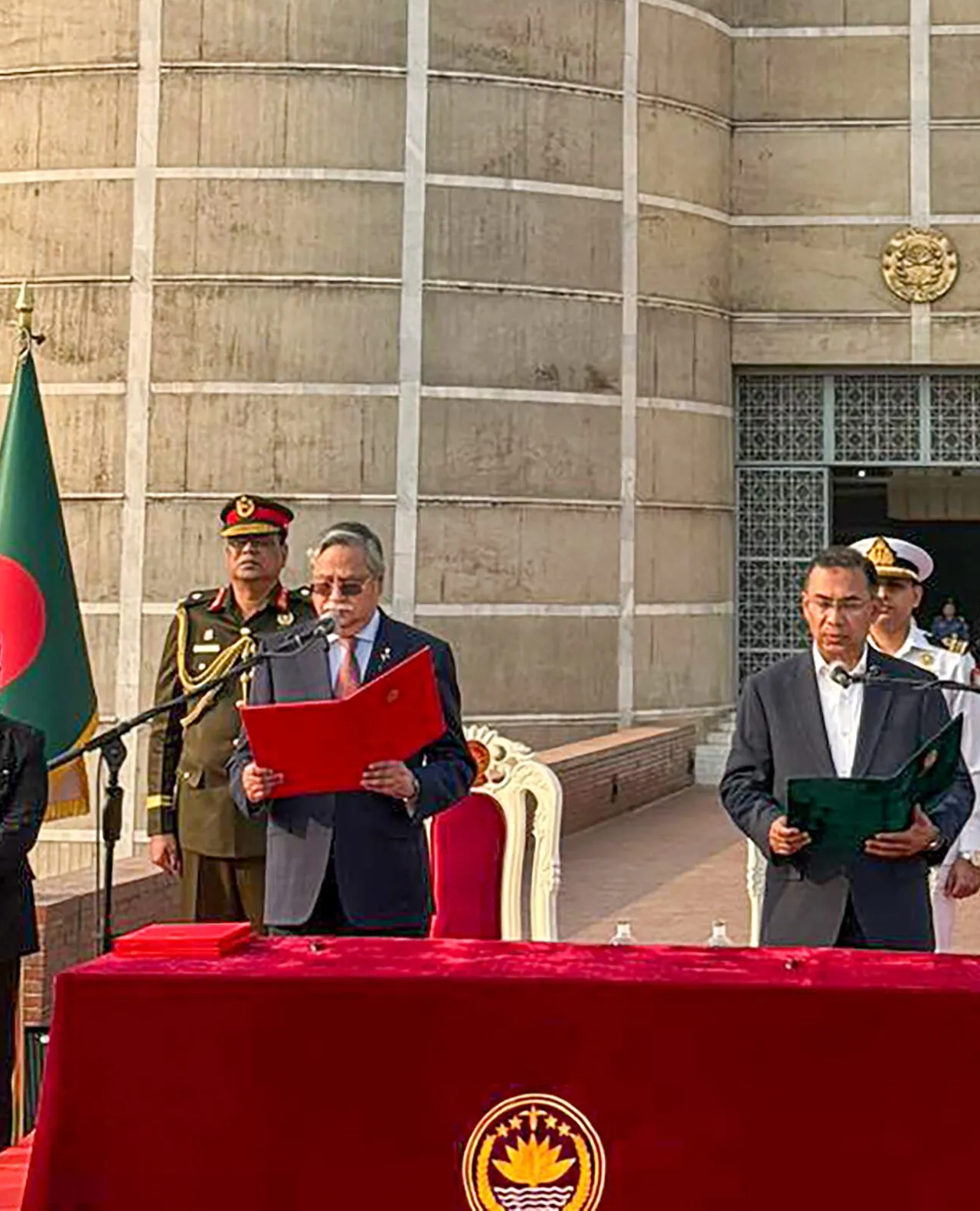
On February 12, Bangladesh delivered a decisive verdict in favour of the Bangladesh Nationalist Party (BNP), led by Tarique Rahman, in what was the first general election since the ouster of the Sheikh Hasina-led Awami League regime in August, 2024, following a student-led series of violent protests. The BNP’s performance corroborated the estimates of exit polls: it took nearly 50% of the popular vote, securing 208 seats in Jatiya Sangsad, trailed by the Islamist Jamaat-i-Islami, securing a significant vote share of over 30%. The general elections were accompanied by a national referendum on a tranche of constitutional reforms, forming part of the July Charter, aimed at restoring the balance of powers. The people have voiced acceptance for the tranche of reforms, with over 60% voting in favour of it.
Against this backdrop, Bangladesh’s evolving ties with Pakistan merit a close scrutiny. Since Hasina’s fall, Dhaka–Islamabad relations have undergone an incremental reset. Under the Awami League, ties remained constrained by historical memory and Dhaka’s close strategic alignment with India. For Pakistan, the BNP’s victory does not signal rupture but ratifies an alternative diplomatic tradition within Bangladesh’s political system. The BNP’s victory will likely result in further progress along the functional, multi-dimensional cooperative track. However, India’s indispensability will be acknowledged; the BNP will not alienate India and will seek to gradually reduce the tensions that have grown in since 2024. The BNP is expected to pursue diversified external partnerships to position Bangladesh as a rising middle power across the intersecting theatres of South Asia and the Bay of Bengal.
Incremental reset
The trajectory of Dhaka–Islamabad relations since 1971 has been characterised by suspended normalisation. While diplomatic relations were restored in 1974, unresolved historical grievances circumscribed engagement. Under the Awami League, engagement with Pakistan was cautious and often subordinated to its strategic alignment with India. The regimes of Ziaur Rehman and HM Ershad had commenced rapprochement with Islamabad, formalising critical functional arrangements on air services (1978), cultural cooperation (1979), and the establishment of a Joint Economic Commission (1979). The current reset thus represents the re-emergence of this alternative diplomatic bandwidth.
Since Hasina’s ouster, Dhaka and Islamabad have pursued re-engagement through political, diplomatic, economic, commercial, and, increasingly, military means. A multi-dimensional, reciprocal outreach will foster selective interdependencies, promoting practical cooperation, reconciliation, and confidence-building.
On January 29, Pakistan and Bangladesh restarted direct flights between Dhaka and Karachi after a hiatus of 14 years, when the flight services were halted citing security concerns by the Hasina regime. Reports have suggested a strong passenger demand, indicating a robust outlook for people-to-people ties.
The renewed connectivity comes at a crucial juncture, as both countries try to hedge against the weaponisation of trade and supply chains. This development has followed from the resumption of high-level dialogue and commercial relations since 2025. Bangladesh’s imports from Pakistan surged by 27%. In October last year, Bangladesh and Pakistan resumed the Joint Economic Commission after 20 years; resultantly, Bangladesh secured access to the Karachi port, as India restricted Dhaka’s access to trans-shipment and land-borne trade. In addition to the resumption of direct trade, Bangladesh and Pakistan are also exploring a ferry service and have liberalised visa regimes to boost travel and commerce.
The trade agreement between the European Union and India will incentivise complementarities and vertical integration in the textile supply chains of Bangladesh and Pakistan: while Bangladesh’s graduation from the status of a Least Developed Country deprives it of preferential access to the European market, Pakistan’s access to the Generalised Scheme of Preferences Plus has been reduced.
Routinised engagement and bureaucratic anchoring
The institutionalisation of economic and commercial ties wa reinforced by regular high-level contact with the interim government. Former Chief Advisor, Muhammad Yunus, met with the Pakistani Prime Minister on the sidelines of the D8 Summit in Cairo in 2024 and the UN General Assembly Summits in 2024 and 2025, discussing the resolution of historical grievances to propel economic and regional cooperation. Deputy Prime Minister Ishaq Dar—also the Minister of Foreign Affairs—became the most senior Pakistani official to visit Bangladesh last year, the first Pakistani Foreign Minister to do so since Hina Rabbani Khar. During his visit, practical areas of cooperation were emphasised, including the establishment of a joint working group on trade and collaboration between Bangladeshi and Pakistani think tanks in knowledge creation and dissemination in strategic studies. The creation of a Bangladesh–Pakistan Knowledge Corridor envisages enhanced financial assistance to Bangladeshi students and civil servants to pursue education in Pakistan, in addition to an increase in aid to Bangladeshi scholars for technical assistance.
The visit was supported by the revival of the Foreign Office Consultation process, moribund since 2010, during the visit of Pakistan’s Foreign Secretary to Dhaka in April last year, and the visit of Pakistan’s Interior Minister in July. It is unlikely that the renewed engagement will be dialled down because of three reasons: Firstly, both countries have revived institutions of bilateral cooperation that rely on norms and bureaucratic channels of communication that withstand regime and personality shifts. Secondly, they have emphasised functional cooperation—people-to-people contacts, capacity building, and trade—that raises confidence, reduces transaction costs, and improves access to public goods. Thirdly, both Naqvi and Dar had extended their outreach to all stakeholders of the democratic transition during their visits, including the incumbent Prime Minister, reducing the perception of partisan alignment.
Limits of engagement
Yet it is necessary to temper the assessment of the increasing ties by pointing to the limits to the achievements and hopes. On the surface, functional cooperation already has spill-over effects into the domain of hard politics. BNS Samudra Joy participated in Pakistan’s Aman-25 joint naval exercise in the Arabian Sea in February last year, which also featured the participation of Sri Lanka and China. Intelligence-sharing and strategic coordination have intensified, evidenced by the visit of Pakistan’s Inter-Services Intelligence to Dhaka. Bangladesh’s Air Chief Marshal Hasan Mahmood Khan visited Islamabad last month, discussing the potential procurement of JF-17 Thunder jets, as part of Bangladesh’s Forces 30’s goal of defence modernisation.
Yet, the newly elected regime will not let one relationship displace another. India and Bangladesh share a 4,096-kilometer-long frontier; cross-border management and river-water sharing are structural, not elective. But BNP will also require Indian cooperation for promoting internal stability. India remains Bangladesh’s second-largest trade partner. Connectivity projects such as rail links, inland waterways, and border haats support livelihoods in frontier districts where the Jamaat has registered electoral resurgence. Economic interdependence reduces the socio-economic grievances that extremist groups often exploit, reinforcing domestic stability.
To conclude, the reset between Bangladesh and Pakistan has lowered the political threshold to leverage existing complementarities for extending cooperation in other domains of hard politics. However, BNP’s foreign policy agenda will be shaped by Bangladesh’s economic realities and the imperative of achieving internal stability amidst intensifying ideological contestation. Tarique Rahman’s cabinet and swearing-in ceremony underscore the nod to pragmatism, economic revitalisation, and internal stability. Engagement with Islamabad is part of a broader diversification strategy that cannot ignore the structural contours of Indo-Bangladesh ties. The durability of this reset will depend on whether economic interdependence translates into sustained growth, social stability, and confidence-building across sectors.



Add comment