


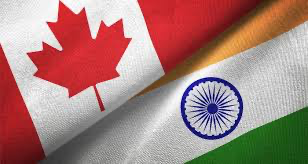
For decades relations between New Delhi and Ottawa continued to be friendly and normal. However, under the leadership of ex-Canadian Prime Minister, Justin Trudeau, bilateral relations soured owing to his partisan policy influenced by Canada-based Sikh extremist groups that had become actively involved in Canadian politics.
Trudeau’s government accused India of contriving the murder of a Khalistani extremist Hardeep Singh Nijjar wanted by India for involvement in various crimes who had fled to Canada. India repudiated the charge and said that Trudeau’s government was not only sheltering the criminals among Khalistanis who had fled India and sought asylum in Canada, but was also prompting the Khalistanis to carry out anti-India propaganda and vandalism in Canada. As a result, relations between the two countries fell to their nadir and even normal diplomacy was badly affected.
In March last, the new Premier Mark Carney paid his maiden visit to India, where he held constructive talks with his counterparts. The discussions were broad-based and comprehensive. The visit was hailed by both sides as heralding a reset in bilateral relations.
The Canadian Khalistanis were sidelined in the last election in which the Liberals led by Carney won a landslide victory. This was the first shock to the anti-India Khalistani Diaspora in Canada. As the new Premier tightened his grip on the affairs of the state, Khalistanis in Canada began to realise that their game of garnering the support of the Canadian government for their nefarious designs had come to an end.
The highlights of the high-level talks in Delhi were the following:
- The two Prime Ministers agreed to conduct fast-track negotiations towards a Comprehensive Economic Partnership Agreement (CEPA), aiming to conclude the talks by the end of the year. They also set the ambitious target of boosting bilateral trade to around $50bn by 2030.
- The leaders outlined new frameworks for cooperation on critical minerals, clean energy, uranium supply, and AI.
- Given the large number of Indians studying in Canada, education featured prominently in the talks. Both governments announced plans to expand academic partnerships, ease exchanges for students and researchers and strengthen mutual recognition of qualifications.
- The two countries will also re-launch a structured defence dialogue and step up maritime and broader security cooperation, underlining a strategic convergence which, analysts point out, extends well beyond trade.
- The leaders described the talks as the beginning of a “new phase” in ties following a period of diplomatic strain, emphasising their shared interests in energy security, resilient supply chains and stability in an increasingly uncertain global order.
It appears that Canada under Carney has a better understanding of the necessity of improving Indo–Canadian relations in the context of the new unfolding and unpredictable geopolitical scenario. On May 1, the Canadian Security Intelligence Service (CSIS) placed before the Canadian parliament a report in which it acknowledged that Khalistani extremism was a national security threat. It drew a distinction between lawful political advocacy for Khalistan and violent extremism that had become the instrument of state policy under Justine Trudeau.
The Indian Ministry of External Affairs told reporters at a weekly media briefing that the CSIS report confirmed that Canada-based Khalistani extremist groups posed a national security threat not only to India but also to Canada. This is precisely what the Indian External Affairs Minister had been telling the ex-Premier of Canada. “Canada’s worst terrorist incident was caused by those spouting radical Khalistani positions from their shores,” said Christopher Blackburn, a London-based security analyst, referring to the 1985 bombing of Air India flight 182, also highlighted in the CSIS report.
The attack, carried out by Sikh extremists, killed 329 people, including 268 Canadian citizens. Blackburn commented that: ”For a neutral observer, it’s been strange watching the Canadian reluctance to confront this. Khalistan is probably more of a Canadian national security problem than an Indian one.”
Moving away from the sordid story of strained relations in the recent past, observers hint at further improvements in bilateral relations, particularly as Prime Minister Mark Carney has pursued a broader diplomatic and economic reset with India. Since early this year, he has sought to boost trade and secure energy partnerships.
Prime Minister Narendra Modi and Canadian Prime Minister Mark Carney finalised a landmark CAD 2.6 billion uranium supply agreement during their bilateral talks in New Delhi. The 10-year contract will provide India with 22 million pounds of uranium ore from 2027 to 2035 to fuel its civil nuclear energy program.
Key details of the agreement stipulate that the uranium will be sourced through the Canadian supplier Cameco. PM Modi hailed the pact as a “landmark deal” and described it as a massive step in expanding long-term strategic energy partnerships to establish a clean and reliable power supply. Alongside the raw uranium supply, both leaders agreed to actively collaborate on cutting-edge nuclear technology, specifically focusing on the development of Small Modular Reactors (SMRs) and advanced reactors.
A breakthrough in India’s research in power generation technologies has been hailed as a defining moment for the country’s energy programme and a step towards self-reliance. Earlier this month, Indian scientist revealed they had achieved criticality, a state of self-sustaining nuclear chain reaction, at the Kalpakkam prototype fast breeder reactor (PFBR) in Tamil Nadu state
Broader Diplomatic Reset
The uranium deal represents a major reset in India-Canada diplomatic and economic ties. In addition to the civil nuclear agreement, PM Modi and PM Carney announced:
- Trade Goals: Both sides committed to finalise the long-pending Comprehensive Economic Partnership Agreement (CEPA) to boost bilateral trade toward a $50 billion target by 2030
- Critical Minerals: India and Canada signed an MoU focused on critical minerals, which aims to build more resilient supply chains for clean technology and advanced manufacturing.
The broad –based and comprehensive bilateral agreement encompassing crucial areas of economy and security is essentially the outcome of patient, positive and futuristic diplomacy by both parties, showing that India and Canada are strong democracies
There is a mention of India in the report of the CSIS, as a country allegedly engaged in foreign interference and espionage in Canada, alongside China, Russia, Iran and Pakistan – activities, described mostly as involving the intimidation and harassment of Diaspora members on Canadian soil. There are large diasporas from all those countries in Canada, and the spokesman of the Indian MEA, Mr. Jaiswal said, “We categorically reject such baseless imputations.”
Some observers opine that while the report has not resolved the underlying disagreements between the two countries, “it creates a practical basis for diplomatic exchanges on a touchy subject”. “Given Canada’s large Sikh population, strong civil liberty protections and the domestic sensitiveness surrounding Diaspora politics, any rapprochement should be reviewed with caution,” says a Political Science professor of Haryana University.
In the final analysis, the interregnum in Indo-Canadian relations is over, and the path of cooperation in many critical areas has been opened. We must appreciate the sensible leadership of the two nations which have opened vistas for collaboration and progress between their respective governments and people, in an environment of restored peace and cordiality.



Add comment