


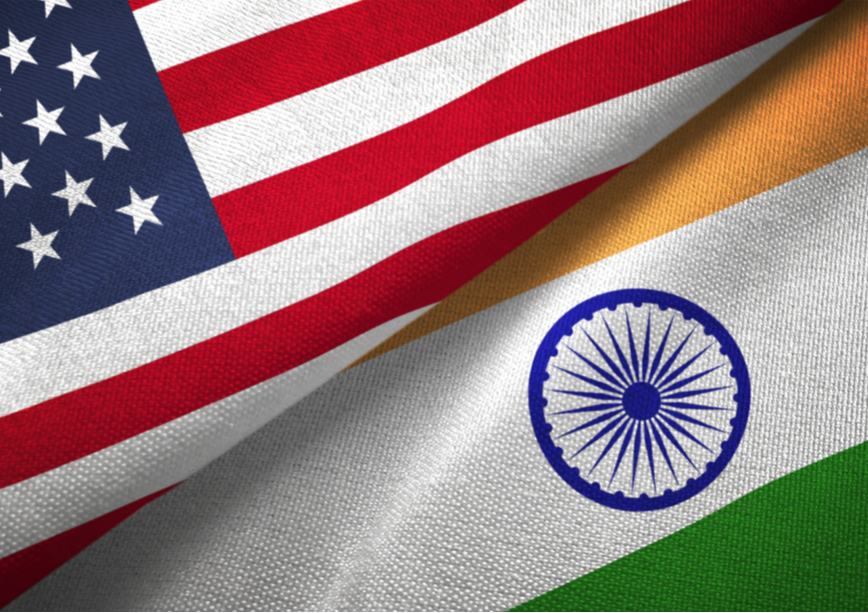
The recent Indo-US Bilateral Trade Agreement on critical technologies and industrial collaboration, and the genuine commendation for PM Shri Narendra Modi by US President Donald Trump, serve as a significant indicator of optimism, establishing a substantial platform for India and the US to forge a closer friendship. President Donald Trump has made a positive gesture by sending a congratulatory message to PM Shri Narendra Modi in honour of India’s 77th Republic Day. Additionally, the reduction in US tariffs from 25 to 18 per cent may further strengthen the positive environment. India might also participate in Pax Silica, a US initiative aimed at establishing a seamless global supply chain for silicon and other critical minerals for AI technology. In a rapidly fluid global landscape, nations across the world are striving to innovate and evolve, seeking deeper strategic, economic and cultural integration.
On the other hand, a number of non-state actors are also operating to create disturbance. Due to globalisation, miscreants and terrorists have become deadlier than they were a few years ago. A unified front is essential to counter the disruptive ambitions of rising global actors and to address transnational challenges. In this regard, India and the US should and can emerge as natural partners, committed to shaping a more secure, prosperous and cooperative world order. Over the past few years, both countries have made remarkable efforts to strengthen their bonds despite a volatile landscape characterised by ongoing regional conflict in West Asia and the Russia-Ukraine conflict. India and the US possess ample reasons to become closer strategic, cultural and economic allies. Historical evidence supports this emotional connection. Prime Minister Narendra Modi’s visit to the US last year fostered a sense of respect and tranquillity, contributing to a harmonious relationship between India and the US.
The visit also exemplified the latent strength of India’s soft power diplomacy, which has cultivated a positive international atmosphere and brought remarkable serendipity to global relations, garnering widespread acclaim. PM Modi’s address to the joint meeting of both houses of the American Congress last year showcased how positive leadership and dynamism can be a game-changer in a web of power struggles in international politics. The MoU between GE Aerospace and Hindustan Aeronautics to facilitate the production of 99 F414 engines has enhanced the prospects for technology transfer. In addition, an agreement to produce jet engines for Mk2 (combat aircraft) and MQ-9B Hale UAVs (drones) would facilitate the smooth transfer of sophisticated technology. This would enhance defence strategies through intelligence gathering to address security challenges from China and Pakistan, as well as from any terrorist group. Besides, cooperation in artificial intelligence can be of immense use. Traditionally, the foreign policy of any country is influenced by myriad factors, but it is primarily determined by the dynamism of national interest, based on economic and security concerns that keep changing with the situation and circumstances, as being highly dynamic in nature.
PM Modi’s recent visit has been a game-changer, demonstrating that ideology, cultural heritage, morality, and good deeds alone can foster intimacy between countries despite a few differences. The warmth in the diplomatic endeavour between India and the US provides ample food for thought to write a new Theory of International Politics. The richness of Indian historical and cultural ideas, such as Vasudhaiva Kodambakkam (One Earth, One Family and One Future) and Jan Bhagidari (greater people participation), have been acknowledged worldwide. These are not mere ideas but have emerged as major catalysts for transforming thinking about politics among nations, marking a major departure from Hans J. Morgenthau’s Realist Approach to the study of International Politics. This will provide a new perspective on different concepts in IR by highlighting the importance of promoting peace, harmony, and cooperation. India’s service-driven industry prowess and its institutional stability, deeply interwoven with pluralism and democracy, have already brought it tremendous inner strength and won it more friends.
Recently, there has been a revolution in the process of opening up of start-ups, with more than ten thousand now in operation, providing a huge impetus to employment generation over the last five years alone. According to a recent report by economic analysts, the robust strategy of start-ups has created more than one lakh direct and indirect jobs. The strategy to enhance its operational and support network, ranging from rural to urban areas, has ensured a much higher rate of return on assets. India has also made magnificent strides in a number of areas, including knowledge- and skill-intensive services in telecommunications and scientific and technological innovation. India is also emerging as the first choice for foreign investors, who are gradually pumping in huge amounts, more than $60 billion, into the Indian stock markets, with about 260 new foreign investors having registered with the stock market regulating body (SEBI) over the last two decades or so. The stupendous progress of India in the IT industry has ushered in a new era in which Indian companies are aggressively capturing overseas markets, and even the US is beginning to realise this.
The ambit of compliance and regulatory authorities also provides economic security, as nothing goes undetected and there is something to learn from. Foreign investor sentiment can be further enhanced by creating permissible ease in tax rates and existing protocols without compromising on security. On the other hand, further cementing Indo-US ties will be quite helpful in developing international cooperation to fight the new tentacles of transnational terrorism and provide the much-needed impetus to work out a new security roadmap for dealing with the most obnoxious form of modern terrorism. Myriad security and defence cooperation, including the Communication, Information Security Memorandum, Basic Exchange and Cooperation Agreement, and the Initiative for Critical and Emerging Technologies between India and the US, are based on mutual coordination and lead to stupendous aggrandisement of communication capability and the management of security arrangements to deal with any kind of threat.
This would instil prudence in anticipating threats from any state or non-state actor. It would also open new avenues for the Communication Compatibility and Security Agreement to facilitate cooperation between the security and defence establishments of the two largest democracies in the world. The US and India have much to share, as approximately 5 million Indians contribute directly or indirectly to the US economy, either by being employed there or by studying at US universities. Numerous companies have also invested heavily in each other’s countries, creating new trade partnerships and accelerating mutual growth. Prime Minister Narendra Modi and the US President share a common worldview. Their leadership and synergy forge new pathways in global diplomacy, trade, and security. This augurs very well for future diplomatic endeavours between the two largest democracies in the world.


Add comment