



For nearly two decades, much of the Arab heartland watched the region burn from a position of relative internal stability. From the implosion of Iraq after 2003, to the prolonged devastation of Syria, the collapse of Libya, the turbulence in Egypt, and recurring upheavals stretching from Afghanistan to Yemen, the Gulf monarchies appeared as islands of order and prosperity in a sea of fragmentation.
Yet, being a “safe haven” is a strategic condition, not a permanent state. And that condition is now under strain.
The ongoing and expanding conflict between the United States and Israel against Iran presents Arab leaderships with a dilemma far more complex than choosing sides in a geopolitical rivalry. It forces them to weigh regime survival, public legitimacy, alliance credibility, and economic security, all at once.
For decades, the Gulf model rested on three pillars: rentier wealth, robust internal security architectures, and the American security umbrella. The first two remain largely intact. The third is being tested in real time.
The United States maintained deep military infrastructure across the region—naval deployments in the Gulf, air bases in Qatar and the UAE, and integrated missile defense networks. This posture reassured Gulf rulers that external threats could be deterred or neutralised. Yet the current conflict has exposed a harsher reality: even advanced, multi-layered air-defense systems can be strained by saturation missile and drone tactics. The rate of Interceptions may be high, but debris falls on cities, infrastructure absorbs shock. and public perception shifts. Security is no longer invisible; it is visibly contested.
This reality has particularly acute implications for the UAE.
Over the past decade, the UAE, especially Dubai and Abu Dhabi, has evolved into more than an oil-backed monarchy. It has positioned itself as a global logistics crossroads, financial hub, technology centre, and crucially, a low-tax, high-security destination for global capital. From Russian oligarchs to European entrepreneurs, from Indian family offices to digital asset investors, the UAE marketed itself as the world’s premier geopolitical hedge: stable, neutral, insulated.
That branding is now strategically vulnerable.
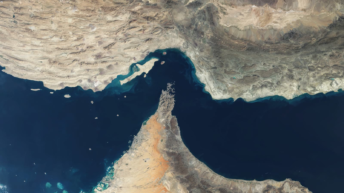
The UAE’s attractiveness as a safe tax and wealth haven rests not only on regulatory advantages but on the perception of geopolitical predictability. High-net-worth individuals relocate assets and families based on risk calculations. A sustained regional war that places Gulf cities within missile range or threatens shipping through the Strait of Hormuz fundamentally alters those calculations.
Even limited attacks can trigger capital-flight psychology. Wealth is mobile. So are residency programs and financial vehicles. If the UAE is perceived as an active node within a U.S.–Israel military architecture targeting Iran, its status risks being modified, from neutral hub to frontline participant.
The economic implications would be significant. Real estate valuations, capital inflows, private banking growth and foreign direct investment are all sensitive to geopolitical shocks. Insurance premiums would rise. Supply chains would reroute. Luxury consumption and tourism, central pillars of Dubai’s diversification model, would contract.
For Abu Dhabi, sovereign buffers provide some resilience but for Dubai’s leveraged, globally integrated growth model, perception is reality. Stability is not merely a domestic feature, it is part of its global brand.
At the same time, overt alignment with Israel against Iran carries internal and regional political risks.
While normalisation with Israel began under the Abraham Accords for advanced strategic and technological cooperation, public opinion across the Arab world remains deeply sympathetic to the Palestinian cause. Gulf governments have managed this divergence through calibrated messaging and tight domestic controls. But in a high-intensity conflict, optics matter.
If the Gulf territory, airspace, or facilities are perceived as enabling Israeli operations while exposing Arab cities to Iranian retaliation, the current regimes could face gradual legitimacy erosion, elite discomfort, Islamist narrative revival and subtle weakening of the prosperity-for-stability social contract.
Thus, Arab rulers confront a layered strategic equation.
Iran represents an immediate kinetic threat through missiles, drones and proxy networks. Israel brings political conflict. The United States offers some protection but also implies strategic entanglement.
In effect, Gulf capitals are not choosing between Israel and Iran. They are trying to balance alliance credibility, internal regime durability and economic transformation.
The consequences will not be confined to the Gulf. For India, the fallout could be immediate and multidimensional.
India imports roughly 80% of its energy needs, with nearly 50% sourced from Gulf producers such as Saudi Arabia, Qatar, the UAE, Iraq and Kuwait. The Strait of Hormuz, through which roughly 20% of global oil supplies are shipped, is a vital artery of the world energy system. Any disruption sends crude prices surging, unsettles financial markets, widens India’s current account deficit, puts pressure on the rupee and intensifies imported inflation.
There are 10 million Indians working in the Gulf who remit approximately $50 billion annually, particularly from the UAE and Saudi Arabia, supporting household incomes and state finances. Economic instability in these host economies will quickly reverberate through India’s banking system and domestic demand. India and the Gulf Cooperation Council have recently launched negotiations for a comprehensive free trade agreement. The bilateral trade between India and the GCC reached approximately $179 billion in 2024-25,
From a security perspective, escalation would stretch the Indian Navy’s maritime surveillance and evacuation capacities across the western seaboard. Sea lanes of communication through the Arabian Sea would require heightened monitoring. A prolonged war would also complicate India’s delicate diplomatic balancing act between Israel, Iran and its Gulf partners, each important to New Delhi’s strategic calculus.
The Middle East is entering a phase where state insulation is thinning. The Gulf’s safe havens now sit within the shooting range.
Ultimately, the question confronting Arab leaderships is stark: can they preserve equilibrium between alliance commitments, domestic legitimacy, and economic growth if the region descends into open war?
For the UAE, it is a test of its safe-haven model. For the other Gulf monarchies, it is a test of regime resilience. And for India, it is a reminder that instability in West Asia is not a liminal concern; it travels through energy markets, remittance corridors and sea lanes.
Safe havens, in geopolitics, rarely remain safe forever.

Add comment