


 Ananya Gupta is an intern at India Foundation.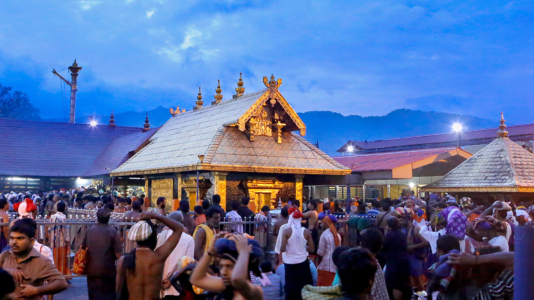
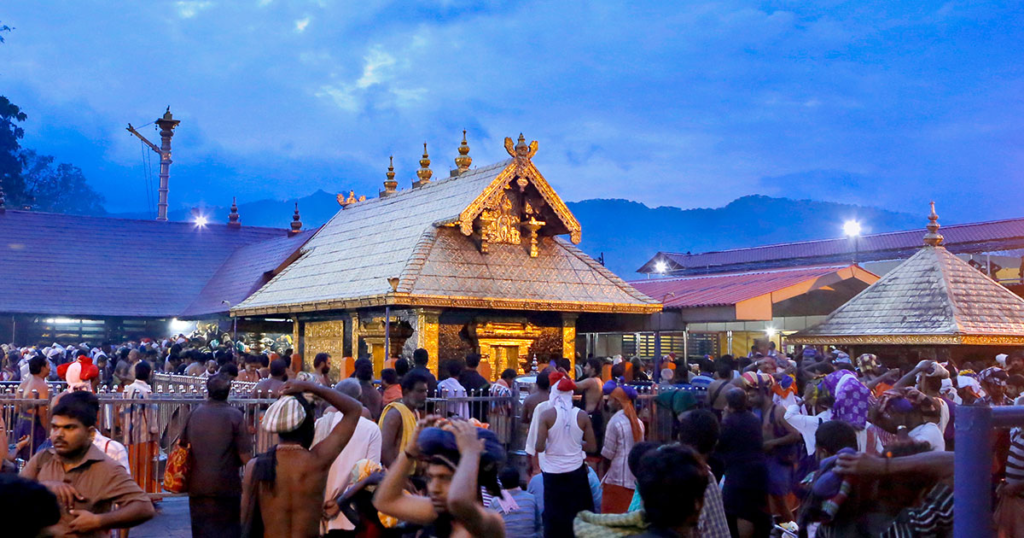
The Sabarimala controversy has been raised again before a nine-judge Bench, following a 2018 decision of a three-judge Bench. The case was taken up after massive protests erupted, with hearings beginning in 2026. With the review petition, the question returns as to whether a court of law should have the jurisdiction to decide the destiny of religion, deity, and its disciples. Our hypothesis is that India is a secular country and that courts lack the knowledge, tools, and mandate to decide matters of faith. Religion is too personal and too complex to be reduced to a legal verdict.
When should Courts Intervene? - Doctrine of Pith and Substance
Judicial intervention in religious matters is sometimes not only justified but also necessary. The abolition of Sati Pratha and the Supreme Court's intervention on Triple Talaq are two such examples. In both cases, the doctrine of pith and substance was applied. The core of the practice was not religious reverence; it was the exploitation of women. A widow being forced into the fire of cremation is exploitation; it infringes the right to life. A woman being instantly abandoned through a unilateral pronouncement, with no recourse, no maintenance, and no dignity, is a matter of harm. Courts were right to intervene precisely because the substance of those practices was oppression.
Sabarimala is different. No woman is being harmed. No one is being coerced. The restriction does not stem from women, menstruation, or impurity, but from the deity's form.
The Deity, Not the Gender
The most misunderstood aspect is that the restriction at Sabarimala is not a statement about the impurity of women. It is about nature, the form of the deity. Lord Ayyappa at Sabarimala is worshipped as a naishtika brahmachari, a celibate ascetic. The entire system of rituals, including the famous 41-day vratham undertaken by devotees, stems from this theological state. As Senior Advocate V.V. Giri argued before the nine-judge bench, a devotee subjugates himself to the divine spirit, and the act of worship requires acceptance of the deity's defining characteristics. A devotee cannot enter a Shiva temple and demand Vaishnavite rituals, and by the same logic, one cannot worship at Sabarimala while disrespecting the very character of the deity enshrined there.
Further, this form of Ayyappa is unique to the Sabarimala temple. There are numerous other Ayyappa temples across Kerala, including those at Achankovil and Aranmula, where women of all ages are freely permitted. The restriction is not a universal ban on women's access to Lord Ayyappa. It is specific to this form of the deity. Applying the doctrine of pith and substance, the true character of this restriction is the preservation of the deity's celibate form, not an assertion that women are inferior or impure.
Judicial Overreach
The majority judgment in 2018 treated women's right to worship under Article 25 as overriding Article 26. This judgment is under review. As J. Sai Deepak argued before the nine-judge bench, Article 25(2) was intended only as a limitation on Article 25(1)and cannot be extended to curtail rights under Article 26. Article 26 protects the collective right of a religious denomination to manage its own affairs, subject only to public order, morality, and health, not to the social reform mandate under Article 25(2)(b).
The social reform provision under Article 25(2)(b) abolishes untouchability-linked exclusions rooted in caste hierarchy. Extending it to cover a celibacy practice specific to one deity's form is judicial activism the text does not support. As Justice Indu Malhotra noted in her 2018 dissent, Article 17's prohibition on untouchability refers to caste and does not extend to discrimination on the basis of gender. The Sabarimala restriction and caste-based exclusion are categorically different.
Secularism
India's secular character runs counter to judicial intervention in this case. If secularism truly demands uniform access across religious sites, then men must also be permitted to enter the inner sanctum of the Maa Kamakhya Temple during Ambubachi Mela, and women must be granted equal access to every mosque across the country. Selective intervention in Hindu temple customs alone is not secularism. A genuinely secular state treats all faiths with equal distance and equal respect, not with differential scrutiny.
Further, there is no Uniform Civil Code in India by legislation. Parliament has not enacted one. In the absence of such a law, there is no legislative basis for the judiciary to standardise religious customs or temple practices. The Directive Principle under Article 44 is a guide for the legislature, not a grant of power to the courts.
Comparative Analysis
The Indian temple tradition is rich and diverse in its practices. The Maa Kamakhya Temple in Assam closes for three days during Ambubachi Mela, when the goddess is believed to menstruate. Men are barred from the inner sanctum during this period. The Brahma Temple at Pushkar also has customary restrictions that bar certain people from the inner circle. These are not acts of prejudice; they are expressions of the deity's theological form. Sabarimala also falls within this living tradition.
Justice Indu Malhotra's lone dissent in 2018 is the opinion that best reflects how a secular court should act by staying out of matters of faith. She recognised that the Sabarimala Temple is a separate religious denomination entitled to manage its own affairs under Article 26(b), and that no court has the authority to override that right. She made a simple but powerful point that in a country as religiously diverse as India, constitutional morality does not mean a single standard for all faiths; it means giving each faith the space to exist on its own terms.
She was also clear that a court of law is not equipped to decide whether a religious practice is rational or logical. That is precisely our argument. Courts are trained in law, not theology. They lack the knowledge, context, or mandate to enter a temple and redesign its customs. Allowing them to do so does not make India more secular. It makes the state an uninvited arbiter of religion, which is precisely what secularism is meant to prevent.
Conclusion
The nine-judge bench now has the opportunity to interpret these questions of religion and law. The hypothesis is that courts should intervene when religion is used as a cover for genuine harm. But where the substance of a practice is rooted in the identity of a deity, respecting India's plural religious traditions, including the quiet dignity of a celibate deity, is not regressive. It is what genuine constitutional secularism demands.
(The views and opinions expressed in this article are solely those of the author(s) and do not necessarily reflect the views, policies, or position of the organisation.)