


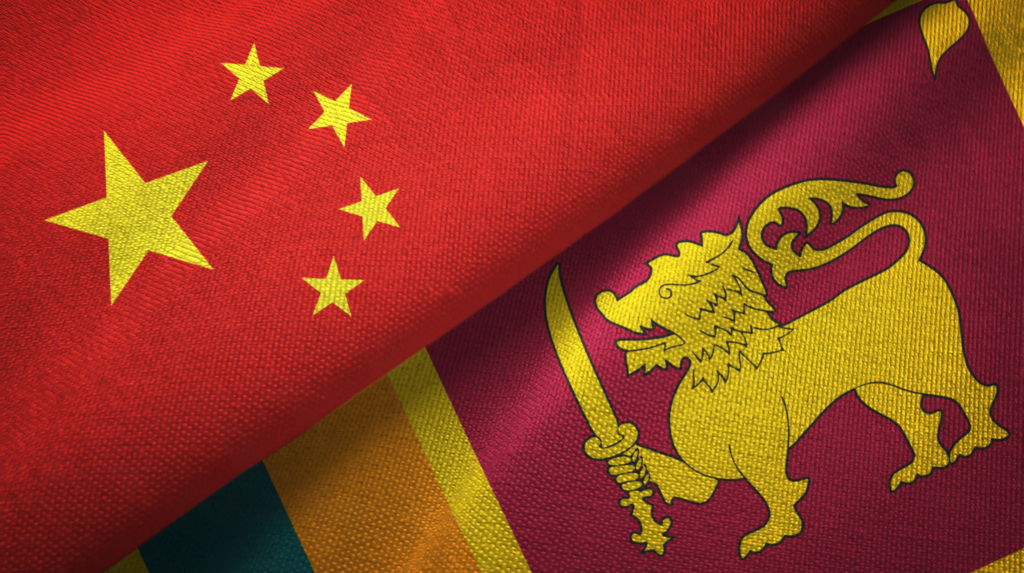
At the conclusion of his tenure in Colombo, Chinese Ambassador Qi Zhenhong highlighted how China and Sri Lanka had supported each other through a series of difficulties, including the COVID-19 pandemic, the energy crisis, prolonged economic hardship, and the devastation caused by Cyclone Ditwah in late November 2025. He emphasised that projects undertaken through China’s Belt and Road Initiative (BRI), launched in 2013 to enhance trade, connectivity, and economic integration across Asia, Europe, Africa, and beyond, had generated considerable economic momentum, particularly through operations at Colombo Port City and Hambantota Port, as well as the resumption of work on the Central Expressway.[1] China has also sought to consolidate its existing projects while investing in new initiatives, including the proposed oil refinery in Hambantota[2].
The monetary assistance provided by China for infrastructure development in Sri Lanka has caused much speculation due to its debt-trap diplomacy. Indian academic Brahma Chellaney referred to Chinese loan diplomacy as debt-trap diplomacy in 2017. This form of diplomacy involves funding development projects in developing nations with challenging repayment terms. This, in turn, pushes the borrowing nation to accept China’s terms and conditions in the event of non-repayment of their debt and is also forced into a debt-trap crisis.[3] However, despite the much-debated notion of a “Chinese debt trap,” Ambassador Zhenghong assured that Sri Lanka’s economic crisis was the result of multiple factors, including domestic policy failures, external shocks, and global economic conditions, not Chinese lending alone.[4]
In 2017, Sri Lanka devoted nearly 83 per cent of its government revenue to servicing debt. About one-fourth of this amount went towards external debt obligations, with the remainder used to repay domestic borrowings. This heavy repayment burden weakened the country’s capacity to meet its liabilities to China, including those associated with the Hambantota Port project. Consequently, the Sirisena–Wickremesinghe administration agreed to lease the port under a debt-for-equity arrangement. The 2017 Hambantota Port concession agreement, involving an investment of up to US$1.12 billion, granted the joint-venture companies established by China Merchants Port Holdings and the Sri Lanka Ports Authority a 99-year lease to develop and operate the port. Across the overall investment structure, CM Port held an effective 69.55 per cent share, while SLPA held the remaining 30.45 per cent. The agreement also reportedly entitled SLPA to acquire an additional 20 per cent stake in the Hambantota International Port Group from CM Port within ten years. Owing to its economic, political and strategic implications, the arrangement generated considerable controversy.[5]
Chinese assistance has also been extended to public services through projects including the outpatient building at the National Hospital of Sri Lanka, the National Nephrology Hospital, digital education programmes, nearly 2,000 housing units for low-income families, and the provision of school-uniform fabric for approximately 4.4 million students.[6]These initiatives (Table 1) demonstrate the extent to which Chinese involvement has become deeply embedded in Sri Lanka’s development and public welfare landscape.
Table 1. China’s investments in Sri Lanka
| Project | Financial Assistance |
| Colombo–Katunayake Expressway | China Exim Bank provided four loans totalling US$248.2 million. |
| Southern Expressway | China financed the later Matara–Hambantota extension. Loans of about US$1.71 billion, excluding a separate US$90 million consultancy loan. |
| Outer Circular Highway | The US$494 million Chinese loan financed the 9.32-km Kadawatha–Kerawalapitiya section, identified as Phase III |
| Mattala International Airport | China Exim Bank provided a US$190 million loan |
| Norochcholai Power Station | Loan of approximately US$1.346 billion. |
| Colombo Port City | Investment of US$1.4 billion |
| Colombo International Container Terminal | An investment of over US$500 million |
| Lotus Tower | Loan was approximately US$88.6 million, |
| Hambantota Port | Loan of approximately US$1.2–1.3 billion |
| Water-supply projects | China Development Bank agreed to provide a US$400 million loan facility for the Katana, Thambuttegama and Kandy North water-supply projects. |
| Matara–Kataragama Railway Line | Loan of US$278 million for 26.75-km Matara–Beliatta section |
From a geopolitical perspective, such extensive involvement by one country in another’s affairs is typically driven by the expectation that the assisting country will secure long-term benefits from the recipient state. After consolidating his power in 2013, President Xi Jinping introduced the idea of a “new era” for China, portraying it as a major global power capable of developing a “new type of major-country relations.”
Under Xi’s leadership, China’s foreign policy has undergone fundamental changes, with the country adopting a more assertive and proactive role on the global stage. Xi appears to have moved away from the earlier doctrine of Tao Guang Yang Hui, commonly translated as “keeping a low profile.” Instead, China has pursued a more ambitious and expansionist foreign policy, positioning itself as one of the world’s most prominent emerging powers.[7]
Conclusion
China’s investments have become an important part of Sri Lanka’s domestic development. The scale and strategic location of these projects have raised legitimate concerns about debt sustainability, national control and the long-term political influence that may accompany economic dependence, which could, in turn, hamper the country’s sovereignty. The Hambantota experience shows that the debate cannot be reduced to either a deliberate “debt trap” or a purely beneficial development partnership. Sri Lanka’s viability and the management of major foreign-funded projects remain central to understanding their wider consequences.
In future, Sri Lanka will need to approach Chinese investment with greater institutional scrutiny and a clearer national development strategy. New projects should be assessed for their economic viability, repayment capacity, employment generation, environmental impact and contribution to local communities. Loan agreements and concession arrangements must also be more transparent and subject to effective parliamentary and public oversight. Most importantly, Colombo should avoid excessive dependence on any single external partner by maintaining balanced relations with China, India, Japan and other development partners.
A carefully managed, diversified and transparent investment policy would allow Sri Lanka to benefit from its strategic location in the Indian Ocean without compromising its economic autonomy or sovereign interests. The future of China–Sri Lanka relations will therefore depend not simply on the volume of investment, but on whether these investments serve Sri Lanka’s long-term national priorities.
[1] Major projects deepen Sri Lanka-China strategic partnership – Gold FM News – Srilanka’s Number One News Portal, Most visited website in Sri Lanka
[2] India and China’s Economic Engagement in Sri Lanka Post-2022 Crisis – MP-IDSA
[3] Chellaney B. China’s debt-trap diplomacy. Project Syndicate. 2017 Jan 23. Available from: https://www.project-syndicate.org/commentary/china one-belt-one-road-loans-debt-by-brahma-chellaney 2017-01
[4] Quiet diplomacy of Ambassador Qi Zhenhong: Through crisis and recovery | Daily FT
[6] Major projects deepen Sri Lanka-China strategic partnership – Gold FM News – Srilanka’s Number One News Portal, Most visited website in Sri Lanka
[7] Kim, J. (2016), ‘Possible Future of the Contest in the South China Sea’, The Chinese Journal of International Politics, Vol.9, No.1, pp.27-57.

Add comment