


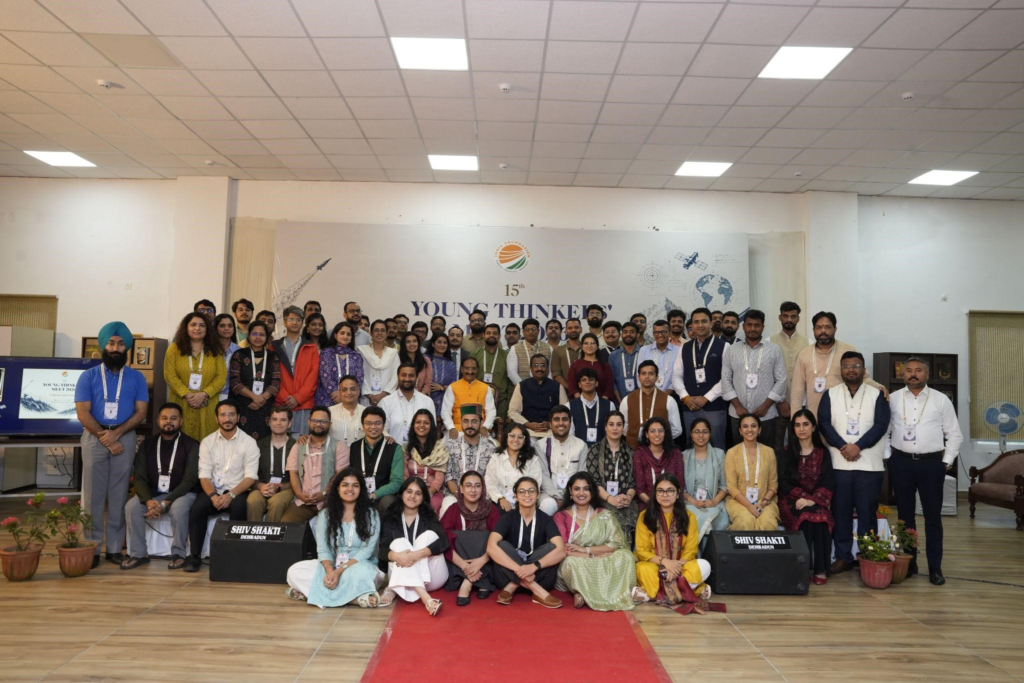
The 15th Young Thinkers’ Meet (YTM), organised by the India Foundation in the tranquil landscape of Lekhak Gaon in Uttarakhand, offered much more than an academic dialogue and exchange. The three-day programme centred on “Wars and Narratives” brought together young scholars, researchers, professionals and practitioners to discuss changing geopolitical situations, national security, strategic communication and nation-building. The dialogue with experts, the simulation exercise and informal sessions collectively highlighted that, in the 21st century, military capabilities alone do not determine a nation’s strength; it is the joint effort of the former with the confidence of society, the credibility of narratives, the resilience of institutions and the preparedness of youth from diverse domains that fundamentally strengthens the nation.
The Changing Nature of Conflict in the Twenty-First Century
One of the key resolutions from the Meet was that the nature of the conflict is no longer what we observed until the last decade; it has undergone a profound transformation. Although military preparedness remains indispensable, modern wars increasingly involve cyberspace, technology, trade, finance, supply chains and the information ecosystem. Nations are therefore required to secure their critical infrastructure, protect digital networks, strengthen economic resilience, and mitigate the risk of economic concentration.
The power of narratives is equally important. The 21st century may be referred to as the era of data and information. Perceptions based on the information spread often shape geopolitical realities. Hence, strategic communication has emerged as a critical instrument of national power. The international arena favours countries that can effectively communicate their achievements, counter misinformation and fake narratives, and articulate their strategic vision. The discussions reinforced that ideas, communication and public diplomacy are no longer peripheral to statecraft but integral to it.
The discussions at Lekhak Gaon broadened the understanding of national security beyond traditional boundaries. Today, security encompasses energy, finance, and cyber resilience—all deeply interconnected areas requiring coordinated policymaking. Ultimately, military strength cannot compensate for a fragmented society, nor can technological advancement thrive on a weak economic foundation.
Another key takeaway was the emerging role of technology in geopolitics. Artificial intelligence, deep tech, quantum tech and critical minerals are reshaping the global power equations on a large scale. The resolution for India was to continue investing in research, manufacturing, innovation and self-reliance to realise the dream of ‘Atmanirbhar Bharat’.
Nation Building Begins with Society
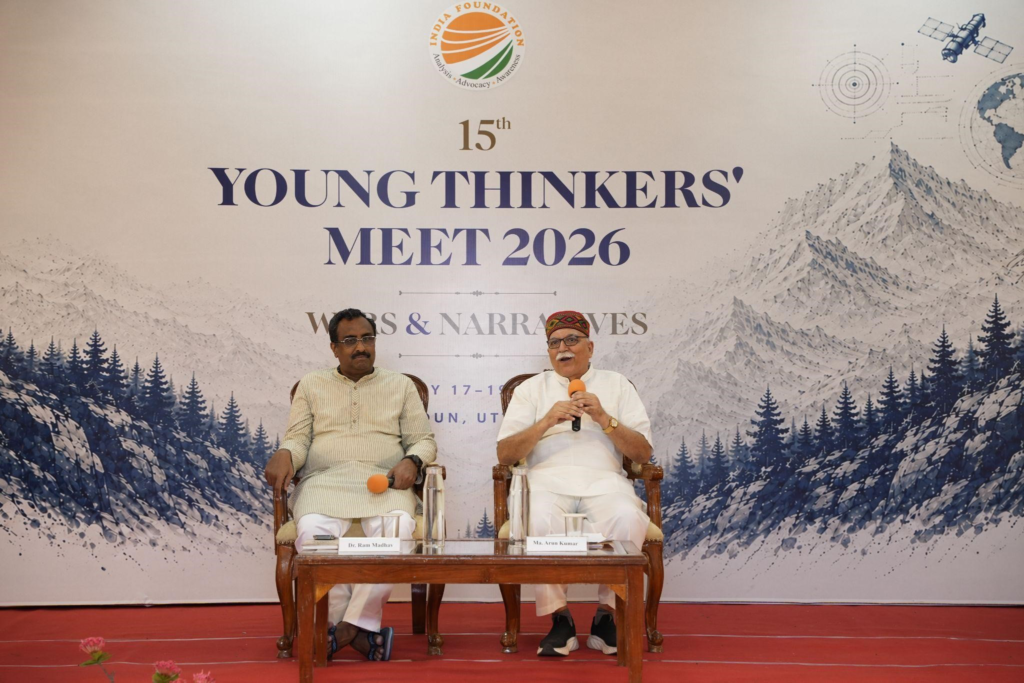
Among the most thought-provoking discussions was a reflection on the centenary journey of RSS. The deliberations underscored that organisation building is not a short-term task and can be achieved only through the patience and discipline of volunteers, the character-building of society, and sustained engagement with communities. The Sangh’s 100-year journey illustrates that social transformation can be achieved only through perseverance, continuity, and unwavering commitment to the nation.
The concept of ‘Panch Parivartan’ (Five Transformations) further enriched the perspective on societal renewal. The discussion with the resource person from the Sangh and among the delegates emphasised that the vision of ‘Viksit Bharat’ can’t be realised solely through government policies; it requires active participation by every citizen. Strengthening social harmony, reinforcing family values, promoting environmental consciousness, encouraging responsible civic conduct, and fostering Swabodh and Swadeshi together constitute a comprehensive roadmap for national transformation. The conclusion was clear: true change begins with individuals and communities before it manifests in institutions and public policy.
Preparing the Next Generation of Strategic Thinkers
Following the legacy of its inaugural edition in 2012 at Coorg, the 15th YTM also distinguished itself from conventional lectures and conferences by examining the agenda from multiple perspectives and involving young thinkers from diverse backgrounds across the nation. The simulation exercise enabled delegates to engage with complex policy scenarios, negotiate competing priorities and make decisions in critical situations. Such practical exposure helps the next generation of policymakers, lawmakers and diplomats understand the importance of balancing multiple interests while responding swiftly to developing circumstances.
The diversity of delegates further enriched the intellectual environment. Young researchers, professionals, journalists, entrepreneurs and politicians examined contemporary challenges from their respective perspectives and shared their insights from economic, legal, technological, political and social angles. These interactions and networking demonstrated that the complex domestic and international challenges confronting India don’t demand isolated expertise but interdisciplinary thinking.
Conclusion: Winning the Battle of Ideas
The 15th Young Thinkers’ Meet was more than an intellectual gathering—it delivered an emphatic message that the future belongs to nations that combine knowledge with execution, patriotism with responsibility, and ideas with institution-building. The summit concluded that 21st-century conflicts will be fought not only across borders but also in laboratories, think tanks, media ecosystems, classrooms, and the minds of citizens. While military strength remains crucial, a nation’s capacity to generate ideas, craft narratives, build institutions, and inspire public confidence is equally paramount.
To lead in this era, India must harmonise innovation with civilisational wisdom, economic growth with social cohesion, and strategic ambition with ethical leadership. The culmination of this three-day dialogue—the ‘Lekhak Gaon Declaration’—reaffirmed that genuine national power rests on an informed citizenry, confident institutions, and a shared commitment to progress. In today’s climate of global uncertainty, the battle of ideas is as vital as conventional defence, making intellectual preparedness and narrative sovereignty core pillars of national security.



Add comment