


An Uncertain World
The world is becoming increasingly unstable and militarised. The Russia-Ukraine war continues. West Asia remains volatile. Strategic competition between the US and China is intensifying. Countries are spending more on defence and preparing for an uncertain future. Warfare is evolving, with drones, missiles, cyberattacks, AI and space-based systems gaining prominence. Meanwhile, the global security architecture is becoming more fluid. Established alliances face questions about burden-sharing and future commitments, while new partnerships and smaller security arrangements are emerging.[i]
This changing environment matters to BRICS. The grouping was not created as a defence organisation, nor should it become one. Yet security can no longer be separated from stability and economic development. Without peace and stability, investment suffers, trade routes are disrupted, and development slows. The question, therefore, is not whether BRICS should become a military alliance. It is whether it can contribute more to security and stability without becoming a military bloc.
Security, Stability and Development
BRICS cooperation rests on three broad pillars: political and security cooperation, economic and financial cooperation, and people-to-people exchanges. Its declarations have repeatedly linked peace and security to sustainable development, inclusive growth and prosperity. The connection is simple. Economic development requires stability, and stability, in turn, requires a reasonable degree of security.
Recent conflicts have shown how security and economic development are interconnected. Warfare raises energy prices, disrupts trade, and hinders growth; cyberattacks, terrorism, and instability can also deter investment and slow growth. For BRICS, therefore, security and economic development cannot be viewed in isolation. Security provides stability, and stability creates the conditions for trade, investment, and development to flourish.
An Age of Alliances and New Alignments
The international security system is becoming increasingly complex. NATO remains the world’s most developed collective-defence alliance. AUKUS has brought Australia, the UK and the US into closer defence and technology cooperation. The Quad brings together India, the US, Japan and Australia, though it is not a military alliance. The Shanghai Cooperation Organisation has its own political and security mechanisms. More recently, Saudi Arabia, Türkiye and Pakistan signed the Makkah Joint Defence Agreement in August 2026. The agreement adds another security arrangement to an already shifting landscape. It also shows that countries are seeking new partners and additional security options as the global order becomes less predictable.
These arrangements are markedly different. Some involve collective defence, while others focus on technology, intelligence, maritime security, or broader political and security cooperation. Countries may also belong to multiple groupings simultaneously. The result is not simply a return to two Cold War-style blocs. The picture is far more complex, with security relationships increasingly overlapping.
The BRICS Paradox
BRICS brings together countries with very different strategic interests. Russia and China have developed a close strategic relationship. India and China work together within BRICS, but they remain strategic competitors and have an unresolved boundary issue. Iran’s security concerns differ from those of several other BRICS members. India has a longstanding defence relationship with Russia while also building close strategic ties with the US, France, Japan, Australia and other countries.[ii]
BRICS members therefore do not share a common adversary. Nor do they always agree on what constitutes the main security threat. At first glance, this may seem like a weakness. But it can also be useful. In a divided world, keeping communication channels open has value. Countries need not agree on every issue to cooperate where their interests align. BRICS can provide such a space. Its diversity limits military integration, but the same diversity may make it useful for dialogue and practical security cooperation.
Why BRICS Should Not Become a Military Bloc
A military alliance requires much more than regular meetings. Its members typically need a shared perception of threats, a high level of political trust, and some form of commitment to come to each other’s defence. BRICS lacks these conditions. Attempting to create them could divide rather than strengthen the grouping. An explicitly anti-Western military character would also be difficult for countries such as India, which value strategic autonomy and maintain important partnerships with both Western and non-Western powers.
There is no need to choose between keeping security outside BRICS and turning BRICS into another NATO. There is a middle path. BRICS does not need collective defence. It needs cooperative security. That means working together on common problems without creating military obligations against a third country.
Where BRICS Can Cooperate
Several factors make this possible:
- Counter-terrorism is the most obvious area. BRICS already has mechanisms for cooperation in this field. The BRICS Counter-Terrorism Action Plan was adopted during India’s 2021 Chairship. Cooperation can cover terrorist financing, radicalisation, organised crime, narcotics, drones, and misuse of new technologies.[iii]
- Cyber security is another area. Modern economies depend on digital networks. Banks, ports, power systems, communications and military infrastructure are all vulnerable to cyber attacks. BRICS countries can share experience and improve resilience without creating a common cyber command.[iv]
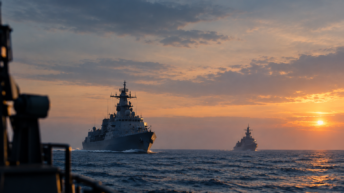
- Maritime security is equally important. The expanded BRICS includes countries along some of the world’s major energy and trade routes. Piracy, illegal fishing, narcotics trafficking and threats to shipping affect many of these countries. Ports, undersea cables and other maritime infrastructure also need protection. Information sharing, search and rescue, HADR and UN peacekeeping offer practical areas for cooperation.[v]
- Defence industry should be approached with greater care. Recent wars have underscored the importance of ammunition, drones, repair facilities, technology and secure supply chains. BRICS can discuss industrial resilience, critical materials and dual-use technologies. However, sensitive military technology, weapons and intelligence are better handled bilaterally, where sufficient trust exists. The aim should be practical cooperation, not another layer of military bureaucracy.
India’s Approach: Security Without Alignment
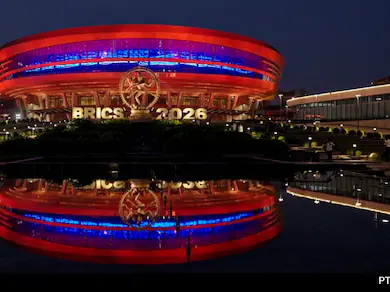
India is well placed to shape this approach during its 2026 BRICS Chairship. Its foreign policy reflects the world’s evolving dynamics. India is a member of BRICS and the SCO and part of the Quad. It maintains close defence ties with Russia while strengthening strategic partnerships with the US, France, Japan, Australia, and West Asia. This reflects India’s policy of strategic autonomy. The same approach can guide India’s engagement with BRICS. India can promote cooperation on terrorism, cybersecurity, maritime safety, disaster relief, transnational crime, and critical infrastructure. At the same time, smaller groups of willing members can cooperate on maritime security, peacekeeping, training, and search and rescue.
Sensitive areas should remain bilateral. Defence technology, intelligence, weapons procurement, military exercises and joint production require levels of trust that cannot be taken for granted within BRICS. This approach would allow security cooperation to grow without altering the grouping’s basic character.
Security for Development, not a Military Alliance
BRICS was created to coordinate economic policy among major emerging economies, provide a strong voice, and promote development and cooperation.[vi] Yet development requires peace and stability, making security increasingly important. The answer is not another military alliance. BRICS is too diverse for that. Instead, it can bring together countries with different strategic interests to find common ground. For India, the way ahead should be security cooperation without military alignment. In an age of wars and alliances, BRICS should be judged not by the military power it can assemble, but by its ability to promote security and stability, sustain dialogue, and create conditions for economic development.[vii]
[i] “U.S. and Allied Burden Sharing: A Progress Report” https://www.csis.org/analysis/, Jerry McGinn and Celia Barrie, 08 September 2026
[ii] “BRICS Summit 2026: Can India Balance China, Russia, Iran, US & The Global South?” News Nine https://www.youtube.com/watch?v=eZSWfyf88wQ
[iii] BRICS Evolution, Cooperation and India’s Leadership, PIB ID: 2308611, 10 September 2026
[iv] Ibid, 1
[v] “Chair’s Statement and Outcome Document at BRICS Foreign Ministers’ Meeting (May 15, 2026)”. New Delhi, 15 May 2026.
[vi] Ibid, 1
[vii] “BRICS Fire Power: Defence is not an area of cooperation, but the bloc can pack a punch when it comes to collective military capabilities, spending”, https://www.wionews.c08 September 2026om/, Vinod Janardhanan, 08 September 2026


Add comment