


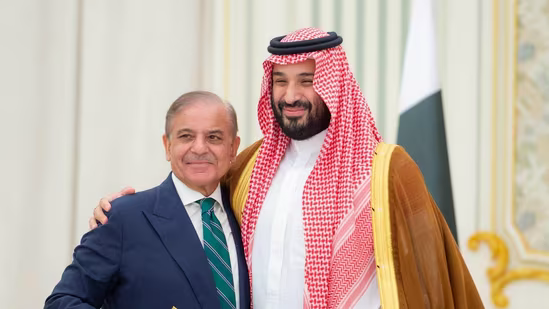
The reported expansion of the Saudi–Pakistan defence agreement to include Turkey has generated commentary about new blocs and emerging fault lines. In reality, the proposed alignment reveals less about collective strength and more about collective unease in a rapidly fragmenting strategic environment.
This alignment should be understood as a precautionary hedge born of strategic uncertainty. It reflects growing discomfort with the United States’ evolving global posture, its emphasis on the Western Hemisphere, selective engagement elsewhere and reliance on regional partners rather than direct intervention.
For the Middle East, this shift has two consequences. First, it injects uncertainty among long-standing U.S. security dependents about the depth and speed of American intervention. Second, it empowers Israel as Washington’s closest, most capable and politically influential regional partner, increasingly able to act autonomously, given the reduced regional leverage over escalation management.
Saudi Arabia’s search for diversified security hedges must be understood in this context. Riyadh is not replacing the U.S.; it is insuring against ambiguity. Pakistan sees an opportunity to monetise strategic symbolism, offering perceived deterrence and intra-Islamic solidarity amid economic distress. Turkey projects strategic autonomy, balancing NATO membership with influence outside Western-led security structures.
Crucially, this alignment is neither an anti-Israel bloc nor a credible coalition against Iran. None of the allies can confront Israel directly (at least in the short term in a symmetrical conflict), and each maintains varying degrees of coordination or accommodation with it, especially for the containment of Iran. SaudiArabia has shifted from escalation to risk management with Iran; Turkey maintains transactional competition with the Islamic Republic; Pakistan has little interest in an Iran-centric conflict. What unites them is not a shared enemy but a shared uncertainty in a region where U.S. intervention is no longer assured and Israel’s freedom of action is growing.
Another driver is the rise of radical Islamist influence in Europe. Turkey’s diaspora politics and ideological mobilisation alarm European states.
Pakistan has long used religious narratives strategically. Saudi Arabia, seeking autonomy, distances itself from transnational Islamist movements that threaten regime stability and economic modernisation.
This ideological tension exposes deeper fractures in the Islamic world, fractures that the new alliance does not resolve, but rather sharpens.
Nowhere are these contradictions clearer than in South Asia and Afghanistan. Pakistan is governed by a security establishment legitimised through a pseudo-clerical authority, a de facto Cleric–Field Marshal model, while across its western frontier stands a theocratic Emirate in Afghanistan.
Paradoxically, the Taliban 2.0-led Islamic Emirate is reaching out to India, the world’s largest democracy, with a Hindu majority and deep historical civilisational ties that extend to people-to-people connections. Yet, at the same time, the Taliban have re-established links with their original theological mentors in the Deobandi Ulema tradition, which emerged in mid- 19th-century British India to preserve Islamic teachings from Western influence. Today, their spiritual descendants in Afghanistan are exploring an engagement with India, signaling that they are pragmatically pivoting away from the proxy wars and radical ideology historically fostered under Pakistani guidance, wars that killed and displaced millions and destabilised the region.
These contradictions are mirrored elsewhere. The UAE opposes political Islam, seeing it as an existential threat, and it is increasingly in conflict with Turkey, Qatar and Saudi Arabia, because of widening divergences over Yemen’s regime, the energy policy, diplomacy and economics. That split undermines the formal, largely performative Gulf unity. Qatar’s continued patronage of Islamist platforms further deepens the fault lines.
From Beijing’s perspective, this Muslim alliance is met with cautious scepticism. China’s concern about the Uyghurs, who are ethnically and linguistically Turkic, makes it wary of transnational Islamist networks linked to Turkey or Pakistan. While Beijing values Gulf energy and strategic ties, it is unlikely to support an alliance that could embolden radical or separatist movements resonating with Uyghurs and Turkic populations in general, particularly those who have ideological linkages across borders.
Effective defence pacts require shared threat perception, congenial cultures and trust. None exist here. Saudi Arabia worries about Iran and domestic stability. Pakistan over-emphasizes an alleged threat from India for exporting violent ideological and sectarian narratives. Turkey aims at strategic-economic outreach and regional influence. The UAE, sees political Islam, not Israel or Iran, as the main threat. These respective priorities are structurally incompatible.
Escalation risks are asymmetric. Pakistan has existential stakes in its confrontation with India. Saudi Arabia worries about its regime’s legitimacy and its energy infrastructure. Turkey balances ambition with NATO discipline and economic vulnerability. The nuclear picture further complicates the picture: Pakistani weapons reassure on paper but alarm Riyadh and Ankara, neither of which wants entanglement in South Asian nuclear brinkmanship. Operational gaps, no integrated command, limited intelligence sharing and poor interoperability make the alliance militarily fragile.
Conclusion
In its full context, this proposed defence alignment is neither anti-Israel nor anti-Iran, nor does it represent a unified Islamic military alliance.
Instead, it exposes the internal contradictions of the Islamic world, between ideology and statecraft, militancy and modernisation, symbolism and strategy and between historical enmities and pragmatic outreach. Beijing’s cautious stance toward transnational Islamist influence further erodes any global credibility or cohesion this alliance might claim.
Its principal function is to reassurance and send a signal, not to deter or fight a war. Alliances built on anxiety and unresolved ideological fault lines rarely survive their first serious crisis. This one is unlikely to prove the opposite.
For India, the implications are significant. Outreach, even from hardline actors such as the Taliban. toward New Delhi underscores recognition that stability, legitimacy and development increasingly lie outside the logic of perpetual conflict. In that sense, this alignment says less about Islamic unity and far more about the enduring costs of ideological warfare, fractured strategic vision and the limits of alliances built on uncertainty.


Add comment