


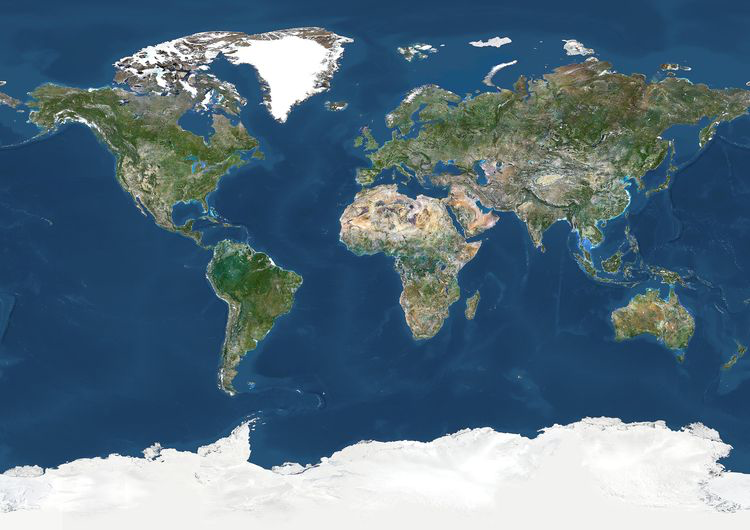
The contemporary international system is undergoing a profound transformation marked by the unmistakable return of geopolitics and a parallel trend of democratic backsliding across multiple regions. After a brief post–Cold War period in which economic globalisation, multilateral institutions, and normative convergence appeared to soften power politics, states have re-entered an era where strategic competition, national interest, and relative power once again dominate decision-making. This return of geopolitics is not a simple reversion to twentieth-century patterns of territorial rivalry; rather, it is a more complex form of competition that operates through economic leverage, technological dominance, narrative control, and institutional influence. At the same time, many democracies—both established and emerging—are experiencing a gradual erosion of liberal norms, institutional independence, and civic freedoms. These two phenomena are deeply interconnected, reinforcing each other in ways that reshape governance at home and behavior abroad.
Geopolitics has returned largely because the assumptions that once underpinned the liberal international order have weakened. Economic interdependence did not eliminate strategic rivalry; instead, it created new vulnerabilities that states now seek to exploit or defend against. Critical supply chains, financial systems, energy routes, digital infrastructure, and advanced technologies have become tools of influence and coercion. Trade policy is increasingly shaped by security considerations, sanctions have become a routine instrument of statecraft, and investment screening reflects fears of strategic dependency rather than purely economic risk. Technology has emerged as a central arena of competition, with artificial intelligence, semiconductors, cyber capabilities, space assets, and data governance treated as determinants of national power. In this environment, states view resilience and control over key nodes of globalization as essential to their geopolitical standing, leading to a more fragmented and contested global order.
As geopolitical rivalry intensifies, democratic backsliding has accelerated, often under the justification of security, stability, or national survival. Democratic erosion today rarely occurs through abrupt coups or the outright suspension of constitutions. Instead, it unfolds incrementally through legal reforms, administrative decisions, and political practices that weaken checks and balances while preserving a façade of electoral legitimacy. Executive power expands at the expense of legislatures and courts (not immune either to ideological bias and arbitrary authoritarian temptations), often through emergency laws, national security statutes, or prolonged states of exception. Independent institutions—such as election commissions, anti-corruption bodies, regulators, and public broadcasters—are brought under political influence through appointments, budgetary pressure, or structural reorganisation. The cumulative effect is a hollowing out of democratic substance even as formal procedures continue to operate.
The information environment plays a critical role in this process. In an age of digital media and constant connectivity, political narratives can be shaped, amplified, and manipulated at unprecedented speed and scale. Disinformation, selective leaks, and coordinated online campaigns blur the line between domestic politics and foreign interference, making democratic societies more vulnerable to polarisation and mistrust. Governments facing geopolitical pressure often respond by tightening control over media, regulating digital platforms intrusively, and framing dissent as a security threat. While such measures are justified as defences against external manipulation, they frequently weaken transparency and suppress legitimate debate, further contributing to democratic backsliding.
Geopolitics and democratic erosion bolster each other through a mutually reinforcing logic. External threats, whether real or perceived, provide political cover for the concentration of power and the curtailment of civil liberties. Leaders can invoke national security to delegitimise opposition, restrict protests, or sideline critics, portraying them as irresponsible or disloyal in a time of danger. In highly polarised societies, foreign policy becomes a domestic political weapon, with toughness toward external rivals used to signal strength and competence, while compromise is cast as weakness. Conversely, weakened democratic institutions reduce a state’s resilience to external influence, corruption, and strategic penetration, making it more vulnerable in geopolitical competition and hence more inclined to further securitise politics.
Economic factors deepen this cycle. Geopolitical tensions often produce sanctions, trade disruptions, inflationary pressures, and energy or food shocks that directly affect citizens’ livelihoods. Economic hardship erodes trust in democratic governance and creates fertile ground for populist narratives that promise order, protection, and decisive leadership at the expense of institutional restraint. In response to social unrest or declining legitimacy, governments may further centralise authority, limit accountability, and rely on coercive tools to maintain control. Over time, this dynamic transforms democracy from a system of negotiated governance into a more hierarchical and exclusionary model, even within formally democratic states.
Another important dimension is the shifting role of international norms and alliances. In a more competitive geopolitical environment, strategic interests often outweigh normative commitments. States may tolerate illiberal practices in allies if they serve broader security or economic goals, weakening external pressure for needed reform. This selective application of democratic standards undermines the credibility of liberal norms and reduces incentives for governments to uphold them domestically. As a result, democratic backsliding becomes normalised rather than exceptional, framed as a pragmatic adaptation to a harsher international environment.
The return of geopolitics today differs from earlier eras because domestic governance quality has become a core component of national power. Military capability and economic size remain important, but institutional credibility, social cohesion, and political legitimacy increasingly determine a state’s capacity to mobilise resources, sustain long-term strategies, and withstand external shocks. Democracies that erode their own institutions in the name of security may gain short-term control but often undermine the very foundations of resilience and innovation that geopolitical competition demands. Weak rule of law, politicized bureaucracies, and suppressed public debate tend to produce strategic blind spots, corruption, and policy inconsistency, all of which reduce a state’s effectiveness on the global stage.
Ultimately, the interaction of renewed geopolitics and democratic backsliding presents a central paradox of contemporary international politics. The pressures of rivalry push states toward centralisation, secrecy, and coercion, yet the demands of sustained competition in a complex, interconnected world require adaptability, trust, and institutional strength. Democracies face the challenge of protecting themselves from genuine external threats without sacrificing the norms and mechanisms that give them legitimacy and long-term stability. How states manage this tension will shape not only their internal political trajectories but also the character of the emerging global order. The future will likely belong not simply to the most powerful states, but to those capable of balancing security with openness, competition with accountability, and geopolitical ambition with democratic resilience.
About:- Rajan Kumar Mishra writes about the intersections of public policy, national security, and politics. He has a master’s degree in Political Science from Lalit Narayan Mithila University, Darbhanga. His writing delves into the complexities of governance, offering insightful analysis and perspectives on pressing societal issues. Rajan’s expertise lies in examining the intricacies of public policy formulation, national security challenges, and the ever-evolving political landscape. Through his compelling articles, he aims to engage readers in informed discussions and contribute to the advancement of knowledge in these critical areas.



Add comment