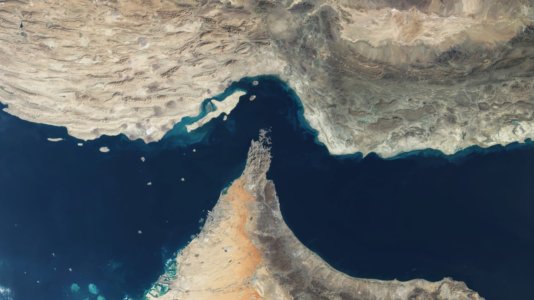
The author argues that the Strait of Hormuz crisis represents a shift from regional conflict to a global maritime chokepoint confrontation shaped by international law.
The author argues that the Taiwan Strait is another choke point in global trade and is crucial for India. Any disruptions can lead to massive delays and cost escalations for consumers and businesses in India.
As the world transitions towards clean energy, digitisation, and defence modernisation, critical minerals have become indispensable for 21st century economies.
India–EU relations today embody multipolarity as a pattern of behaviour, defined by selective coordination and strategic autonomy rather than formal alignment.
The author argues that the patronage extended to the Rohingya during the PDP-BJP coalition period exposed contradictions between professed secularism and ground-level political practices.
The author argues that while the brief Kedarnath Yatra season attracts an influx of economic activity, the region’s dependence on seasonal religious tourism results in a cyclical boom-and-bust pattern.
The author argues that the Trade and Economic Partnership Agreement (TEPA) marks a paradigm shift in India’s trade diplomacy, linking market access directly with binding investment commitments for the first time.