


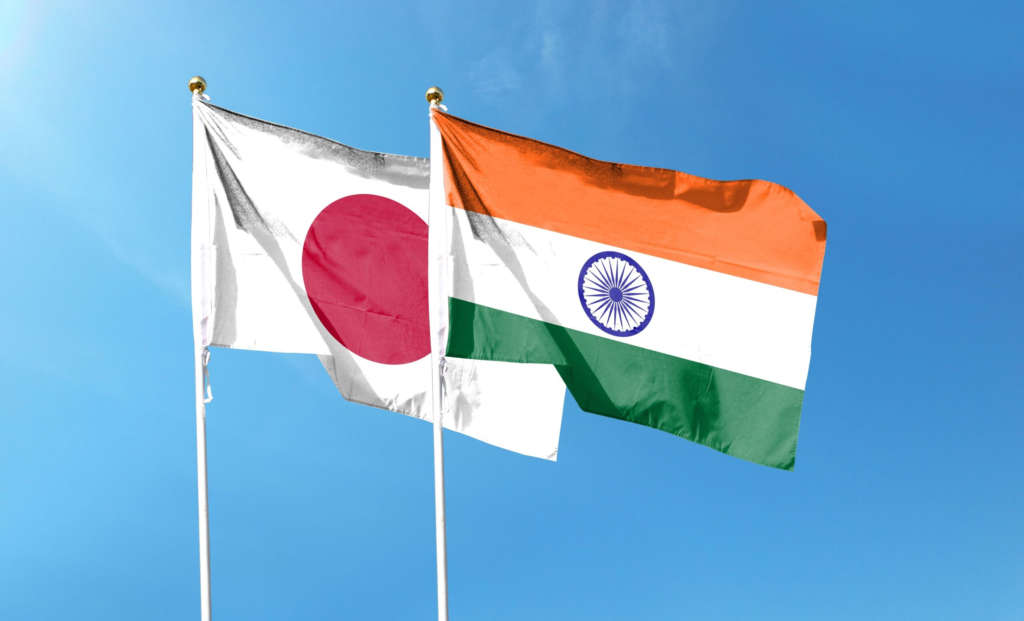
Japanese Prime Minister Sanae Takaichi’s recent visit to India in July came at a particularly consequential moment for the Indo-Pacific. The summit produced a wide-ranging set of outcomes spanning defence cooperation, economic security, artificial intelligence, energy resilience, supply chains, connectivity, and investment, reaffirming the breadth and maturity of the contemporary India-Japan partnership. Yet the visit’s significance extends beyond the agreements that were announced. It reflects the growing strategic importance of the India-Japan relationship at a time when the regional order is being increasingly contested.
The Indo-Pacific today is a more complex strategic land and seascape than it was a decade ago. China’s growing military and economic assertiveness continues to reshape regional security dynamics, while questions surrounding the future of the US engagement have prompted regional actors to reassess their strategic assumptions. The recent restoration of the US Pacific Command (USPACOM) nomenclature, alongside a more transactional approach to alliance management under the second Trump administration, has confirmed perceptions that Washington’s regional strategy is evolving. At the same time, although the Quad remains an important platform for cooperation, its political momentum has slowed compared with its rapid expansion during the previous decade.
Against this backdrop, the India-Japan partnership occupies a distinctive place. Over the past two decades, the two countries have steadily broadened cooperation across economic, political, technological, and security domains, anchored by a shared commitment to a free, open, and rules-based Indo-Pacific. What distinguishes the partnership today is not simply the breadth of this cooperation, but the increasingly important regional function that it performs. As geopolitical uncertainty deepens, India and Japan are two countries whose expanding interaction is helping strengthen the wider Indo-Pacific order.
Why India and Japan Are Natural Stabilising Partners
The growing importance of the India-Japan partnership stems not only from converging strategic interests but also from the complementarity of their respective assets. At a time when the Indo-Pacific countries require more resilience across domains ranging from maritime security and critical technologies to supply chains and infrastructure, India and Japan offer capabilities that are mutually reinforcing.
Japan remains one of the Indo-Pacific’s foremost sources of advanced technology, high-quality infrastructure, industrial expertise, and patient capital. Over several decades, it has supported India’s economic development through Official Development Assistance (ODA), infrastructure financing, industrial corridors, and manufacturing investments. Flagship projects such as the Mumbai-Ahmedabad High-Speed Rail corridor and the Delhi-Mumbai Industrial Corridor illustrate the scale of Japan’s long-term commitment to India’s growth.
India, meanwhile, brings a different but equally indispensable set of strengths. Its strategic location at the heart of the Indian Ocean gives it a central role in safeguarding some of the world’s busiest sea lines of communication, through which much of Japan’s trade and energy imports transit. Combined with its growing naval capabilities, manufacturing ambitions, a vast domestic market, and youthful workforce, India is an increasingly attractive partner for countries seeking to diversify production and strengthen supply chains. New Delhi’s Atmanirbhar Bharat vision answers Japan’s quest for trusted manufacturing and technology partners.
The two countries also have broadly compatible strategic outlooks. Both support a free, open, inclusive, and consensually rules-based Indo-Pacific community, founded on respect for international law, freedom of navigation, peaceful resolution of disputes, and ASEAN centrality. India advances these objectives through initiatives such as the Indo-Pacific Oceans’ Initiative (IPOI), while Japan has promoted its vision of a Free and Open Indo-Pacific (FOIP). These complementary approaches provide a durable foundation for cooperation and have enabled the partnership to expand beyond shared principles.
From Shared Vision to Shared Capabilities
If the defining feature of the India-Japan partnership over the past two decades was the gradual convergence of strategic interests, its importance today lies in the translation of that convergence into practical cooperation. Prime Minister Takaichi’s visit illustrated this evolution, with the summit producing outcomes in the domains of defence, economic security, technology, energy, and connectivity.
Nowhere is this more evident than in defence cooperation. For many years, security ties consisted of strategic dialogue, maritime exercises, and military exchanges. The partnership is now moving towards co-development and co-production. The agreement on the UNICORN (Unified Complex Radio Antenna) project, the first defence co-development initiative between the two countries, symbolises this shift. Rather than remaining in a conventional buyer-seller relationship, both states are beginning to jointly develop ways and means for technological self-reliance that strengthen their respective defence-industrial bases. Expanded cooperation in maritime domain awareness, unmanned systems development, and naval maintenance and logistics further reflects this emphasis on practical capability.
A similar evolution is visible in the economic domain. Japan’s contribution to India’s development has long been synonymous with ODA, infrastructure finance, and manufacturing investment. These remain important, but the partnership is increasingly extending into areas located at the intersection of economics and national security. The adoption of the Joint Declaration on Economic Security during the summit reflects a shared recognition that supply chains, advanced technologies, critical minerals, semiconductors, telecommunications, and clean energy have become strategic assets as much as economic ones.
Technology cooperation further illustrates this broadening agenda. Initiatives in artificial intelligence, semiconductor manufacturing, digital infrastructure, and research and innovation signal a shift from technology transfer to technology co-creation. Joint research, private-sector partnerships, and collaboration in emerging technologies can enhance the technological competitiveness of the two nations while reducing excessive dependence on concentrated global technology supply chains.
Taken together, defence co-development, economic security, trusted supply chains, critical technologies, resilient infrastructure, and industrial collaboration are becoming mutually reinforcing elements of a broader strategic agenda. They hone the ability of both countries to anticipate and respond to geopolitical disruptions while contributing to the resilience of the wider regional order.
From Supporting the Indo-Pacific to Sustaining It
The significance of the India-Japan partnership ultimately lies in the broader regional function that it is increasingly performing. Together, the two countries are helping build a more resilient Indo-Pacific order, better equipped to withstand geopolitical shocks, economic coercion, and strategic uncertainty.
This does not mean that India and Japan can or should assume the role of the United States or existing regional institutions. The United States remains, so far, a pivotal security actor in the region, while platforms such as the Quad, RCEP, BIMSTEC, and ASEAN continue to play important roles. Rather, the India-Japan partnership adds another layer of support to the regional architecture by generating practical cooperation across the security, technology, connectivity, and economic domains.
By bolstering maritime security, diversifying critical supply chains, co-developing defence technologies, advancing trusted digital ecosystems, and investing in resilient connectivity, the two countries are helping create conditions under which the Indo-Pacific can remain relatively stable during periods of heightened geopolitical uncertainty. Their partnership is therefore no longer simply contributing to the Indo-Pacific balance of power; it is increasingly helping to protect it.
Conclusion
Prime Minister Sanae Takaichi’s visit to India reaffirmed what has become evident over the past decade: the India-Japan relationship has matured into one of the Indo-Pacific’s most substantive strategic partnerships. The summit’s agreements in the fields of defence, economic security, technology, energy, and connectivity demonstrate that the partnership is steadily adapting to the strategic demands of a changing regional order.
As the Indo-Pacific enters an era of persistent uncertainty, regional stability will increasingly depend on trusted partners capable of providing practical responses to shared challenges. India and Japan are well placed to do so, drawing upon their complementary strengths, shared strategic vision, and growing capacity for joint action. The future of the Indo-Pacific will be shaped not only by the policies of its great powers but also by the ability of the enduring partnership between India and Japan to remain dynamic, resilient, and mutually beneficial.




Add comment