


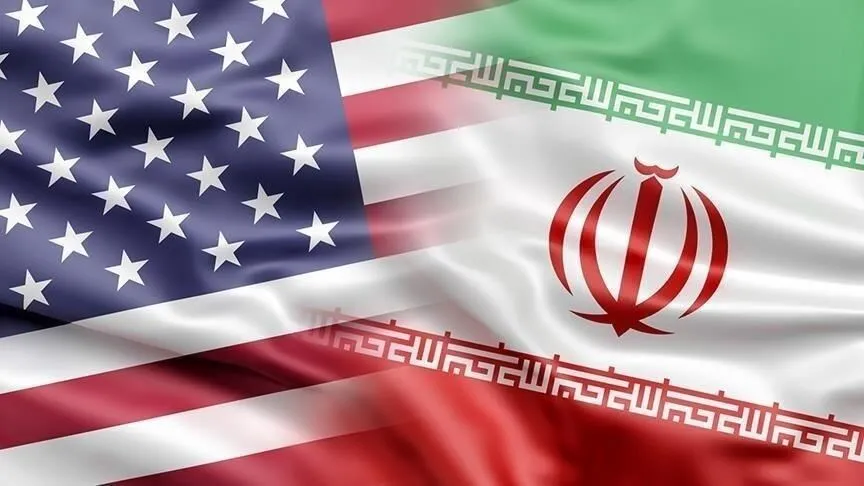
The first thirty-nine days of US airstrikes accomplished what decades of diplomacy and persuasion failed to do. For the first time since the 1979 Islamic Revolution. Stating that Iran could face a civilisational catastrophe if it did not surrender, the United States was exceptionally vocal in warning the regime of severe consequences for executing the intellectuals and activists who had led a popular uprising with full American and Israeli support. This was the first time the Iranian state’s military and security apparatus was met with an overwhelmingly powerful foe.
Recognising that Iran’s air and naval capabilities were severely crippled, three leading Islamic nations — Saudi Arabia, Pakistan, and Turkey, all with long histories of positive relations with the U.S — urgently sought ways to halt the escalation of hostilities. Political observers speculated that an alliance akin to an “Islamic NATO” might emerge. However, since direct armed intervention on their part was off-the-table, these nations chose a diplomatic approach. They agreed that Pakistan should take the lead. As the only Islamic nation possessing nuclear weapons and the one with the strongest ties to armed proxies in the region, Pakistan was uniquely positioned to act as the primary mediator. The UAE was excluded from the group owing to diverging geopolitical interests and growing strategic competition with Saudi Arabia.
The United States aimed to dismantle Iran’s entrenched network of proxy forces — a core element of its regional power projection — by launching a surprise attack that involved assassinating the Supreme Leader and his top aides in the midst of ongoing negociations. However, while this campaign disrupted the religious and political hierarchy, the structural foundation of the velayat and the battle-hardened, indoctrinated Islamic Revolutionary Guard Corps (IRGC) fundamentally survived intact.
In the following negociations, Iran secured tremendous financial concessions, effectively using the Hormuz chokehold to negotiate its economic rehabilitation. Through the deal, Tehran gains the release of frozen billions, avoids capitulation on all its regional proxy activities in the preliminary MoU, and secures the release a massive capital influx to rebuild its fragile economy.
During the Iran conflict, Donald Trump famously declared Iran a civilisational threat, arguing that such threats cannot be managed but must be eliminated. However, the institution he tried to destroy remains intact. If anything, it may have grown stronger by awakening deep-seated civilisational pride among the Iranian people.
President Trump’s recent embrace of Pakistan — a state long criticised as a hub for international terrorism — and his favourable treatment of its army chief appear not to be driven by conventional political strategy. Instead, these moves suggest a quid pro quo aimed at securing a multi-billion-dollar cryptocurrency agreement. This partnership, which integrates the Trump family-linked stablecoin into Pakistan’s financial system, has raised ethical questions about the intersection of U.S. foreign policy and the President’s personal business ventures.
The draft of the peace agreement was drafted in Islamabad. Many call it a surrender document. In the words of Gregg Roman, the celebrated American media person, “it is surrender, executed by the victor, on the terms of the vanquished. Count what Iran surrenders and you will count roughly to zero.”
The current agreement seeks to reaffirm that Iran will not develop a nuclear weapon. However, this raises a critical question: did Iran not offer identical assurances for over two decades, while covertly constructing nuclear facilities beneath mountains? On top of that, Iran agrees to dilute its nuclear stockpile locally using the same inspectors who were blocked and misled in the past. Does this arrangement actually give us confidence that the alleged nuclear weapons program is crippled?
The U.S. and Iran are still negotiating the operational details of a draft agreement that immediately issued Treasury waivers to allow Iranian oil to flow. Critics warn that this pumps hard currency directly into the regime’s coffers before preliminary terms are verified. There is widespread concern that Tehran will funnel these cash reserves to the Islamic Revolutionary Guard Corps (IRGC).
The Islamic Revolutionary Guard Corps (IRGC) is the elite and most heavily armed branch of the Iranian Armed Forces, intertwining military operations with vast political and economic influence. As one of the best-funded state security organisations globally, it serves as the primary engine for projecting Iran’s geopolitical power across the Middle East. Often characterised by Western analysts as a nexus of militant ideology and state power, the IRGC has traditionally opposed direct talks with the United States. However, recent diplomatic frameworks and proposed international reconstruction funds now position the organisation to be a major beneficiary of renewed global investment and sanctions relief.
Los Angeles Times Washington Bureau Chief Michael Wilner summarised this precise strategic contradiction in his June 18th analysis, highlighting the core failure of the current administration’s diplomatic strategy: “By contrast, Trump’s agreement commits the United States to pursuing economic relief for Iran while providing no clarity about the future of Iran’s nuclear program — the very issue Trump cited as the rationale for launching the war.
The United States’ failure in Iran was not only caused by the strength of Iran’s military resistance, but also by the Trump administration’s inability to accurately assess the deep nationalism of the Iranian people. In the early stages of the uprising, as the Islamic Revolutionary Guard Corps (IRGC) brutally suppressed the demonstrations, theocratic think tanks rapidly shifted the narrative to reframe the unrest as an anti-American movement. Consequently, protesters who had just torn down the regime’s flag and hoisted the pre-revolutionary monarchical banner overnight pivoted their stance, aligning with the regime against foreign pressure.
The deal erodes the security agreement Israel has had with the United States for so many decades, and weakens the grip that Zionist lobbies have on American policy-making. It dismisses the existential challenges to the Israeli nation raised by Iran and its allies. The deal will change the entire military and strategic scenario of the Middle East. Israel will have to meet threats on several fronts, and many more formulations might emerge to put a tight leash on the Jewish State.
Finally, the Trump administration has sufficiently demonstrated its ineptitude in securing its allied nations in the Gulf area. Iran’s bold and unabashed air attacks on smaller Gulf countries like the UAE, Bahrain, Qatar and parts of Iraq have convinced these states that the US is incapable of protecting them against Iranian aggression. They will look for other options, and the Islamic NATO concept is one on the table now.
“The IRGC is aware that the United States has not achieved victory in any conflict since World War II. It recognises how the United States operates primarily within non-military domains. As this conflict prolongs, the United States becomes increasingly weakened and may become desperate to maintain its power and status as a global superpower. History does not repeat itself exactly, but it often rhymes; numerous great empires have experienced similar cycles of rise and fall, and the United States appears to be heading toward a comparable fate.” The quote is from The Australian Post of 26 April.
_____________________________
The writer is the former Director of the Centre of Central Asian Studies, Kashmir University, India. He can be contacted at knp627@gmil.com

Add comment