


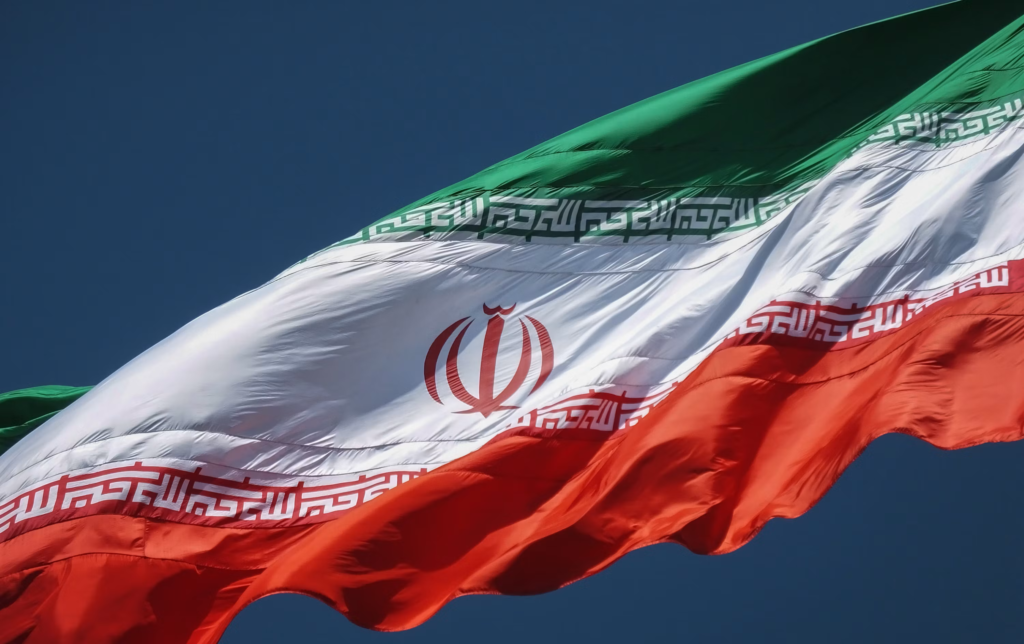
No wise person can ignore what Iran faces in world politics today. As one of the world’s oldest civilisations, Iran deserves respect, not drones and missiles. At a United Nations building in New York, a famous poem by the 13th-century Iranian poet Sa’adi is carved in stone: “The children of Adam are limbs of each other, having been created from one life.” This shows that Iran taught human love and unity over eight hundred years ago.
Something has gone wrong; some aberrations need to be highlighted and corrected. Since its inception in the seventh century, the historical and theological framework of Shia Islam has been deeply shaped by narratives of injustice and martyrdom. In the modern geopolitical context, the Iranian state has channelled this ideological focus towards opposing the State of Israel. This strategy, reinforced by scriptural themes of divine justice and the ultimate triumph of Islam, serves to unify domestic support and project influence across the broader Middle East.
This historical backdrop fostered a deep-seated belief in the piety and inevitability of martyrdom. According to this worldview, martyrs are promised an eternal paradise flowing with milk and honey, accompanied by seventy-two heavenly companions (houris). Driven by this vision, devoted warriors hold the unwavering conviction that Islam, as the final and supreme revelation of Allah, is destined to prevail worldwide.
Historically, Shia jurisconsults have often resisted religious reform, with prominent clerics gaining influence by enforcing theological conservatism. While local clergy and mullahs maintained strong rural constituencies and participated in national politics, they traditionally retreated to their mosques and seminaries once domestic crises were resolved. This dynamic changed drastically during the 1979 Islamic Revolution.
Led by Ayatollah Ruhollah Khomeini, the senior clergy outmanoeuvred secular liberals and other revolutionary factions to seize control. Contrary to the broad expectations of ordinary Iranians who participated in the revolution, the newly established regime instituted a strict theocracy that concentrated absolute power in the hands of a single, supreme religious leader.
Some scholars argue that Iran’s deep-rooted pre-Islamic culture fundamentally shaped the nation’sadoption of Islam, producing a unique synthesis of Persian heritage and Islamic traditions rather than a complete cultural erasure. Following the 1979 Islamic Revolution, the new clerical leadership distrusted the remnants of the Shah’s traditional military. To protect the theocracy, the regime established the Islamic Revolutionary Guard Corps (IRGC) as a parallel institution to the regular army (Artesh). The IRGC was strictly indoctrinated in conservative Shia ideology, emphasising absolute loyalty to the Supreme Leader and the spiritual rewards of martyrdom, and it served as the regime’s ideological shield.
The IRGC did not entirely replace the traditional Iranian military; rather, it was established alongside it. Iran currently maintains a dual-military system: the regular army (Artesh) handles conventional defence, while the IRGC handles internal security, asymmetric warfare, and the protection of the revolution. The core friction between the Iranian clergy and the United States stems less from historical grievances — such as the 1953 overthrow of Mohammad Mosaddegh or U.S. ties to Israel — and more from ideological self-preservation. The ruling establishment is primarily wary of U.S. cultural and political influence. They fear that American ideals of democracy, egalitarianism, and a free press could permeate Iranian society and undermine their clerical authority.
Iran is not alone in facing this crisis; Pakistan suffers from the same affliction. In both countries, authoritarian leaders and entrenched establishments view democratic reform and individual freedoms as existential threats to their grip on power. To protect this control, both utilise ideologically driven, state-sponsored paramilitaries. The Iranian regime continues to fight and issue threats — despite severe degradation of its conventional forces by US and allied strikes — by relying on an ideological survival strategy. This endurance is driven by propaganda, regional ambitions, and deterrence via proxies rather than an immediate nuclear capability.
Iran’s use of asymmetrical missile and drone strikes against U.S. forces stationed in neighbouring Arab nations reflects a strategic pattern of intimidating weaker littoral states. Tehran’s reluctance to strike nuclear-armed Pakistan, which reportedly hosts covert U.S. installations, underscores a pragmatic deterrence calculus: Iran avoids direct engagement with adversaries capable of a devastating symmetrical response.
The Iranian nation must chart a rational, acceptable path forward, recognising that politics and faith are not mutually exclusive. Official hostility towards any nation violates the principles of international law and is widely condemned by the global community. While the historical origins of Israel cannot be undone, sponsoring armed proxies to destabilise neighbouring countries disqualifies Iran from being regarded as a peace-loving state. Iran’s pursuit of nuclear capabilities and its threats to militarise the Strait of Hormuz will result in devastating international isolation rather than geopolitical leverage. Tehran must abandon its aggressive isolationist stance and instead embrace responsible diplomacy to secure a prosperous and historically significant future.

Add comment