The SCO’s formation in 2001 was catalysed by the shared perception of “Three Evils”—terrorism, separatism and religious extremism—as the primary threats to regional stability.
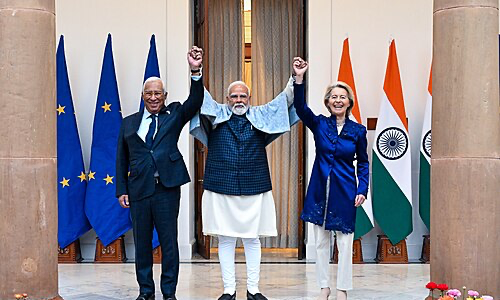
The author argues that the Trade and Economic Partnership Agreement (TEPA) marks a paradigm shift in India’s trade diplomacy, linking market access directly with binding investment commitments for the first time.
The author argues that India’s trajectory affirms that sustained national progress is forged not through compliance with global powers, but through strategic resilience, indigenous innovation, and pragmatic diplomacy.
The rise of Pakistan’s permanent Ruling Elite can also be attributed to the assassination of Liaquat Ali, which created a power vacuum, leaving non-democratic forces, primarily the Army and the bureaucracy, to assert control.
Pakistan’s repeated interference in Afghanistan’s internal affairs has brought destruction and misery, fueling nationalist and anti-Pakistan sentiments among Afghans and the Taliban 2.0.