


In March 2025, India announced the MAHASAGAR (Mutual and Holistic Advancement for Security and Growth Across Regions) vision, which seeks to promote trade, capacity-building, technological cooperation, development and mutual security across the Indian Ocean Region and the wider Global South (Ministry of External Affairs [MEA], 2025). Among the IOR’s littoral states, Sri Lanka holds a prominent position and has been accorded a central place in India’s Neighbourhood First policy and the MAHASAGAR vision. This policy vision is not achieved in a vacuum; rather, it is entwined with other factors, such as the two nations’ cultural similarities.
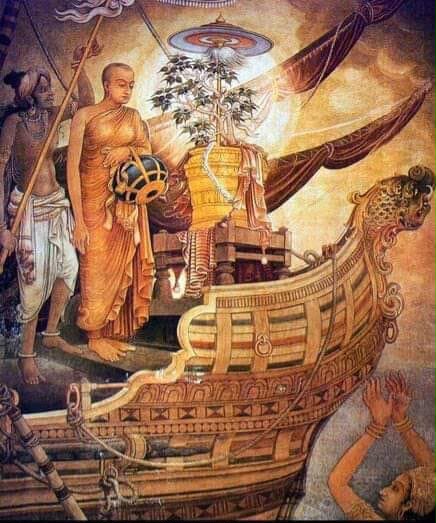
The relationship between the two countries is officially described as spanning more than 2,500 years and is founded on historical, religious, cultural and linguistic interactions (High Commission of India, Colombo, 2026). One of the best-known narratives associated with these connections appears in the Mahāvamsa, a widely celebrated chronicle in Sri Lanka that traces Prince Vijaya’s ancestry to the kingdoms of Vanga and Kalinga and recounts his sea voyage from the Indian subcontinent to Lanka, where he established the settlement of Tambapanni. The narrative subsequently presents Vijaya as the founding figure of Sinhala civilisation (Geiger, 1912, Chapters 6–7). However, the Vijaya account should not be understood only as a mytho-historical origin narrative of a particular historical migration or maritime route. The Mahāvamsa was compiled around the fifth century CE, several centuries after the events it describes, and its narrative reflects the religious, political and symbolic concerns of its own period (Strathern, 2014).
Nevertheless, chronicles and folk traditions preserve cultural memory and reinforce a sense of shared ancestry and brotherhood between the two countries.
In this context, cultural diplomacy serves as a unique conduit for dialogue, drawing on these memories to promote mutual understanding and build trust between societies. Building on the notion of “soft power”, coined in the 1980s by Joseph Nye, Milton Cummings proposed a definition of cultural diplomacy as the “exchange of ideas, information, art, language and other aspects of culture among nations and peoples in order to foster mutual understanding”. (Cull, 2008; UNESCO, 2022). Therefore, this variant of diplomacy plays a bigger role in improving bilateral relations between India and Sri Lanka. The story of Vijaya’s voyage highlights the maritime linkages that have remained vital to the two nations since ancient times and continue to provide a cultural foundation for their contemporary partnership.
Cultural closeness between India and Sri Lanka extends beyond the Vijaya narrative. Many factors explain the close link between the two countries, and Buddhism is the strongest foundation of the relationship. The transmission of the teachings of Gautam Buddha to Sri Lanka during the reign of Emperor Ashoka, traditionally associated with Arhat Mahinda and Theri Sanghamitta in the third century BCE, made them torch-bearers of enduring religious and institutional connections between the two regions. The Bodhi tree at Anuradhapura, Buddhist monastic traditions, Pali literature, and pilgrimage to Bodh Gaya, Sarnath and Kushinagar continue to bind the two societies.
Recent developments indicate that these civilisational connections are being consciously integrated into contemporary diplomacy. This is evident in the exposition of the sacred Devnimori Relics of Lord Buddha at the Gangaramaya Temple in Colombo from 4 to 11 February 2026. The relics were brought from Gujarat with state honours, displayed outside India for the first time, and reportedly attracted more than one million devotees. The exposition followed an announcement made during Prime Minister Narendra Modi’s visit to Sri Lanka in April 2025 and coincided with Sri Lanka’s Independence Day. Its significance, therefore, went beyond a religious ceremony. By facilitating public access to a sacred object revered by Sri Lankan Buddhists, India used its Buddhist heritage to foster direct engagement with the Sri Lankan public and to reinforce the shared spiritual identity of the two countries (High Commission of India, Colombo, 2026a).
Shared culture should not be an alternative to resolving political and strategic differences in the region. India and Sri Lanka continue to face difficult questions regarding fisheries, maritime boundaries, the Tamil issue, and the involvement of external powers in the Indian Ocean. Addressing these regional problems requires rigorous dialogue from both sides, while safeguarding each nation’s interests. Hence, cultural familiarity does not automatically resolve these disagreements; rather, it creates a social foundation upon which political dialogue can be sustained. The present relationship therefore reflects continuity as well as adaptation: ancient narratives provide historical memory, while relics, temple restoration, cultural centres, scholarships, pilgrimages and ferry services convert that memory into contemporary cooperation. India and Sri Lanka are consequently connected not merely by geographical proximity, but through a dense network of religious traditions, languages, communities and maritime experiences that continues to shape their bilateral relationship.
(This article is part of the ICSSR project titled, ‘Kalinga–Lanka: A Study of Historical Networks and Dynamics of Cultural Diplomacy.’)
References
Cull, N. J. (2008). Public diplomacy: Taxonomies and histories. The ANNALS of the American Academy of Political and Social Science, 616(1), 31–54. https://doi.org/10.1177/0002716207311952
Geiger, W. (Trans.). (1912). The Mahāvamsa or the Great Chronicle of Ceylon (M. H. Bode, assistance). Oxford University Press for the Pali Text Society. Digitised edition
High Commission of India, Colombo. (2026). India–Sri Lanka bilateral relations. https://www.hcicolombo.gov.in/page/india-sri-lanka-bilateral-relations/
Ministry of External Affairs, Government of India. (2025, March 12). English translation of the press statement by Prime Minister during the India–Mauritius joint press statement. https://www.mea.gov.in/Speeches-Statements.htm?dtl%2F39157
Strathern, A. (2014). Vijaya and Romulus: Interpreting the origin myths of Sri Lanka and Rome. Journal of the Royal Asiatic Society, 24(1), 51–73. https://doi.org/10.1017/S1356186313000527
UNESCO. (2022, January 27). From standing out to reaching out: Cultural diplomacy for sustainable development. https://www.unesco.org/en/articles/cutting-edge-standing-out-reaching-out-cultural-diplomacy-sustainable-development
High Commission of India, Colombo. (2026a, February 4). Exposition of the Holy Devnimori Relics. https://www.hcicolombo.gov.in/section/press-releases/exposition-of-the-holy-devnimori-relics2/

Add comment