


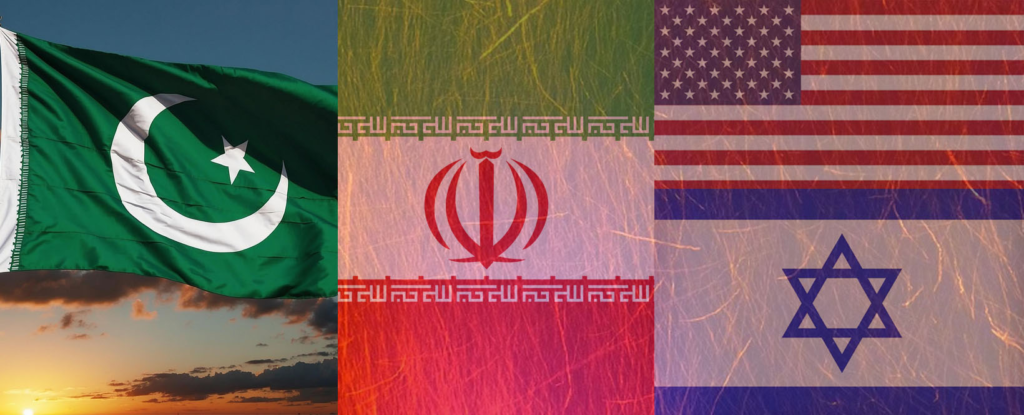
Pakistan’s willingness to broker a deal between Iran and the US was nothing short of a surprise to international political punditry. A pigmy on the trot between two giants was comic if not bizarre.
President Trump, as unpredictable as always, said that the US’s messages were being passed to Iran, and Iranian responses were relayed to Washington through the same channel. Maybe, upholding the axiom ” to set a thief to catch a thief,” President Trump might have thought for a while that one terrorist state would be ideologically in sync with handling a ‘radical’ state.
Despite giving unmerited importance to the Pakistani Prime Minister, the President said he had handed over a fifteen-point proposal to Iran as the basis on which talks could be held. Islamabad said that its public peace effort followed weeks of quiet diplomacy. Nothing beyond that was disclosed officially.
But Iranian official circles repudiated both Trump and Pakistan by saying that Iran had not been exchanging any messages with the US. It, however, revealed that it had offered a 5-point draft for holding talks with the US. The intriguing thing is that if Iran’s statement that it is not exchanging any messages is true, then how come it presented a 5-point draft to Pakistan to be delivered to Washington?
Before the commencement of the meeting to which Pakistan invited the foreign ministers of Saudi Arabia, Turkey, and Egypt for a quadrilateral summit/peace dialogue aimed at mediating the ongoing conflict between Iran and the United States, Pakistani foreign minister Ishaque Dar visited Beijing at the invitation of the Chinese foreign ministry chief. The inference could be that China had prompted Islamabad to take the initiative. China has huge investments in Iranian oil resources and it has a stake in Gulf stability, particularly when Iran partly blocks the Strait of Hormuz.
In a report, The Wall Street Journal said that Tehran had formally informed mediators that it would not attend proposed talks with American officials in Islamabad. Iranian officials also rejected Washington’s conditions outright, calling them unacceptable. “The refusal marks a significant setback for Islamabad, which had positioned itself as a neutral facilitator capable of bringing both sides to the table.
Why Pak mediation failed
Pakistan-led effort to broker peace has failed. Iranian officials rejected Washington’s conditions outright, calling them unacceptable. Tehran’s refusal was a setback for Pakistan. Pakistan aspired to establish its neutral status, but that did not happen. Iran had offered its 5-point negotiation formula, which the Americans were not prepared to accept. It means that Pakistan’s claim that it had spent weeks in behind-the-scenes talks preparatory to open negotiations was misleading.
A more dispassionate analysis of this situation will show that Iran, in an afterthought understanding, became conscious of the fact that Pakistan’s claim of neutrality was a hoax. Iran knows that Pakistan is a client state of the US. More recently, in the ongoing war, Pakistan was reported to have allowed American jets to refuel or take off on its soil. This has been Tehran’s lurking suspicion.
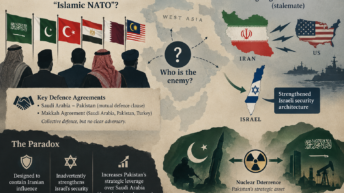
It is notable that after the failure of the talks initiated by Pakistan, the government in Islamabad felt desperate. The defence minister of Pakistan issued a direct warning to Tehran that if it bombarded Saudi installations, Pakistan would jump into the fray on the side of the Saudis because Pakistan has a defence agreement with the Saudi Kingdom.
President Trump also escalated his rhetoric after the failure of the talks. It reflected a widening gap in expectations. He threatened to bomb Iran “back to the Stone Age” if did not agree to US terms. Even Pakistani officials acknowledged the impasse. Foreign Office spokesperson Tahir Andrabi admitted that “obstacles” were hindering progress, though he stopped short of detailing them.
By way of face-saving, Islamabad insists that it will continue efforts to create conditions for “meaningful negotiations.” If Pakistan sincerely meant to achieve lasting detente, then its defence minister should not have issued the warning to Tehran. His statement is in itself an indirect affirmation that Pakistan is tilted toward the US, making his claim of neutrality highly doubtful.
Eating humble pie
Pakistan’s Prime Minister Shahbaz Sharif is reported to have recently called Iranian President Mas’ud Pezeshkian. On the one hand, Pakistan is issuing threats to Iran to fight shoulder to shoulder with Saudi Arabia if Iran targets Saudi assets, and on the other hand, the Pakistani Prime Minister is talking about rebuilding trust with Iran.
Pakistan’s position has become more precarious owing to Iran’s attack on American assets in Gulf countries. Airports, oil refineries and critical structures in some of these Gulf states have been targeted. Pakistan, a Sunni stronghold in the region, is on the horns of a dilemma as to how it should forge a policy that would define its stand in the ongoing war. From the grapevine, one hears it that Turkiye and Egypt, too, were unhappy with Pakistan messing up things and finally letting them down.



Add comment