


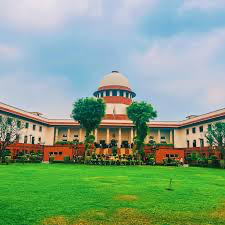
It would be a pity if the Supreme Court merely levels some of the egregious provisions of the University Grants Commission (Promotion of Equity in Higher Education Institutions) Regulations 2026, leaving scope for all groups to file specious complaints against each other and vitiate the atmosphere of learning in the highest academic bodies. Chief Justice of India, Surya Kant, expressed astonishment at the notification, “You have spoken about Separate hostels? For God’s sake.”
This is an opportune moment to recognise some serious imbalances in the reservation pie that have been agitating the middle class (so-called upper castes) since the Mandal Commission added 27 per cent reservations for the Other Backward Classes in 1990. Creeping reservations have since steadily eroded the space for the general castes, and harsh, easy-to-abuse laws for the protection of the very sections that dominate the quota pie have added salt to open wounds. The UGC Regulations 2026 were the last straw that broke the camel’s back, triggering widespread protests and concerns that reached the portals of the Apex Court.
Mandal Commission and Dominant Castes
The Mandal Commission, set up in 1979 to identify socially and educationally backward classes, included eminent sociologists such as M.N. Srinivas (as chairman), Yogendra Singh, and B.K. Roy Burman. They dissociated from the commission’s final recommendations because of its focus on Caste as the basis for identification, ignoring larger social, economic, and occupational factors, and thus perpetuating caste divides. The sole formal dissent was made by the Scheduled Castes representative L.R. Naik, who wanted to split the OBC quota in favour of the most marginalised subgroups (an issue that has since found political favour).
What rankled most when Prime Minister V.P. Singh accepted the Mandal Commission report on August 7, 1990, without any public discussion, was the discovery of Dominant Castes in the OBC list that gave 27% reservation in central government jobs and public sector undertakings. This was clearly the handiwork of the political members on the Commission, and triggered widespread protests. OBC reservations have since crept into every sphere of life, on the basis of the same unscientifically prepared list.
The phenomenon of Dominant Castes was first observed by M.N. Srinivas in his ethnographic study of Rampura village (Karnataka, 1959). It confirmed that the Varna status of Brahmins varies from the grassroots reality and that Castes with land or other resources dominate the village or region with their superior economic and political power. They patronise the Brahmins for ritual services.
The Mandal Commission included dominant castes such as Yadavs (Ahirs, Gwala) and Koeris (Kushwaha, Shakya, Maurya) in UP and Bihar; Lodhs (Lodhi/Lodha) in UP and Madhya Pradesh; Jats (Rajasthan); Vokkaligas (Karnataka) and Kunbis/Marathas (Maharashtra). They cornered the lion’s share of benefits owing to better access to education, wealth, and political power at the local level. This explains why castes such as the Patels in Gujarat and Marathas in Maharashtra are demanding inclusion in the OBC list.
On January 29, 2026, the Supreme Court stayed the UGC Equity Regulations 2026, observing that some of the clauses appear to promote casteism. It ruled that till the next hearing on March 19, 2026, the 2012 regulations will remain in effect. The Court took action on the basis of three PILs filed against the regulations, viz., Vineet Jindal (W.P.(C) No. 109/2026) that challenged Regulation 3(1)(c) for promoting discrimination against general classes; Mritunjay Tiwari (W.P.(C) No. 101/2026) that argued that the Regulations are arbitrary and violate Article 14; and Rahul Dewan and Ors. (W.P.(C) No. 108/2026) that contended that the rules discriminate against general categories.
Former Uttar Pradesh Chief Minister and Bahujan Samaj Party leader Mayawati was among the first to welcome the Supreme Court’s decision. In a statement on X she observed, “Whereas in the country, an atmosphere of social tension etc. in this matter would not have arisen at all if the UGC had taken all parties into confidence before implementing the new rules and had also given appropriate representation to the upper-caste society in the investigation committee etc. under the principles of natural justice.”
Divisive Regulations
The UGC Regulations are deplorable because, far from improving the quality of education, they have hatched a policy of dividing students on each campus where the rules will be applied. Little wonder that its promoters, such as former UGC chairman Sukhdev Thorat and senior advocate Indira Jaising, are lamenting that it does not cover some elite institutions of higher learning.
The UGC Regulations assume a fake narrative of “rampant caste-discrimination on campuses” and stretch the definition of “Discrimination” to embrace any “implicit” act, even an action without “intent”, if someone feels it is discriminatory. The recent instance of a policewoman weeping on social media because a minister had made a Republic Day speech without mentioning an iconic leader is illustrative in this regard.
Over the past five years, caste-based complaints have risen 118 per cent (173 > 182 > 186 > 241 > 378) and the number of SC/ST/OBC students has increased from 43.2 per cent to 60.8 per cent, while the General category students (including EWS) have declined from 56.8 per cent to 39.2 per cent (All India Survey on Higher Education 2022-23, Union Ministry of Education). The increase covers government and private institutions, and the SC/ST/OBC students could constitute over two-thirds of total higher education enrolment by 2027-28.
In the light of this stunning reality, there is a legitimate basis to scrutinise the “educationally backward” category; “socially backward” is too vague to be quantified. The categorisation of Intermediate Castes as ‘Backward Classes’ was a British invention in Madras Province, to disempower the Brahmin community. This was found politically useful for electoral purposes in independent India.
The impugned Regulations presume that only SC, ST, and OBC are possible victims of caste discrimination, and that the General Category students or teachers are “oppressors”. There is no burden of proof on those filing a complaint, and no punishment for false complaints; the accused are “guilty until proven innocent”. Worse, so-called civil society members, NGOs (and their agendas), and police are made a permanent feature on campuses, vitiating the atmosphere completely.
The General Category’s rage boiled over this time because in 2015, the SC/ST Atrocities Act was expanded, and the number of “crimes” increased from 22 to 47. Most additions were so vague and absurd that ordinary social, academic, or professional interactions could be turned into criminal cases. In 2016, a female assistant professor Deepshikha filed cases under SC/ST Act against three senior professors at Allahabad University. In 2024, the Allahabad High Court ruled that the cases were false. When the UGC Regulations excluded General Category students from the right to file complaints, they feared its weaponisation to destroy careers.
A member of the Kapu community, a dominant caste in Andhra Pradesh along with the Kamma, Reddy and Velama, explained that two Kapu sub-castes – Toorpu Kapu in Uttarandhra and Munnuru Kapu in Telangana are classified as OBC. The Telangana Munnuru Kapus are quite well off. Under the impugned Regulations, Kapus are Oppressors in Coastal Andhra, but Oppressed in Telangana!
Supreme Court case
The story of the regulations is perplexing. In 2019, the mothers of Rohith Vemula and Payal Tadvi, two students who died by suicide after alleged caste discrimination, filed a PIL demanding the enforcement of existing anti-discrimination rules. Senior Advocate Indira Jaising, who represented them, sought implementation of a 2012 framework for the creation of Equal Opportunity Cells, real monitoring, and integration with accreditation bodies.
In January 2025, Justices Surya Kant and Ujjal Bhuyan demanded action on the petition, and the UGC responded with a balanced draft in February 2025.[1] It retained focus on discrimination against SC/ST students and maintained due process for everyone. Complaints would be investigated with both sides presenting evidence. There would be no automatic suspensions or expulsions on mere allegations. Equity Committees would include broad stakeholder representation, not just reserved categories. The draft included penalties for false complaints and thus curbed the weaponisation of the grievance system.
Suddenly, in September 2025, Jaising urged the Supreme Court for ten specific reforms: grievance committees with substantial marginalised representation, granting withdrawal powers for non-compliance, explicit anti-segregation clauses, and more. The bench set an eight-week deadline.
Here, the story becomes murky. The Education Ministry should have defended its balanced draft, but it capitulated. The final regulations of January 13, 2026, incorporated all of Jaising’s demands and removed the safeguard against false complaints; denied general category persons representation on the committee; and limited the definition of “caste-based discrimination” to acts against SC/ST/OBC, with no commensurate protection for general category students. A detailed inquiry into this episode is warranted by the Union Ministry of Education.
A way out of the imbroglio can be found in the advice of former Chief Justice of India, B.R. Gavai, who favoured the strict application of the Creamy Layer in all reservations. Speaking on the subject of “India and the Living Indian Constitution at 75 Years”, the sitting Chief Justice of India observed that the children of an IAS officer cannot be equated with the offspring of a poor agricultural labourer.[2] Justice Gavai observed that it was time for the States to evolve a policy for identifying the creamy layer even among the Scheduled Castes (SC) and Scheduled Tribes (ST), as the Indian Constitution is not “static”.
In other words, a strict application of financial norms to include the truly needy will make reservations meaningful for society as a whole, rather than the toolkit of those who know how to manipulate the system. The students’ demand for a full rollback of the UGC Regulations is warranted, along with the abolition of the already much-abused SC/ST Act that burdens the courts with unnecessary litigation. The saving grace in the current controversy is that the move to mindlessly extend reservations to the private sector will die a quiet death.
End
[1] One Hearing, Ten Demands, Total Surrender: The UGC Equity Fiasco, Swarajya, Jan 27, 2026.
[2] Chief Justice Backs Exclusion Of Creamy Layer In Reservation To Scheduled Castes, PTI, Nov 16, 2025.



Add comment