


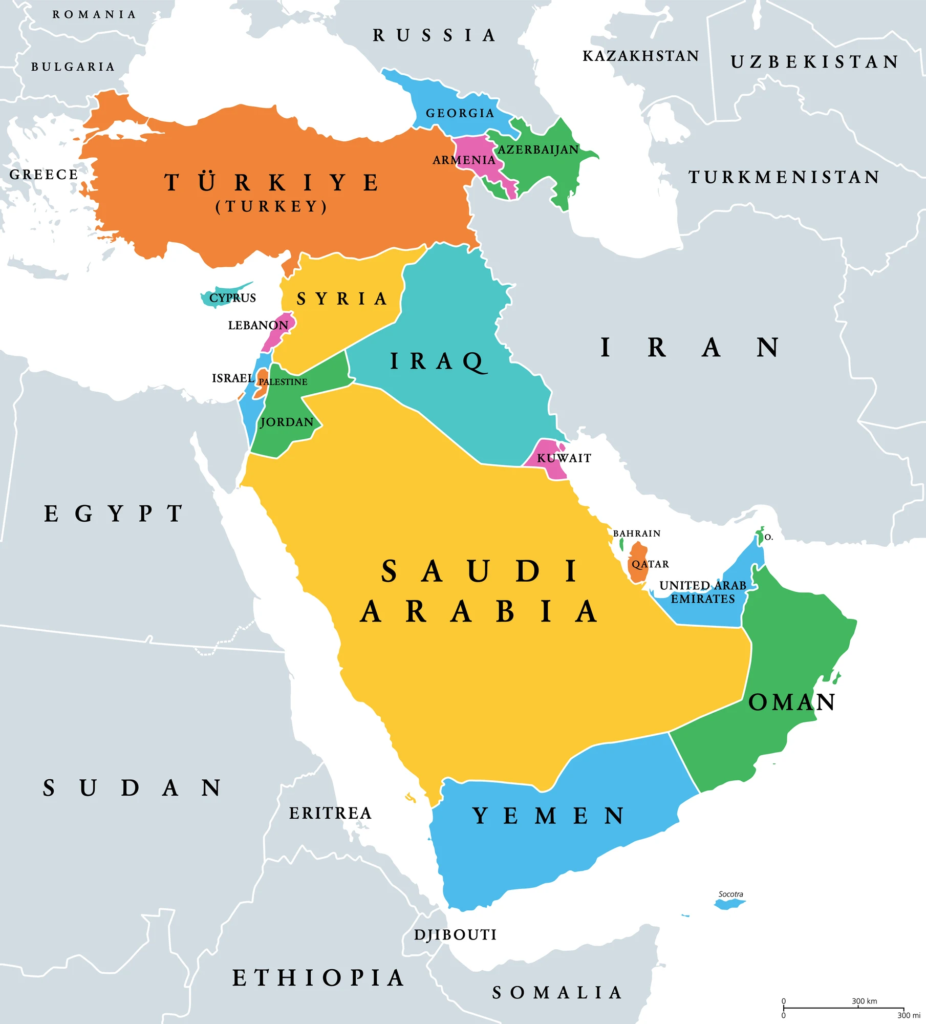
The armed conflict between Iran and the US has reached a stalemate, though both sides continue to exchange verbal threats. Meanwhile, the war in Ukraine has lost much of its initial momentum, despite sporadic, lethal missile attacks. Globally, the economic burden of these conflicts—compounded by severe energy supply disruptions caused by Iran’s unilateral blockade of the Gulf and the US’s subsequent response—has affected nearly the entire world. Furthermore, the clash between Iran and the US-Israeli alliance demonstrates that traditional superpowers are not as invincible as once believed, nor is the developing world a geopolitical non-entity. Ultimately, the proliferation of advanced technology has been the primary catalyst for the shift in the global balance of power since the end of the Cold War.
West Asia, particularly the Gulf region, is entangled in complex bilateral and multilateral conflicts. Internal rivalries have eroded the long-championed ideal of Islamic brotherhood, exposing deep regional fractures. Central to this crisis are Iran’s aerial strikes on neighbouring Gulf states, notably its arch-rival Saudi Arabia. At the same time, Iran’s fierce pushback against the U.S., marked by missile attacks on American bases across the Gulf, has rattled the broader Muslim world. By aggressively retaliating against American belligerence, Iran has revealed that divisions within the ummah are not merely political but are deeply rooted in sectarian and social factionalism.
Certain Muslim-majority states with a pronounced right-wing tilt began to perceive a threat to their influence and status within the Ummah. This perceived threat to the authority of the Islamic faith has long been a recurring anxiety in the region’s political psyche. Those fears were further reinforced when President Trump openly warned during the Iran conflict that, by refusing to surrender, Iran risked its very civilisation. Over a decade ago, the Arab Spring, a major socio-political upheaval, swept across the Middle East and North Africa. Anti-Western and anti-democratic factions initially sought to capitalise on this unrest, viewing the mass protests as a distinct opportunity separate from traditional militant groups such as Al-Qaeda, ISIS, and Wilayat Khorasan. Ultimately, however, those extremist organisations inflicted far more devastation on Muslim populations than on anyone else. Just as the momentum of the Arab Spring eventually faded, these remaining violent factions are also likely to run their course before long.
Framed as a commitment to defending Islam against external pressures, a coalition of hardline Islamist states convened to strategise against direct and indirect threats. In reality, these nations were driven by individual threat perceptions, which they reframed as a broader religious cause. The first concrete step in this direction was a defence accord between Saudi Arabia and Pakistan. Following Iranian and Houthi attacks on its oil infrastructure, Riyadh recognised the need to overhaul its national security strategy. Capitalising on this vulnerability, Islamabad persuaded the Saudi monarchy to place less reliance on American security guarantees. Ultimately, Crown Prince Mohammed bin Salman found a compelling case for moving away from traditional U.S. alignment, turning instead to Pakistan in the hope of securing a nuclear umbrella.
The first concrete step in this direction was a defence accord between Saudi Arabia and Pakistan. Following Iranian and Houthi attacks on its oil infrastructure, Riyadh recognised the urgent need to overhaul its national security strategy. Capitalising on these vulnerabilities, Islamabad persuaded Saudi leadership to reduce reliance on American security guarantees. Ultimately, Crown Prince Mohammed bin Salman saw a compelling case for diversifying beyond traditional alignment with the US, turning to Pakistan in pursuit of a potential nuclear umbrella.
For cash-starved Pakistan, this was a windfall. Billions of dollars were set to flow into its coffers, making the Pakistani army the primary beneficiary of the deal. One clause, which drew intense scrutiny from major media outlets, stipulates that if either party’s national security is threatened, the other will deploy its armed forces to defend it. Political observers questioned whether such an arrangement could be considered sensible or balanced. When India raised concerns about the intentions behind a pact that directly affected its security, Saudi officials sought to reassure New Delhi that the agreement was not signed with India in mind.
Turkey’s President Erdoğan has long harboured ambitions to revive the power and glory of the Ottoman Empire. To this end, he has frequently threatened neighbouring Mediterranean nations, including Greece and Cyprus—part of which remains under Turkish occupation. Erdoğan has also sought to challenge the Saudi monarchy’s role as custodian of the Two Holy Mosques (haramayn) in Mecca and Medina. In pursuit of this goal, he helped orchestrate a Kuala Lumpur summit with the leaders of Pakistan, Iran, Qatar, and Malaysia to pass a resolution transferring that custodianship to Turkey. However, the effort ultimately failed after Saudi Arabia pressured Pakistani Prime Minister Imran Khan to withdraw, threatening to cut off financial aid and to demand the immediate repayment of massive loans.
Recognising that the Indian subcontinent is home to the world’s largest Muslim population, Erdogan has increasingly shifted his geopolitical focus to the region. Driven by an ambition to be seen as the pre-eminent leader of the Islamic world, he has embraced Pakistan’s prompting on the Kashmir dispute, effectively aligning himself with Islamabad’s narrative. Over the past several years, he has adopted an explicitly anti-India posture, frequently invoking Kashmir to criticise New Delhi at the UN and other international forums. This diplomatic alignment is underpinned by deep defence ties. During India’s Operation Sindoor, Turkey supplied Pakistan with significant quantities of drones and military hardware, and Ankara remains actively involved in building frigates and submarines for the Pakistani navy.
Recent reports indicate that aircraft from China and Turkey have been conducting round-the-clock sorties to Karachi Airport for over a week. While the exact nature of the arms and ammunition being delivered to Pakistan remains unknown, rumours have surfaced of a new three-year defence pact between Turkey and Pakistan. Under this reported agreement, Turkey will supply Pakistan with 100,000 specialised micro-drones equipped with various payload delivery systems. Geopolitically, this aligns with their broader diplomatic coordination. Whenever India’s bid for permanent membership of the UN Security Council is raised on international platforms, Pakistan and Turkey consistently advance nearly identical arguments to block India’s rightful inclusion. Now, with Saudi Arabia seemingly aligning with the Pakistan-Turkey bloc following the Makkah Agreement, it appears that hardline Islamic states are increasingly coordinating around the Ghazwat-ul-Hind agenda. Recent statements from the OIC, reports from UN Observers in Kashmir, and the openly pro-Pakistan remarks of Kashmiri leader Farooq Abdullah—who has long enjoyed the best of both worlds by feigning secularism and democracy—are a pointer in this direction.
India has already deployed the warship INS Trishul near Turkish waters in the Mediterranean, with reports that the French and Greek navies may join it. India could further leverage its strong relations with Afghanistan and end its indifference to the plight of the Baloch people fighting for their freedom, as a policy option to put pressure on Pakistan. The Baloch freedom fighters need India’s moral support. India should also sensitise NATO to Turkish drones supplied to Pakistan for unprovoked airstrikes against Afghan civilians. Such transfers of weapons to a third country for use against its neighbours are a direct violation of alliance rules and warrant Turkey’s expulsion. By flooding Pakistan with military equipment, Turkey is jeopardising the peace and security of the entire Indian subcontinent.

Add comment