


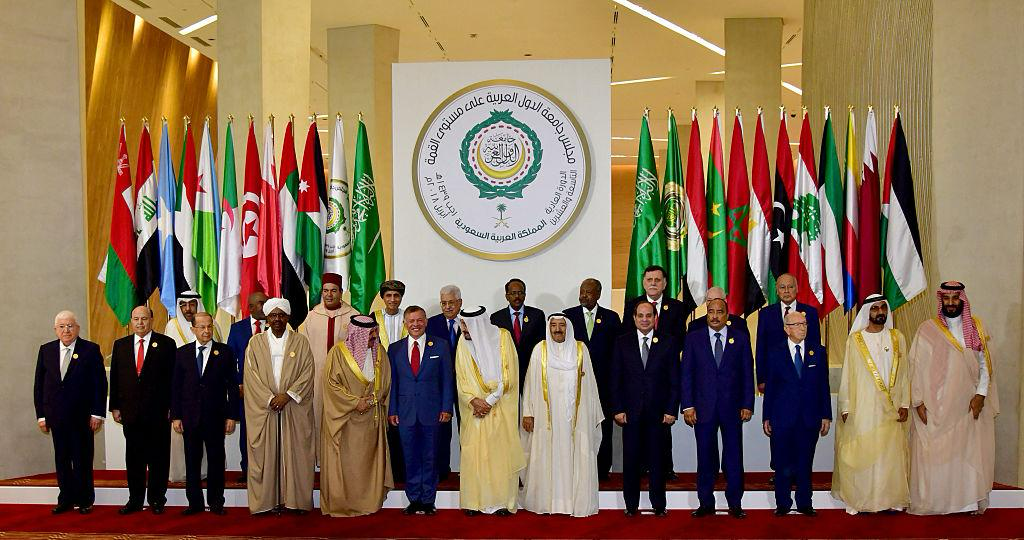
The Organisation of Petroleum Exporting Countries, commonly known as OPEC, constitutes the most significant source of energy in the current global economic system. It shapes the basis the industrial production and functions as the main driver of the continuous development of the global industry, economy, income, and employment. Although this organisation does not control all global crude oil production, it has significant influence over the production, supply, and distribution of crude oil in the world, as well as fluctuations in production targets. OPEC was established in 1960 in Baghdad, Iraq, by five founding members: Saudi Arabia, Iran, Iraq, Kuwait, and Venezuela. Throughout the years, several other countries joined the organisation, while some withdrew from membership from time to time according to their national interests and policies. The United Arab Emirates (UAE) announcement of its withdrawal from OPEC in May, as well as signs of a possible distancing from the Arab League, has sparked a new debate in the Arab world and international politics. This is not a trivial diplomatic incident, but an event whose effects can be felt beyond the borders of the Gulf, extending to Europe, Asia, Africa, and global energy markets. The central question is: what circumstances led a successful, prosperous, and influential state to distance itself from institutions that were considered symbols of Arab unity and collective oil producers’ power? Who will benefit from this decision? And could it be the beginning of a broader disintegration within the Arab world?The Hidden Beneficiaries of Arab Division:OPEC was formed to ensure that oil-producing countries could adopt a common policy regarding their natural wealth, play a key role in determining prices, and become a unified economic force to compete with the major industrial powers. Over the past several decades, OPEC has exercised a profound influence on the global economy. When oil prices rose or fell, the world’s economies were affected by it. The secret to the organisation’s strength was that its members maintained a basic economic unity despite their differences. In such a situation, the withdrawal of a major producing country like the United Arab Emirates would not merely signify the loss of one member but also a deeper rift in the collective system.The first beneficiaries of this decision could be those countries that have long been concerned about OPEC’s collective power. The United States, European powers, and major importers have always wanted oil-producing countries not to unite or influence prices collectively. If OPEC’s unity weakens, purchasers gain a better chance of bargaining. They can pit one country against another, make individual agreements, and put pressure on prices. In this sense, the UAE’s decision can be considered a diplomatic success for the world’s greatesr powers.The second beneficiaries may be large international energy companies. When state alliances are strong, national control over resources remains decisive, but when countries move towards individual policies, corporate powers become more influential. The role of these companies in investment, technical cooperation, refining, supply chains, and long-term contracts increases. In this way, market logic prevails over the idea of national unity. The third beneficiaries should be those forces in the region that want to see the coordination between Arab States weakened. When Arab countries speak in a single voice, their regional influence increases, but when each country adopts separate priorities, the regional balance changes.The Slow Fragmentation of the Arab World:At this juncture, an equally important question arises: Could Arab unity begin to fall apart? The fact is that the Arab alliance has already been affected by ideological, political, and economic differences for decades. Some states are close to the Western world, some are strengthening relations with Asian powers, some prioritise their own security, and some internal stability. Therefore, Arab unity can no longer be viewed as the simple and uniform goal it once appeared to be. The UAE’s decision does not mark the beginning of this fragmentation but rather a reflection of the current reality that Arab and other Islamic countries are now guided more by national interests than by emotional slogans. However, this decision may further deepen the current division within the Arab world.The signals given to the Arab League are even more concerning because the Arab League is not just a political institution but a symbol of the formal expression of Arab identity and unity. If an important member considers removing itself from it, it may be interpreted as a sign that traditional Arab institutions are losing their effectiveness. The Arab League has been criticised before for its inability to play an effective role in major crises, whether in the Palestinian issue, Syria, Lebanon, Yemen, or Sudan. If key members view the organisation as ineffective, the institution’s future itself may come into question. It means that each member-state thinks only of itself and ignores the common interests of the region and of major-oil producing nations.A Region Standing at a Historic Crossroads:At present, industrial growth is increasing all over the world, which inevitably raises the demand for energy (although there is now a perceptible slowdown in global economic activity. The demand for crude oil in major economies such as China and the United States is still rising, while the current conflict in the Strait of Hormuz has alarmed all industrialised countries, all of which want to maintain uninterrupted oil supplies at all costs. If the Arab countries allow the scope of regional cooperation to shrink, their collective influence may gradually decline in the coming decades, even if their coffers are full today. The world is gradually moving towards renewable energy, electric vehicles, solar projects, and new technologies. If the Arab world remains entangled in internal divisions and fails to focus on economic diversification, the real loss will be more from this global transition than from the dissolution of OPEC.The decision of the United Arab Emirates has opened a new chapter in the history of Arab world; its members haveto choose between two possible paths. One path leads toward more independent, modern, and competitive nation-states that will find their place in the emerging world order. The other leads toward mutual distancing, weak institutions, and loss of power. The question today is not so much why the UAE left OPEC, but rather what lessons other members should learn from that decision. If this question is not addressed wisely, the Middle East may indeed witness a new geopolitical upheaval in the coming years.



Add comment