


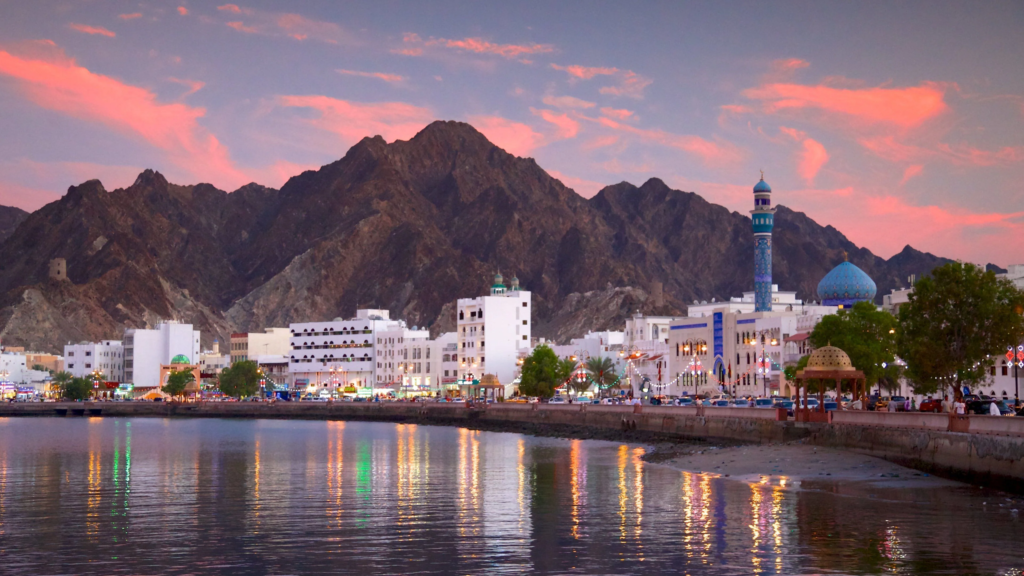
In a major geopolitical shift amidst tensions roiling the Middle East, Muscat moved closer to Tehran, potentially triggering new alignments in the region. The Sultan of Oman signed an executive decree to expand trade and deepen economic ties with Iran, following US President Donald Trump’s intemperate threat to “blow up” Oman, and demand that Saudi Arabia, Qatar, and others join the Abraham Accords in gratitude for America ending a war that he started and failed to defend them against.
Trump hinted that Washington may not sign an agreement with Iran unless they join the AbrahamAccord, though a deal seems distant. Strategic analysts opine that this indicates that Trump is losing control with Iran and is attempting to crudely pass responsibility to the Gulf allies. Oman, it may be recalled, had already refused to join the US President’s Peace Council (March 12, 2026), or to normalize relations with Israel.
Schocked that its traditional neutrality did not protect it from American threats or an attack by Iran in the early days of the war, Oman responded to Trump’s threats, saying: “Oman will not pay the tribute. These threats are evidence of bullying and Trump’s failure in the region. We remain firm in our position regarding the war against Iran” (May 28, 2026).
Iran, meanwhile, is proceeding to set up a new zone to manage the Strait and charge fees, even as Washington is powerless to act as nearly 2,000 vessels are stuck in the massive backlog at the Strait (Sky News).
The Saudi monarchy, while officially standing with the US, increasingly views the presence of US military bases on the Kingdom’s soil as a source of instability rather than as a security guarantee. The Iranian attacks on US infrastructure and assets of Gulf neighbours have triggered deep thinking in the Middle East, and could lead to the resumption of private diplomacy with Tehran. Oman was quick to resume ties with Iran and is embracing its plans to jointly monitor the Strait of Hormuz and share the levy.
During the ongoing US-Iran negotiations, Trump reportedly agreed to Iran levying a fee (changed from “transit fees” to “service fees”), but denied Oman’s right to a share, insisting that ships pass through the Omani side “for free.” Estimating that the transit could yield up to USD500 million daily, the Sultanate wisely signed economic agreements with Iran.
Journalist Sameer Alnamri points out that under the United Nations Convention on the Law of the Sea (UNCLOS), every State has jurisdiction over 12 nautical miles from its coast. As the Strait of Hormuz, at its narrowest point, is around 21 miles, Iran’s waters to the north and Oman’s waters to the south cover the entire strait. The law prohibits States bordering straits from obstructing passage or imposing fees on transit, but “service fees” are permitted (i.e., pilotage and navigational service fees, as Turkey levies in the Bosphorus and Dardanelles straits under the Montreux Convention).
President Trump caused deep consternation with his demand that Saudi Arabia, Qatar, Pakistan, Turkey, Egypt and Jordan join the Abraham Accords. (May 25, 2026). In a social media post, Trump said: “After all the work done by the United States to try and pull this very complex puzzle together, it should be mandatory that all of these countries, at a minimum, simultaneously, sign the Abraham accords.”
Islamabad promptly rejected the proposal, which is unlikely to elicit a positive response from any of the nations mentioned, given the deep distrust of Israel due to its military actions in Gaza, and now Lebanon. Trump also spoke to the leaders of the UAE and Bahrain, that have already signed the accords. He welcomed Iran to join this “unparalleled World Coalition” if it signed an agreement with him. A Pakistani source told the media that the Iran war and the Abraham Accords are “not interlinked and cannot be made so.”
Saudi Arabia, birthplace of Islam and custodian of its two holiest sites in Mecca and Medina, regards Israel as a national security issue; it cannot sign the Accords without a clear roadmap to Palestinian statehood. While Egypt, Jordan and Turkey have diplomatic relations with Israel, relations have been strained since the Gaza war.
A former US diplomat called Trump’s initiative a “poison pill” that created new “conditions for peace that neither Iran nor the states in question will accept” (Politico, May 26, 2026). Analysts point out that Israel’s actions in Gaza (70,000-plus dead and 170,000 injured with the numbers continuins to rise), and Lebanon (3,200 killed, 7,500 injured, and millions homeless as of a few cays ago) are not conducive to the success of Trump’s grand strategy. Indeed, the violence in Gaza has enraged Bahrain and the UAE, though both have signed the Accords and don’t plan to cancel them for now.
Israel has escalated tensions with Turkey, with former Israeli Prime Minister, Naftali Bennett, claiming that Turkey is “the next Iran” (February 2026). On May 20, 2026, Miki Zohar, Israeli minister of culture and sports, said Turkey should be treated as “an enemy state”.
Qatar is livid with Israel for launching strikes on Doha in 2025 in an attempt to kill key Hamas leaders living there, as part of mediation efforts requested by the US and Israel. To placate Doha, the White House released a photo of Trump monitoring Israeli Premier Benjamin Netanyahu’s apology to Qatari Prime Minister Sheikh Mohammed bin Abdulrahman Al Thani on the telephone.
\
Iran took up the cause of Palestinian statehood after the revolution of 1979, and later supported Hezbollah and other militias across the Middle East. It suffered military strikes by Israel, including the assassinations of several key nuclear scientists, before its top spiritual and military leadership was decapitated in a joint US-Israeli strike on February 28, 2026.
After Trump’s threats, Iran’s Foreign Ministry spokesman Esmaeil Baghaei said Tehran stands in solidarity with Oman. Yemen said any attack on Oman would be met with a “strong and immediate response that the United States cannot imagine” (May 29, 2026).
The US-Iran talks have failed, due to repeated military flare-ups during negotiations. A temporary ceasefire was announced on April 8, but the direct talks in Islamabad on April 11- 12 collapsed, after which the two sides have exchanged proposals and counter-proposals via mediator Pakistan, but Iran maintained has control over all shipping through the Strait of Hormuz, while the US enforces a blockade on Iranian ports.
On May 28, the IRGC struck an unnamed US airbase in response to an attack by US forces on a site near the airport in Iran’s Bandar Abbas. The same day, a US base in Kuwait was hit by missiles and drones; unconfirmed reports claim that nearly 250 American troops were killed.
Omani Foreign Minister Badr Albusaidi was mediating a nuclear deal between the US and Iran, and met Vice President JD Vance and other officials in Washington, DC, on February 27, 2026. After the attack on Iran the next day, Albusaidi denied that Iran was an “imminent threat” to the US, and said “significant progress” had been made in the nuclear talks. Though Oman does not host US forces, its Duqm commercial port was hit on March 1, 2026, when Iran attacked US military assets and energy infrastructure across the Gulf region. The two nations however quickly restored ties afterwards.
*
References
Trump links Abraham Accords to any Iran deal, Reuters, May 25, 2026.
https://www.reuters.com/world/middle-east/trump-links-abraham-accords-iran-deal-2026-05-25
Trump’s call to expand Abraham accords is destined to fail, The Conversation, May 28, 2026.
https://theconversation.com/trumps-call-to-expand-abraham-accords-is-destined-to-fail-283997
Why has Trump threatened to bomb Oman, amid Iran war escalation?, Al Jazeera, 28 May 2026.
Oman FM: No normalisation with Israel, no joining Board of Peace, Middle East Monitor, March 12, 2026.
Iran’s IRGC say they targeted US airbase after strike near Bandar Abbas, Reuters, May 28, 2026.


Add comment