The recent dismantling of Maoist memorials by the Central Reserve Police Force (CRPF), in coordination with state police units, marks more than a tactical action - it represents a strategic inflection point in India’s long campaign against Left-Wing Extremism. [DISPLAY_ULTIMATE_SOCIAL_ICONS]
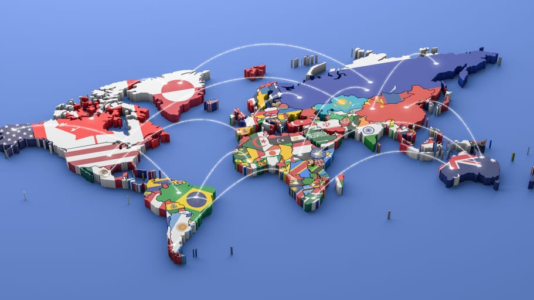
The author argues that western multilateralism is an order led by the United States and the West, based on alliance systems and characterised by value exclusivity. [DISPLAY_ULTIMATE_SOCIAL_ICONS]
The author argues that western multilateralism is an order led by the United States and the West, based on alliance systems and characterised by value exclusivity. [DISPLAY_ULTIMATE_SOCIAL_ICONS]
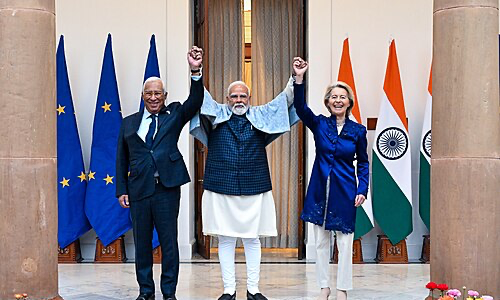
India–EU relations today embody multipolarity as a pattern of behaviour, defined by selective coordination and strategic autonomy rather than formal alignment. [DISPLAY_ULTIMATE_SOCIAL_ICONS]
The author argues that the United States’ shift toward selective, crisis-driven engagement has not created a security vacuum in West Asia but an enduring condition of strategic ambiguity. [DISPLAY_ULTIMATE_SOCIAL_ICONS]
The author argues that the patronage extended to the Rohingya during the PDP-BJP coalition period exposed contradictions between professed secularism and ground-level political practices. [DISPLAY_ULTIMATE_SOCIAL_ICONS]
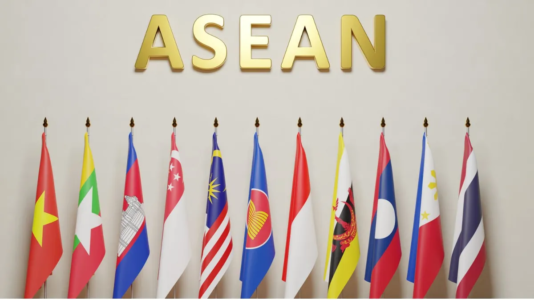
The India–ASEAN partnership exemplifies a multi-sectoral and multipolar engagement model, positioning India as both a strategic balancer and a normative bridge in the Indo-Pacific. [DISPLAY_ULTIMATE_SOCIAL_ICONS]
The article examines control of the Western Hemisphere as a structural foundation of the United States’ global strategy during the transition phase of the international order. Arguing that Washington’s security and power projection depend on securing the hemispheric space, the text interprets the approach promoted by Donald Trump not as a rupture, but as a deliberate acceleration of a long-standing strategic logic. The analysis links this acceleration both to the growing pressure exerted by emerging actors and alternative coalitions, and to the economic, industrial, and social crises within the United States, exacerbated by the political urgency of the midterm elections. Through an examination of key continental nodes, the symbolic dimension of power, technological supremacy, and control of space, the article contends that “hemispheric closure” represents—for Washington—an indispensable precondition for sustaining a prolonged global competition.
[DISPLAY_ULTIMATE_SOCIAL_ICONS]
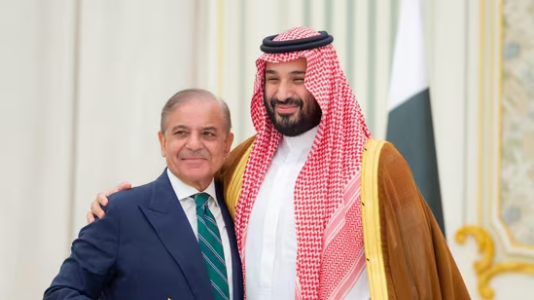
Deep ideological fractures within the Islamic world, particularly over political Islam, Islamist mobilisation and state modernisation, are exposed rather than resolved by this proposed partnership. [DISPLAY_ULTIMATE_SOCIAL_ICONS]
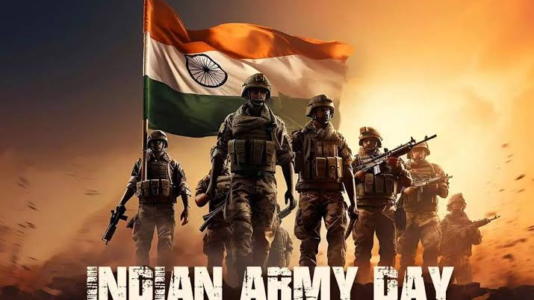
Army Day today functions not only as a commemorative event but also as a platform to showcase the Army’s expanding national footprint and modernisation trajectory. [DISPLAY_ULTIMATE_SOCIAL_ICONS]