


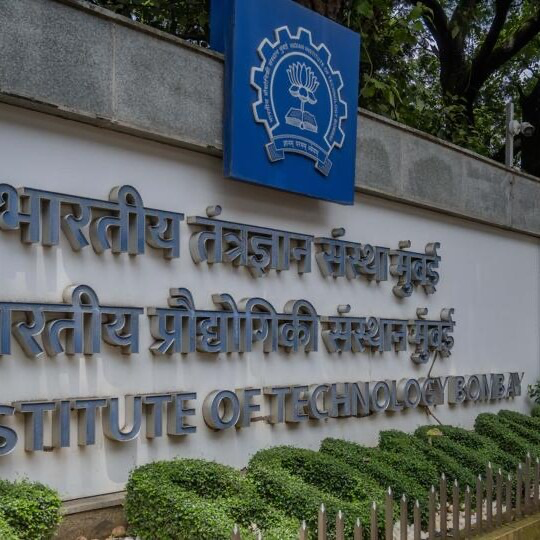
It was a routine mid-semester examination for which second-year B.Tech students in the Department of Energy Science and Engineering at IIT Bombay sat on 18 September 2026. Just another normal day, with students scribbling furiously on their answer sheets and invigilators keeping watch to ensure the examination was conducted with due probity. That was when an examiner, Professor Suryanarayana Doolla, caught one student, 22-year-old Sahil Ravindra Wakode, uploading exam questions to ChatGPT to obtain answers.
The young man returned to his hostel room around 4 PM. Perhaps the matter would have ended there, but sometime later that evening, his friends found him dead in his room. He had died by suicide. That’s when all hell broke loose. According to a statement from IIT Bombay, the professor, while counselling Sahil, had assured him that no formal disciplinary action would be initiated and that his academic career would not be affected. Sahil’s parents, who rushed to campus, however, alleged that their son took his own life after enduring caste-based discrimination and harassment for three months. They did not mention any cheating. Based on the parents’ complaint, the police registered an FIR against Professor Suryanarayana Doolla and other officials. The FIR includes charges of abetment of suicide and provisions of the SC/ST (Prevention of Atrocities) Act.
A student group joined the bandwagon, strongly opposing the administration’s version. Along with Sahil’s parents, they alleged that Sahil was threatened with suspension and that the entire matter was handled with great insensitivity. Protests intensified, culminating in an open-house meeting with the institute’s director and the submission of an 18-point charter of student demands. The administration buckled and, on 21 September, apologised for its earlier communication, acknowledging that it was insensitive and selectively framed. The Institute also suspended Professor Suryanarayana Doolla.
In defence of Professor Doolla, the IIT Bombay Faculty Forum issued a statement supporting him, saying he was simply following established academic misconduct procedures and seeking fair due process. A section of the student body also spoke out in support of the Professor. The issue has now become politically charged, with political parties entering the fray. The unfortunate suicide of a Dalit boy has become the cause célèbre of Dalit vote-bank politics.
Suicides are not unknown in high-pressure establishments. IIT Bombay itself has seen two student suicides earlier this year, but there was no ruckus on campus, giving the impression that only Dalit lives matter. This, in itself, is a sad reflection of society. Lives matter only if they can be politically exploited. The Sahil suicide is, in that sense, merely political fodder. The larger issue of ‘why’, and possible remedial action, lies forgotten.
Suicides are tragic, but caste-based discrimination is rarely the cause. In my long military career, the caste angle never came up even once. We had an incident in which a jawan committed suicide after believing he had AIDS. He was married, and a minor indiscretion led him to suspect he might be infected. His suicide note contained an apology to his commander for what he had done. The post-mortem revealed that he had not contracted AIDS, so the real tragedy was that he was so consumed by shame that he kept his fears to himself. He did not want his wife and children to know, so he kept it secret, even from his comrades.
Such instances are not uncommon. Many people take their own lives out of a sense of personal shame. This is why the Army instituted the buddy system, so that a troubled soul could confide in a friend and colleague. Yet personal matters are still kept secret, especially troubles on the home front for troops in the field. Harassment of his spouse by family members, property disputes, and infidelity are some of the causes that induce a sense of helplessness. Sometimes, this may lead to suicide. While the Armed Forces remain sensitive to these matters, they still occur every year.
Students at higher education institutions also face pressures, but of a different kind. Inability to compete with peers is one source of pressure. If admission is obtained through a reserved quota, this can lead to social exclusion, not because of caste or other factors, but because study groups form around those with similar capabilities. Added to this is pressure from parents, friends, and family. In many cases, parental expectations far exceed a student’s ability to deliver. At times, students find themselves in a line they are not attuned to. They are living their parents’ dream, not their own. It is not that such students lack talent or ability. More often, it is because they have a talent and desire for something totally different. It is grossly unfair to pit a student with a flair for drama, writing, or painting against someone with a flair for the sciences. Family pressure sometimes puts young people in roles that don’t suit their genius. They are forced to live a dream which is not their own. And in the high-pressure environment of the IITs, they fail to perform as others expect.
Certain prestigious institutions, such as the National Defence Academy (NDA) and the Indian Military Academy (IMA), are also high-pressure, but with a key difference. At the end of the training period, regardless of the inter-se merit with which cadets pass out from the Academy, they all have the same star on their shoulder and the same opportunities ahead. This is not the case at IITs and IIMs. The net emoluments of the front-rankers in their first job are many times higher than those at the bottom of the pecking order. Placement offers in a domestic setting at IIT Bombay for the batch of 2023 were over Rs 20 lakh per annum for the top 37 per cent, while the bottom 13 per cent had placement offers below 10 lakh per annum. The highest placement offer was 1.53 crore per annum, while those at the bottom of the rung received about Rs 5 lakh per annum. The difference is huge. For students who struggle to compete but whose parents expect great things, the burden can be unbearable. In extreme cases, it can be crippling.
The Sahil suicide case is under investigation, and it would be inappropriate to speculate on the outcome. However, certain issues need to be highlighted. Cheating in an examination cannot be condoned, especially in our institutes of higher learning. In the Armed Forces, cheating is considered a major character flaw, and the individual concerned will never be promoted to the next rank. At the NDA or the IMA, it will result in immediate relegation. While imposing military standards of probity on our students is not called for, assuming cheating will not carry consequences is counterproductive and sets a wrong example. In this case, placing the onus on the professor and suspending him for the student’s suicide is a wrong precedent and should have been avoided.
Academic pressure also does not appear to be a major cause of student suicides. According to NCRB data, such cases account for only 1.6% of all suicides. The larger contributory factors are family problems, love affairs gone wrong, illness, and financial stress. While student counselling in colleges is already a work in progress, family support structures need strengthening to reduce such cases. However, this falls outside colleges’ charters and would require separate mechanisms to reduce such incidents.
Within campus, mental health infrastructure needs strengthening by establishing well-equipped wellness centres with professional counselling services available on call. More importantly, institutes could encourage a buddy system, similar to that of the Indian Army. That could be a good preventive measure, considerably reducing the risk of suicide.




Add comment