


On 7 October 2023, Hamas-led militants breached the Gaza border fence and attacked military posts, kibbutzim and the Nova music festival in southern Israel. The onslaught was defined by sheer brutality: close-range executions, deliberate desecration, and the indiscriminate slaughter of families in their own homes. In those hours, humanity plummeted to its lowest depth. According to Israeli figures, about 1,200 people were killed, most of them civilians, and 251 were taken hostage into Gaza. Three years on, the event is still argued over through slogans. Standing at the sites themselves, I found the human scale harder to ignore.
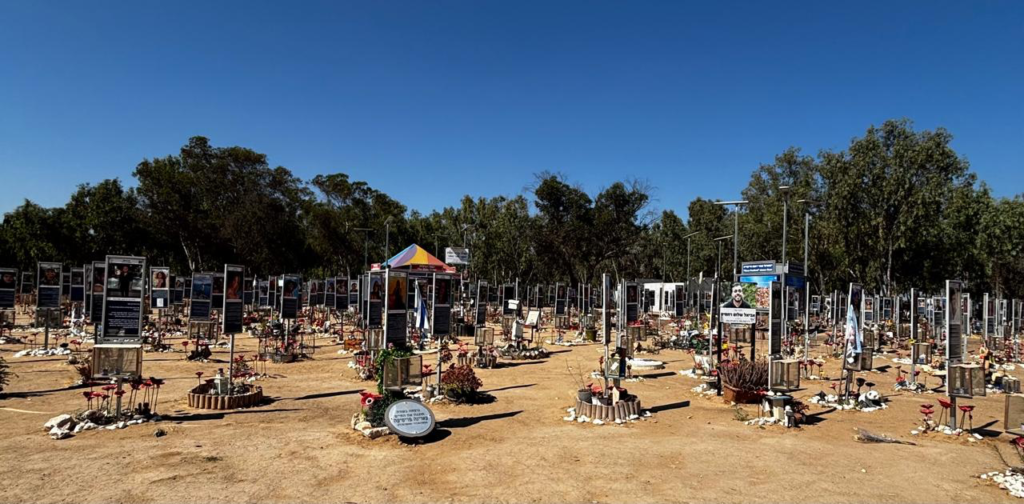
Image 1: Nova festival Site Memorial. An open desert area and forest near Kibbutz Re’im in the western Negev Desert of southern Israel. Source: Captured during an official field visit by Author in July 2026
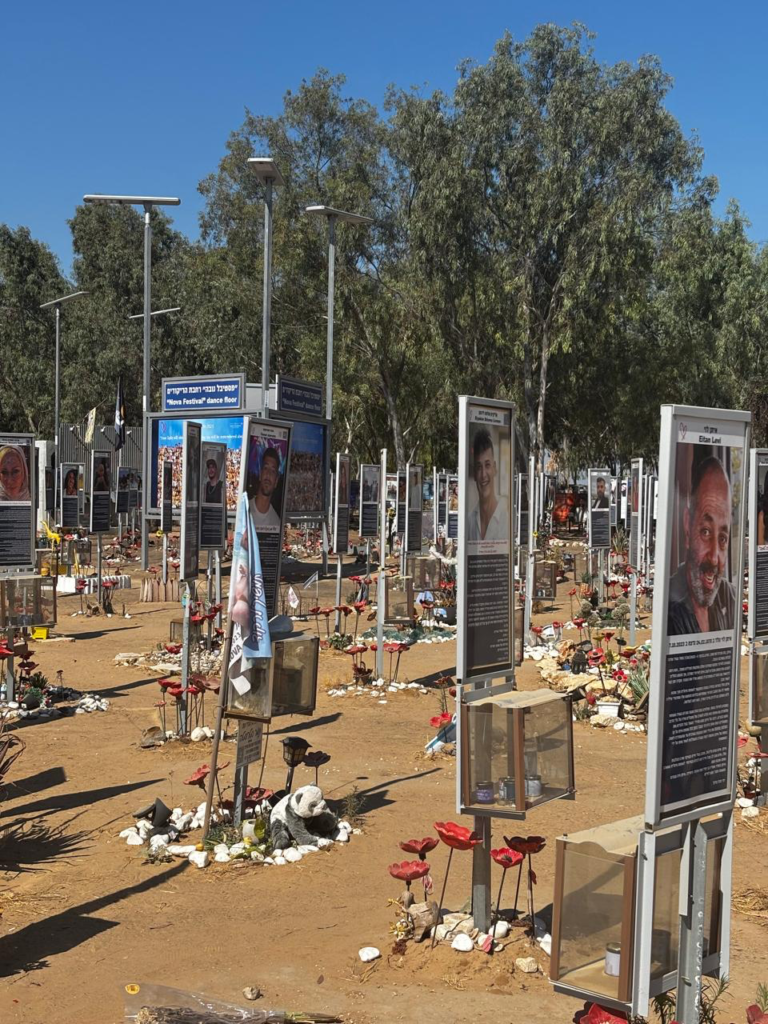
Image 2: Nova festival Site Memorial. An open desert area and forest near Kibbutz Re’im in the western Negev Desert of southern Israel. Source: Captured during an official field visit by Author in July 2026
At the Nova festival site, the first thing that strikes a visitor is how ordinary the setting is: an open field, young people, music. At least 364 people were killed, and about forty were abducted.
The memorial displays a photograph of each victim with a short biography covering family, hobbies, friendships, and plans for the future. Reading them one after another changes how the number lands. A death toll is a statistic, but a panel describing someone who wanted to travel, start a business or simply dance with friends is a life interrupted.
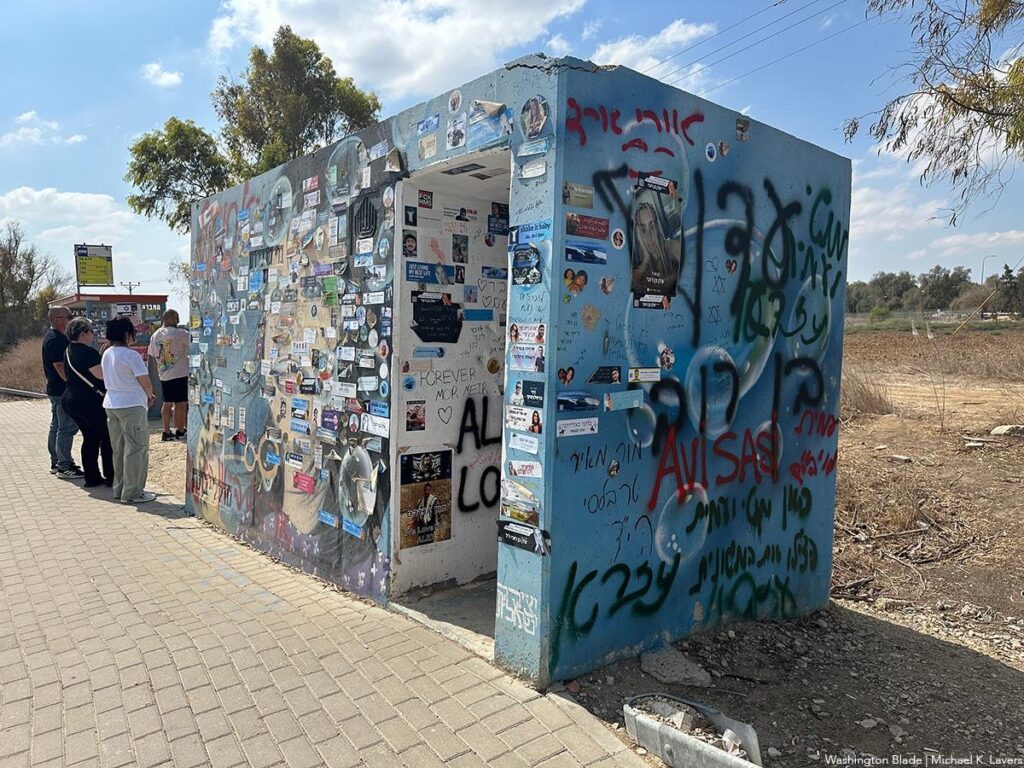
Image 2: Bus stop near Re’im. Source: Washington Blade, captured by Michael k Lavers.
The incident at the roadside shelter near Re’im was equally sobering. Built to protect commuters from rocket fire, it is barely enough for 10 people to stand, and bullet marks are still visible on its walls. Nearly thirty people crowded inside. When the attackers began throwing grenades in, Aner Shapira, a 22-year-old soldier on leave, stood at the entrance and threw seven of them back out. The eighth killed him. Seven of those inside survived.
Standing in that cramped space, I understood how little distance there was between ordinary people and the violence outside. The kibbutzim, close-knit communities, tell a different story. Be’eri alone lost roughly a tenth of its residents. Homes are now being rebuilt, farms replanted, and families slowly returning. Yet “normal” is a fragile word here. The return is marked by absent neighbours and persistent insecurity, and recovery is partial and uneven.
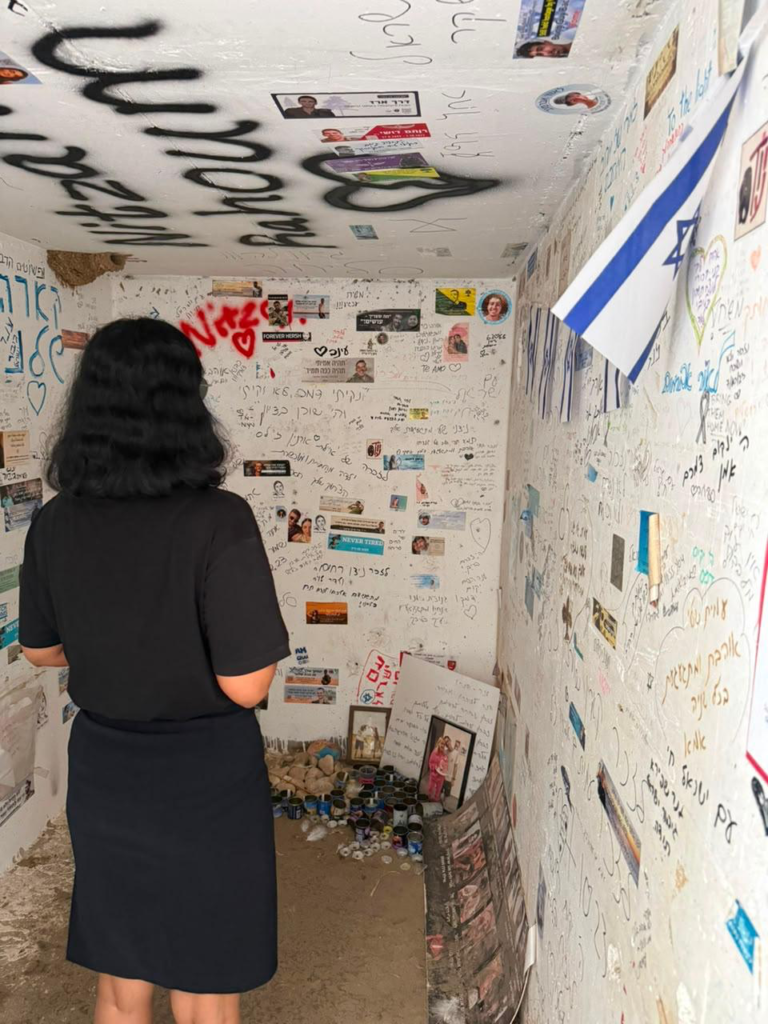
Image 3: Interior of the Bus stop near Re’im. Source: Captured during an official field visit by Author in July 2026
The international response was divided. The UN General Assembly’s resolution of 27 October 2023 calling for a humanitarian truce passed with 120 votes in favour, 14 against (Austria, Croatia, Czechia, Fiji, Guatemala, Hungary, Israel, the Marshall Islands, Micronesia, Nauru, Papua New Guinea, Paraguay, Tonga and the United States) and 45 abstentions. A US-brokered ceasefire took effect on 10 October 2025, though it remains fragile and the underlying political questions are unresolved.
India’s response combined moral clarity with diplomatic calibration. Prime Minister Narendra Modi wrote within hours that he was “deeply shocked” and that “we stand in solidarity with Israel at this difficult hour.” Three days later, he added that India “strongly and unequivocally condemns terrorism in all its forms and manifestations.” At the General Assembly, however, India abstained on the October resolution, having first voted for a Canadian amendment that would have condemned Hamas explicitly but failed to reach the required two-thirds majority. Explaining the vote, Deputy Permanent Representative Yojna Patel said that “terrorism is a malignancy and knows no borders, nationality or race.” India then voted for the December 2023 ceasefire resolution, sent humanitarian aid to Palestinians, and reiterated its support for a two-state solution.
The India-Israel relationship has grown steadily since full diplomatic ties were established in 1992, spanning defence, agriculture, technology, and water management. Beyond strategic and economic interests, there is shared trauma of terrorism: the 1993 Mumbai blasts, the 2001 Parliament attack, the 26/11 attacks, the 2019 Pulwama attack, and, more recently, Pahalgam in 2025. As External Affairs Minister S. Jaishankar put it, “we take a strong position on terrorism because we are big victims of terrorism.” India has pressed since 1996 for a Comprehensive Convention on International Terrorism, which remains stalled over the definition of terrorism.
Three lessons follow. First, the norm of non-combatant immunity is the core issue. Michael Walzer argues that deliberate attacks on civilians cannot be justified by the cause for which a war is fought, a principle that binds states and non-state actors alike. Second, terrorism is strategic, not irrational. States will respond to terrorism, and international law recognises their right to do so. Article 51 of the UN Charter preserves the inherent right of self-defence, and Security Council Resolutions 1368 and 1373 (2001) applied that right to terrorist attacks (although the dividing line between guerrilla warfare, liberation struggles, and terrorism is contested). A state that cannot protect its citizens from mass killing forfeits the basis of its authority, and, as deterrence theory holds, an attacker who pays no price will attack again. Third, definitions shape politics. EAM Jaishankar told the General Assembly in 2022 that “there is no justification for any act of terrorism, regardless of motivation,” yet the stalled convention shows that states still disagree on where terrorism ends, and political violence begins.
References:
[1]Government of Israel figures of roughly 1,200 killed and 251 abducted; independent compilations are close (about 1,195 killed, 815 of them civilians, and 251 abducted).
[2]Figure of 364 dead and 40 abducted as communicated by Israeli police on 17 November 2023, cited at the Nova Exhibition, “The Nova Music Festival”, https://novaexhibition.com/aboutthenovafestival (accessed 5 October 2026); the same toll of 364 killed is reported by Human Rights Watch and by AFP. Reports of abductees range from 40 to 44.
[3]The Times of Israel, “In remarkable Oct. 7 video, soldier tosses grenades back at terrorists, saving lives”, https://www.timesofisrael.com/in-remarkable-oct-7-video-soldier-tosses-grenades-back-at-terrorists-saving-lives/; JNS, “Video captures off-duty soldier’s heroic final act on Oct. 7”, https://www.jns.org/video-captures-off-duty-soldiers-heroic-final-act-on-oct-7 (both accessed 5 October 2026). Accounts of the number of people sheltering vary between about 27 and 30, of whom seven survived.
[4]Magnum Photos, caption for Kibbutz Be’eri, October 2025 (101 civilians and 31 security personnel killed, 32 abducted); Protothema, “October 7: two years on”, 7 October 2025 (at least 97 residents killed, 30 abducted). Counts differ by source and definition. The “tenth” assumes a pre-attack population of roughly 1,000; verify against a Be’eri or Israeli government source.
[5]United Nations General Assembly, Resolution ES-10/21, “Protection of civilians and upholding legal and humanitarian obligations”, A/RES/ES-10/21, 27 October 2023, https://digitallibrary.un.org/record/4025940 (adopted 120-14-45; the voting record was later revised to 121-14-44, so confirm against meeting record A/ES-10/PV.41). List of states voting against from Human Rights Voices, https://hrvoices.org (accessed 5 October 2026).
[6]Reuters, “Death toll from Israeli fire in Gaza since ceasefire passes 1,000, says health ministry”, 18 June 2026, https://www.irishtimes.com/world/middle-east/2026/06/18/more-than-1000-killed-by-israel-in-gaza-since-beginning-of-ceasefire-health-ministry-says/ (accessed 5 October 2026).
[7]Narendra Modi, post on X, 7 October 2023, reproduced by the Prime Minister’s Office: https://www.narendramodi.in/prime-minister-narendra-modi-expresses-shock-at-news-of-terrorist-attacks-in-israel-574814.
[8]Narendra Modi, post on X, 10 October 2023, as reported by IANS, https://m.greaterkashmir.com/article/india-stands-firmly-with-israel-says-pm-modi-after-receiving-phone-call-from-netanyahu/238372.
[9]Yojna Patel, India’s explanation of vote, UN General Assembly, 27 October 2023, as reported by PTI, https://www.tribuneindia.com/news/india/india-abstains-on-un-resolution-calling-for-humanitarian-truce-in-israel-hamas-conflict-557324. The Canadian amendment failed with 88 in favour, 55 against and 23 abstentions (Human Rights Voices, see note 6).
10]UN General Assembly, Resolution ES-10/22, 12 December 2023 (153-10-23); Ministry of External Affairs, India, briefings of October 2023 on humanitarian assistance to Palestine.
[11]P. R. Kumaraswamy, India’s Israel Policy (New York: Columbia University Press, 2010).
[12]On India as a long-standing victim of cross-border terrorism, see Yojna Patel’s statement at the launch of the UN Victims of Terrorism Association Network, reported by UNI, https://uniindia.com/pakistan-a-rogue-state-fuelling-global-terrorism-destabilising-the-region-india-at-un/india/news/3451315.html.
[13]S. Jaishankar, remarks in New Delhi, 29 October 2023, as reported by Deccan Herald, https://www.deccanherald.com/india/india-takes-a-strong-position-on-terrorism-because-it-is-a-victim-jaishankar-says-2747306 (accessed 5 October 2026).
[14]Arpita Anant, “What are the key hurdles to the adoption of the UN Comprehensive Convention on Terrorism?”, IDSA Ask an Expert (India tabled the draft as A/C.6/51/6, 11 November 1996); UN Office of Counter-Terrorism statement on the lack of consensus over the definition, reported by IANS, 1 August 2022.
[15]Michael Walzer, Just and Unjust Wars: A Moral Argument with Historical Illustrations (New York: Basic Books, 1977), chs. 2 and 16.
[16]Charter of the United Nations, Article 51; UN Security Council Resolution 1368 (12 September 2001) and Resolution 1373 (28 September 2001), preambular paragraphs recognising the inherent right of individual or collective self-defence.
[17]Thomas Hobbes, Leviathan (1651), “A Review and Conclusion”, on the sovereign’s duty to protect as the ground of subjects’ obedience.
[18]Thomas C. Schelling, Arms and Influence (New Haven: Yale University Press, 1966), on deterrence and the diplomacy of violence.
[19]S. Jaishankar, address to the 77th UN General Assembly general debate, 1 October 2022, as reported by PTI, https://www.outlookindia.com/international/there-is-no-justification-for-any-act-of-terrorism-regardless-of-motivation-jaishankar-news-225651.



Add comment