


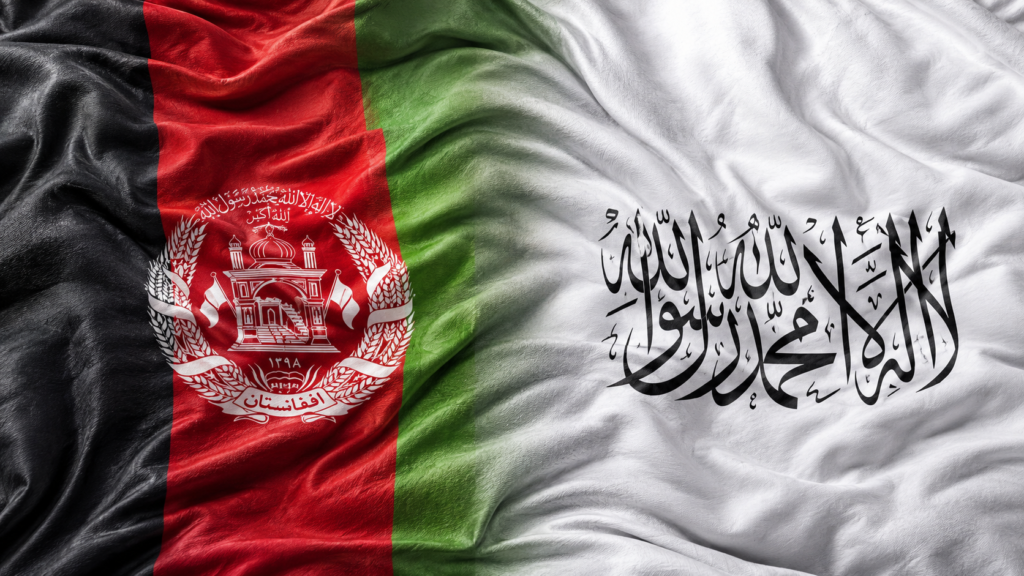
We have seen a great deal written and discussed in the media on the fifth anniversary of the Taliban takeover of Afghanistan. Much of the commentary has understandably focused on five years of Taliban rule – their consolidation of power, the humanitarian and economic situation, restrictions on women and girls, terrorism, Pakistan’s deteriorating relationship with Kabul, and the gradual international engagement with the authorities in Afghanistan.
All of these are important. But there is another perspective that deserves consideration: India’s relationship with Afghanistan is much larger than the politics of whoever occupies Kabul.
I spent nearly two decades in Afghanistan, from 2002 to 2021, as the founder of Anaar Group. I built businesses, travelled extensively, interacted with Afghans across ethnic, political, and social backgrounds. and I participated in Track 2 and Track 1.5 engagements involving Afghan constituencies and international stakeholders.
My impressions were shaped not only by business and travel, but by the extraordinary cross-section of Afghan and international life that passed through Anaar, my restaurant in Kabul. Diplomats, donors, journalists, intelligence officers, Afghan political and business elites, officials, and ordinary Afghans sat around the same tables, offering perspectives rarely found in official briefings. Those conversations gave me a ground-level view of Afghanistan as a society and, importantly, of how Afghans themselves viewed India and Indians.
My experience has left me with one enduring conviction: Afghans’ view of India and Indians is rooted in an extraordinary reservoir of goodwill, built over a multifaceted historical, cultural, and civilisational relationship.
Afghans differ profoundly in their political affiliations, ethnicities, languages, and tribal identities. Their views of successive governments and external powers may vary enormously. Yet across these divides, the warmth and familiarity with which India and Indians are regarded have remained remarkably consistent.
That relationship has been shaped not merely by statecraft, but by centuries of shared history, involving commerce, culture, music, cinema, education, and human interaction.
That enduring Afghan goodwill towards India, not the politics of any particular regime, should be the bedrock of India’s Afghan policy.
Afghanistan is bigger than Kabul
Afghanistan has changed governments repeatedly within living memory: monarchy, republic, communist rule, Soviet intervention, Mujahideen, Taliban 1.0, the Islamic Republic, and now Taliban 2.0.
Through all these transformations, Afghanistan remained Afghanistan.
India should therefore distinguish between its relationship with Afghanistan as a country and its working relationship with whoever governs Kabul.
India can consequently pursue a pragmatic, Taliban-agnostic and people-centric policy: engage the authorities because they govern the country while maintaining relationships across Afghanistan’s political, ethnic, social and economic spectrum.
I experienced India’s Afghan relationship on the ground.
The depth of India’s relationship with Afghanistan becomes apparent beyond official diplomacy.
During my years in Kabul, I repeatedly encountered Afghans who regarded Indians as brothers. India’s image was not primarily that of a geopolitical power but reflected a cultural, familiar, deeply human bond.
I experienced this vividly in March 2006, when I organised a concert by the legendary ghazal singer Jagjit Singh during Nowruz in Kabul. It was a huge success and demonstrated the extraordinary emotional space occupied by Indian culture in Afghan society.
Indian music, cinema, and television have long been part of Afghan popular culture. Characters such as Tulsi from Kyunki Saas Bhi Kabhi Bahu Thi became household names.
This is sometimes dismissed as “soft power”. I would call it something deeper: cultural familiarity accumulated over generations.
That is a strategic asset no foreign policy can manufacture overnight.
A relationship older than modern borders
India’s relationship with Afghanistan predates both modern states.
During the British Raj, undivided India’s frontier extended to the Khyber Pass. The interaction between the peoples of Afghanistan and the Indian subcontinent was therefore commercial, cultural, and social as much as political.
Peshawar and the wider frontier formed part of a interconnected historical geography.
Partition changed the map but did not erase centuries of memory and interaction.
This helps explain why India’s Afghan relationship has survived the Soviet war, Taliban 1.0, the American intervention, and the collapse of the last Republic.
Governments change; relationships between people endure.
India’s development partnership reinforced that goodwill
After 2001, India translated historical goodwill into one of Afghanistan’s most substantial development partnerships.
Between 2002 and 2021, India committed approximately $3 billion to infrastructure, education, healthcare, capacity building, and community development across all 34 provinces.
The Afghan Parliament building, the Afghanistan-India Friendship Dam, schools, hospitals, and community projects were more than development initiatives. They created human connections.
Thousands of Afghan patients received medical treatment in India; Afghan students and professionals studied here; and Afghan cadets trained in Indian military institutions.
India’s investment should therefore be measured not merely in dollars but in relationships.
Five years later, the landscape has changed
The Taliban have consolidated political control, although opposition groups continue to claim responsibility attacks in several provinces. Afghans nevertheless faces severe humanitarian and economic hardship, juridical and social restrictions on women and girls, unemployment, internal displacement, and a continuing threat from groups such as ISKP.
The Taliban have achieved political control without comprehensive international normalisation.
Yet international attitudes are changing. Russia formally recognised the Taliban government in July 2025, becoming the first country to do so, and regional engagement has continued to expand. China, Iran, and the Central Asian states have pursued pragmatic relationships with Kabul.
The region is increasingly learning to deal with Afghanistan as it exists rather than as outsiders would like it to be.
India is doing the same.
Pakistan’s experience and India’s lesson
Perhaps the most consequential development since 2021 has been the deterioration of relations between Pakistan and the Taliban.
Pakistan historically expected a Taliban government to provide strategic depth. Instead, Islamabad discovered that a Taliban government would not be subordinate. TTP has become Islamabad’s main problem, with cross-border attacks and accusations about their militant sanctuaries across the Durand Line deepening the confrontation.
But India should not make the opposite mistake.
Nor should India view Afghans primarily through a Pakistan-centric lens.
This was also a position I had articulated well before the Taliban returned to Kabul. In my March 1st 2020 Gateway House article, “U.S.-Taliban deal: India in strategic role”, written immediately after the 29 February 2020 Doha Agreement, I argued that India should stop viewing Afghanistan through the Pakistan prism, leverage the considerable goodwill it enjoys among Afghans, and play a proactive role in Afghanistan’s development, capacity building, and economic future.
Six years later, that argument has acquired greater relevance.
Afghans should not be viewed as pieces on a geopolitical chessboard – whether as Taliban supporters, opponents, Pashtuns, Tajiks, Hazaras, or Uzbeks. They are Afghans with their own aspirations, histories, and collective relationship with India.
No Afghan faction should ever be mistaken for Afghanistan itself.
Afghanistan is India’s bridge to Central Asia
India should resist seeing Afghanistan solely as a security problem or another theatre in the India-Pakistan rivalry.
Its geography gives Afghanistan enormous significance for India’s continental strategy:
India – Iran – Afghanistan – Central Asia.
India’s investment in Chabahar should therefore be viewed as part of a larger Eurasian strategy. Afghanistan can potentially connect South Asia with Central Asia, Iran, and the wider Eurasian economy.
The emerging Great Game is increasingly less about occupying Afghanistan and more about connecting, influencing, and integrating it into competing Eurasian systems.
India has an unusual advantage.
We do not need to manufacture an Afghan relationship. We already have one.
Engage Kabul, embrace Afghanistan
India’s policy should rest on a simple principle:
Engage the government of the day; embrace the people for the long term.
That means maintaining working relations with Kabul while simultaneously engaging businessmen, technocrats, academics, youth, women, cultural figures, civil society, provincial stakeholders, former political leaders, and the Afghan diaspora.
It means continuing humanitarian assistance, capacity building, education, healthcare, and economic engagement.
My years of Track 2 engagement reinforced another lesson: relationships built during difficult periods become strategic capital when circumstances change.
India should therefore maintain a broad Afghan network rather than a narrow Kabul policy.
Five years after the Taliban’s return to Kabul, India’s greatest Afghan asset remains something no country can purchase or impose: the goodwill of the Afghan people.
Russia may have strategic influence. China may have economic weight. Pakistan may have geographical proximity. America may retain enormous dissuasive power.
India has something different – history, culture, familiarity and human relationships.
Our Afghan policy should therefore not begin with the question: Which Afghan faction is ours?
The answer should be: all Afghans.
For India, the relationship with Afghanistan cannot be built around any regime, faction, ethnicity, or moment in history. It rests on a multifaceted relationship between two Peoples.
That is not merely sentimental diplomacy.
It is sound strategic policy, and after two decades on the ground, I believe it is India’s greatest long-term advantage in Afghanistan.



Add comment