


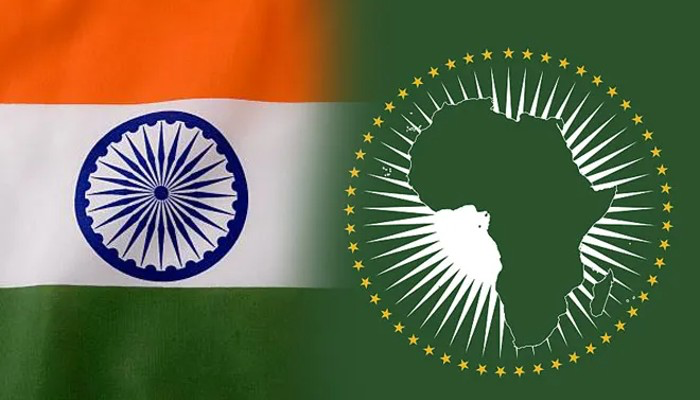
The international order is undergoing a major transition. Multipolarity is growing, power rivalry is intensifying, and economic and national security are increasingly interlinked. Energy, supply chains, critical minerals, technology, cyber capabilities and AI now shape strategic competition. Terrorism, piracy, climate change and disruptions to global trade remain persistent challenges. In this changing environment, the Global South, and Africa in particular, is gaining greater strategic importance. Africa has a young population, expanding markets, vast natural resources and critical minerals. Its geography further enhances its importance. The African Union’s permanent membership of the G20 reflects this growing importance.
Major powers, including the US, Russia, China and European countries, are deepening their engagement with Africa. Yet Africa cannot be treated as a chessboard for external competition. African states have their own interests, choices and priorities. India’s relationship with Africa must therefore be understood on its own terms, rooted in historical ties, shared experiences and mutual interests.
From Political Solidarity to Security Cooperation
India’s engagement with Africa spans trade, investment, healthcare, agriculture, education, energy, digital technology and development cooperation. Defence and security are only one part of this wider relationship, but they are becoming increasingly important. Security and development are closely linked. Sustainable development depends on stability. Stable societies attract investment, and secure sea lanes sustain trade. Defence cooperation therefore helps create the security needed for development.
India’s ties with Africa have deep roots. During the Cold War, they centred on decolonisation, liberation movements and opposition to apartheid, with limited defence cooperation. After 1991, economic liberalisation, trade and energy needs, and Indian participation in UN peacekeeping across Africa added a stronger security dimension. The India–Africa Forum Summit in 2008 gave the relationship greater institutional structure. The India–Africa Defence Ministers’ Conclave of 2020 added a focused defence framework, with the Lucknow Declaration identifying peacekeeping, maritime security, counterterrorism, training and defence cooperation as key areas of engagement.
What Is Driving the Security Relationship?
Four factors are driving closer defence and security cooperation. The first is maritime security. The Indian Ocean connects India and Africa, while the eastern African coast, from the Horn of Africa to the Mozambique Channel and the Cape of Good Hope, lies alongside sea lanes vital to India’s trade and energy security. Piracy off Somalia showed how distant instability can directly affect Indian shipping and commerce.
The second is terrorism and transnational crime. India and several African countries face extremist threats, creating opportunities for cooperation in intelligence, counterterrorism and counter-IED operations. The third is peace and stability, where shared experience in United Nations peacekeeping provides a natural basis for cooperation in training, logistics and operational practices. Finally, the changing geopolitics. As Africa gains global attention, India’s strength lies in respecting sovereignty, strategic autonomy and African priorities.
Training: The Quiet Strength of Defence Diplomacy
Military education and professional training are the cornerstones of India-Africa defence cooperation. African officers have long attended the National Defence College, Defence Services Staff College, the Indian Military Academy and specialised service institutions. India has also deployed military training teams to African countries. Such engagement fosters professional relationships that often endure for decades.
Joint exercises add an operational dimension. The Africa–India Field Training Exercise (AFINDEX) in 2023 involved 25 African countries and focused on Humanitarian Assistance and Disaster Relief (HADR) and UN peacekeeping. The India–Brazil–South Africa Maritime Exercise (IBSAMAR) promotes naval interoperability.[i] The Africa–India Key Maritime Engagement (AIKEYME), co-hosted by India and Tanzania in 2025, brought together Comoros, Djibouti, Kenya, Madagascar, Mauritius, Mozambique, Seychelles and South Africa, thereby widening cooperation across the western Indian Ocean.[ii]
Maritime Security: The Natural Centre of Cooperation
Maritime security is perhaps one of the most natural areas of strategic convergence. Since 2015, India’s approach has been guided by SAGAR (Security and Growth for All in the Region), which emphasises maritime security, prosperity, sovereignty, and collective action. India supports African and Indian Ocean partners through coastal surveillance, maritime domain awareness, joint patrols, naval training, hydrographic assistance, port visits, and HADR operations.
Since 2008, the Indian Navy has conducted anti-piracy patrols in the Gulf of Aden and off East Africa, protecting merchant shipping and supporting international efforts.[iii] The challenge now extends beyond piracy to illegal fishing, narcotics, arms and human trafficking, and threats to vital sea lanes. Effective security requires information sharing, coordinated surveillance and cooperation among Indian Ocean littoral states.
Peacekeeping and the Human Side of Security
UN peacekeeping is another important pillar. India has contributed over 290,000 peacekeepers across more than 50 missions, with more than 5,000 personnel serving in recent years and nearly 180 Indian peacekeepers making the supreme sacrifice. Much of this service has been in Africa, including the Democratic Republic of the Congo, South Sudan, the Central African Republic, Abyei and Western Sahara. India’s all-female Formed Police Unit in Liberia (2007 – 2016) became a powerful role model, inspiring a fourfold rise in women applying to join the police, demonstrating how security can also drive social change.[iv]
Defence Industry: From Buyer–Seller to Co-Production
Defence-industrial cooperation is becoming increasingly important. India’s defence exports rose from under ₹1,000 crore a decade ago to ₹23,622 crore in 2024–25, creating greater scope to offer affordable and reliable systems.[v] A major step is Tata Advanced Systems’ Wheeled Armoured Platform facility in Morocco, India’s first overseas private-sector defence plant, which promotes local production, skills and deeper industrial cooperation.[vi] The future should move towards local manufacturing, maintenance, training, technology absorption and joint ventures.
Building Institutions That Last
Defence cooperation requires strong institutions. The India–Africa Forum Summit and the India–Africa Defence Ministers’ Conclave provide important political and security platforms. The Indian Ocean Naval Symposium (IONS) brings Indian Ocean navies together to address maritime security and interoperability, while bilateral committees, service talks, defence attachés and exchanges provide continuity.
What Makes India’s Approach Different?
Africa has many partners – China brings scale, the West brings technology and institutions, and Russia brings long-standing defence ties. India offers different strengths – historical familiarity, political acceptability, affordable solutions, military training, and respect for African choices and strategic autonomy. However, there are weaknesses. Implementation must be faster, defence-industrial support networks strengthened, and after-sales service, spares and maintenance improved. India also needs greater Africa-specific expertise and deeper engagement with African-led security institutions.
The Way Ahead
The next phase should prioritise maritime security, emerging technologies, defence manufacturing, peacekeeping and counterterrorism. Cooperation should be expanded in surveillance, anti-piracy, AI, drones, local production, maintenance and specialised training. Closer engagement with the African Union and regional organisations is equally important to ensure alignment with African priorities and African-led solutions.
[i] MoD, PIB, “India–Africa Joint Military Exercise ‘AFINDEX-23’ Concluded at Foreign Training Node, Aundh, Pune,” 29 March 2023
[ii] MoD, PIB, “Africa India Key Maritime Engagement 2025,” 12 April 2025; and “Africa India Key Maritime Engagement (AIKEYME) 2025 Inauguration,” 13 April 2025
[iii] MoD, PIB, “Sailing Towards Self,” December 2025.
[iv] GoI, PIB, “India’s Legacy in UN Peacekeeping: Leadership, Commitment, and Sacrifice,” 2025.
[v] MoD, PIB “Defence Exports Surge to a Record High of Rs 23,622 Crore in Financial Year 2024–25,” 1 April 2025
[vi] MoD, PIB, “Raksha Mantri Inaugurates TASL’s Defence Manufacturing Facility in Morocco for Production of Wheeled Armoured Platform,” 23 September 2025



Add comment