


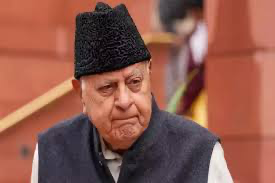
In his recent public address in Budgam, Dr Farooq Abdullah, President of the National Conference (NC), spoke about his party’s historical efforts in serving the people and its role in the State’s development. Who can deny the claims he made? That is history. But the fact is that it is the duty of democratically governed states to serve the broad interests of the nation and to devote their efforts to the development of the State. In that sense, the National Conference has played its genuine role. It is no obligation that NC has won. At best, it is admiration.
Dr Abdullah also raised the issue of restoring statehood to J&K. He cited the Supreme Court and the Home Minister’s statement in parliament on the restoration of statehood at the proper time. Admittedly, the status of J&K as a state is an important issue from a historical perspective. But the story needs to be told in its entirety, not piecemeal. There are vital questions that Dr Farooq should have reflected on, including why the withdrawal of Article 370 was necessitated in 2019. He should also have told the people what the compulsions were for the NDA government to bring about the State Reorganisation Act, even if the Home Ministry’s arguments were not acceptable to him.
From the early 1980s, separatist and secessionist elements in J&K, particularly in the Kashmir Valley, had become active. The 1986 election was crucial, as it reflected the deep polarisation of the Kashmiri Muslim community, then the backbone of the National Conference. The opposition, not only to the NC but also to the very concept of the State’s accession to the Indian Union, was led by the Jamaat-e-Islami. How the NC leadership handled this situation has never been debated freely or brought into the public domain. As a result, the views of the Muslim United Front (MUF), and later the role of its leadership, which had shifted its base to Muzaffarabad, began to be accepted by Kashmir observers everywhere.
A decade later, in 1996, following the Union government’s efforts to restore democratic rule in J&K, elections were held and the NC returned to power. Dr Farooq Abdullah took up the reins of government. With the re-establishment of a democratically elected government, the logic demanded that it institute a comprehensive inquiry into the most vital issues facing the state, such as (a) the exacerbation of separatism and secessionism in Kashmir, (b) the rapidly rising influence of Jamaat-e-Islami’s fundamentalist ideology in Kashmir, (c) the infiltration of Jamaat-e-Islami ideology into the organs of the state, (d) cross-border terrorism, in which the Pakistani ISI created its moles in the Kashmiri community, and (e) terror against the Kashmiri Pandit minority – their genocide and ultimately their ethnic cleansing. These were no small or inconsequential happenings for a state that was strongly portrayed by Pakistan as a disputed territory.
But the state government simply put an iron lid on these fundamental issues. Conversely, not only the NC but also most political parties in Kashmir, in the wake of opposition to the accession of the State and the extension of many parliamentary rules and regulations to the J&K State, conveniently adopted double standards in defining their positions. This was a period when the sense of the State’s separate identity from the Indian national identity grew deeper among the people of Kashmir. Tragically, the NC and other political parties, the media outlets and prominent opinion-making institutions all adopted a soft, rather conciliatory attitude towards the separatist ideologues.
The Vajpayee government, recognising the consequences of this grave situation in the State, pursued a diplomatic approach to address it and ensure that saner elements had a chance to be heard. Omar Abdullah, the son of Dr Farooq Abdullah, was inducted into the Union Council of Ministers as MOS in the Ministry of External Affairs, and Dr Farooq Abdullah was inducted into the Union Ministry as Minister-in-Charge of Renewable Energy.
Prime Minister Vajpayee also undertook his famous ‘bus yatra’ to Pakistan in 1999, in an attempt to improve relations with that country. He signed the Lahore Declaration with Nawaz Sharif, aiming to reduce the risk of nuclear war. Addressing a civic reception, he quoted his own poem, saying, “Hum jung na hone denge… Teen bar lad chuke ladayi, kitna mehnga sauda.” Yet all that was in vain. Even as Vajpayee was building a path of peaceful coexistence in Islamabad and Lahore, the Pakistani army chief was secretly planning to seize the Kargil heights and cut off India’s connection with Leh. This was how the ISI and Pakistan worked to deprive Kashmiris of a peaceful resolution to the Kashmir issue.
In 2002, the Jammu and Kashmir Peoples Democratic Party (JKPDP), largely supported by the Jamaat-e-Islami, assumed power, forming a coalition government with the Congress. Its second term of power ensued in 2015 with the BJP coalition, which lasted just one year. The period between 2002 and 2016 was crucial in modern Kashmir history. It was virtually the Jamaat-e-Islami running the show, with the others as mere showboys. Covert and overt connections grew between local moles and their masters on the other side of the border. The slogan of “talk to Pakistan” became louder, with elements in the Kashmir leadership eager to make Pakistan a formal partner in the issue. Fortunately, the abrogation of Article 370 and the subsequent firm actions taken by the Centre restored the situation to a large extent.
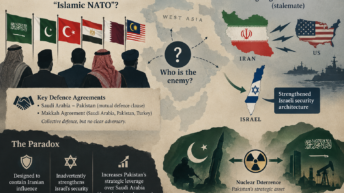
Whether the terrible event of the Iran-Israel-US triangular war has opened the eyes of the Kashmiri people to the catastrophe caused by extremism and theo-fascism across the globe will best be answered by their leadership. But the fundamental issue is not the restoration of statehood. The issue is one of development, industrialisation, connectivity, boosting tourism and trade and removing radicalism. That is where the interest of the Kashmiri people lies.

Add comment