


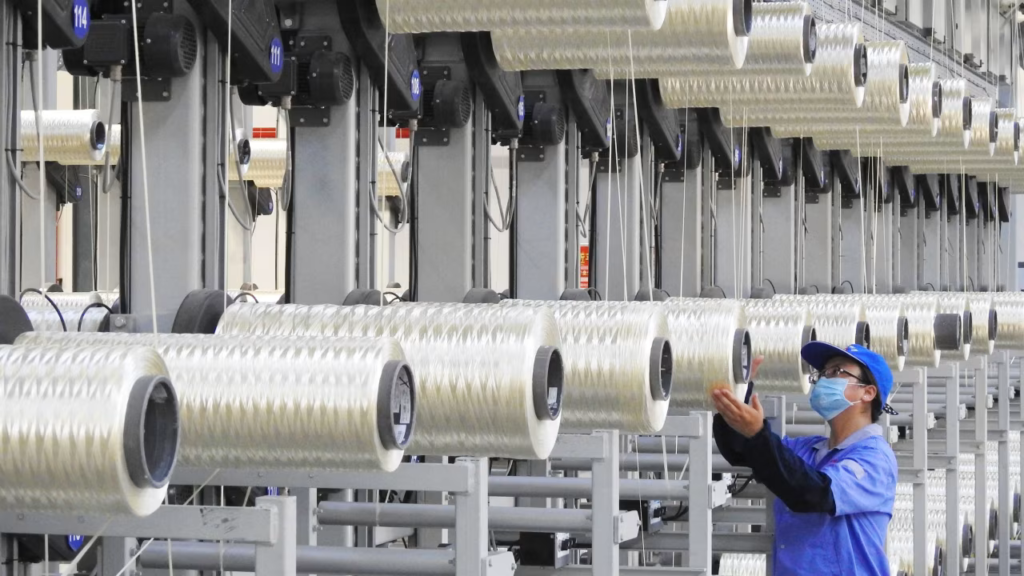
Now that the Gulf region enters its most crucial stage in May, it is obvious that the international community will be paying close attention to the price volatility of crude oil. However, for the People’s Republic of China (PRC), the current situation has transcended from merely an oil shock to a much more complex challenge. As Beijing has already built up significant strategic petroleum reserves, a number of “second order shocks” are now starting to disrupt the functioning of the country’s manufacturing machinery.
The End of the Iranian Subsidy
Over the years, the competitiveness of Chinese industry has been covertly supported by a large supply of cheap energy. Prior to early 2026, China was receiving 1.3 to 1.4 million barrels of oil per day from Iran, which accounted for about 13-14% of its oil imports. Most importantly, this was not at market price, but at a discount of $8-$10 per barrel.
However, the ongoing crisis has brought this system to an end. Since Iranian supply to China has seen a 90-95% reduction, the latter finds itself in the hands of the market, where the price of crude oil hovers around $100-$120 per barrel[1]. This has led to a tremendous increase in the cost of production factors. The “subsidy” that was fueling Chinese industry has ceased to exist.
The SPR Dilemma: A Half-Trillion Dollar Drain
The first line of defense for Beijing has been through its Strategic Petroleum Reserve, which stands at 1.2 to 1.4 billion barrels today. While this figure should be enough to keep Beijing from facing an energy meltdown in the short run, the budget implications of maintaining them at their existing levels is concerning. With stocks dwindling as a buffer for Beijing during this crisis period, the expense of rebuilding them in light of current prices will cost Beijing between $400 and $500 billion per year.[2] This would mean wasting precious money in sustaining a system the CCP sought to change via “New Quality Productive Forces”.
Second-Order Disruptions: The Industrial Squeeze
The stuttering of the industrial engine cannot be blamed entirely on the cost of crude. The ongoing tensions have led to a series of disruptions in the supply of key industrial raw materials and agricultural fertilizers:
1) LNG and Refining: The disruption of LNG supplies from Qatar and also in the supply chain of Naphtha is impacting the power-intensive industries in the coastal regions of China.
2) Fertilizer Shortage: The most important issue here is the disruption in the supplies of Ammonia, Urea, and Sulphur from the Gulf region. These raw materials play a vital role in the agricultural sector of China.
The US Leverage and the Shipping Crisis
Consequences of the war on geopolitics have surprisingly altered the balance of power in the Pacific region. With the Persian Gulf turning into an area of high risk, China is compelled to expand its sources towards the US and South America. Such a trend has endowed more bargaining power to the US during bilateral negotiations due to its increased dependence on energy and agricultural produce from the US.
Moreover, such a strategy carries with it a cost implication, with the increased cost of shipment resulting from diversion of shipping lines from the Middle East to America. Besides, the extended voyage, coupled with the hike in insurance charges of all ships passing through disputed seas, has created a “war premium” for every element exported or imported into Chinese ports.[3]
The PPI-CPI Gap and Industrial Friction
The Chinese manufacturing industry is facing significant problems with the economy within the country due to the high level of the energy price index rising to 41.6% up to the month of March 2026.[4] The increase has been attributed to the increase in the cost of crude oil, which rose by 40.5%,and that of natural gas increased by 59.4%. Also, according to World Bank forecasts, the energy costs are projected to rise at an annual rate of 24% and commodity costs at 16% during the year.
An imbalance has developed between factory gate prices and the cost of consumption. The Producer Price Index (PPI) has fallen due to surplus production capacity in the industry while the Consumer Price Index (CPI) has risen. The cost has also risen due to the high cost of fertilizers,[5] which increased by 26.2%. The change in the economic structure has shifted the focus from the usual story of trade into the more pressing problem of margin squeeze.
Conclusion
The Chinese economic engine, as of May 2026, will experience its most daunting test in decades. “Second-order effects” of the Gulf war, the Iranian discount’s disappearance, the budget costs of using the Strategic Petroleum Reserve, and the interruption in chemical supplies are coming together to produce an extended period of economic friction.
Footnotes
[1] Transition from discounted Iranian crude ($8–$10 discount) to current market benchmarks ($100–$120).
[2] Estimated annual replacement costs for SPR based on 2026 market volatility.
[3] Refers to the increased freight costs and insurance surcharges due to rerouting from the Gulf.
[4] National Bureau of Statistics (NBS), March 2026 Energy Price Index Report.
[5] World Bank Commodity Markets Outlook: 2026 fertilizer and commodity price projections.
References
1) Trading Economics / National Bureau of Statistics (NBS). (2026). China Energy Index and Producer Price Data.
https://tradingeconomics.com/china/energy-index
2) Statista. (2026). China: Trade and Maritime Transport Statistics.
https://www.statista.com/topics/1381/china
3) S&P Global Commodity Insights. (2026). Natural Gas and LNG Supply Chain Disruptions: 2026 Gulf Crisis Analysis.
https://www.spglobal.com/commodityinsights/en/market-insights/topics/lng
4) U.S. Energy Information Administration (EIA). (2026). International Energy Portal: China Strategic Petroleum Reserve (SPR) Tracking.
https://www.eia.gov/beta/international/analysis.php
5) World Bank. (2026). Commodity Markets Outlook: Energy and Fertilizer Price Forecasts (April Edition).
https://www.worldbank.org/en/research/commodity-markets
6) OECD. (2026). OECD China Focus and Maritime Trade Policy.
China (People’s Republic of) | OECD
7) State Council of the People’s Republic of China. (2026). Policies, Laws, and Government Gazettes.
The State Council Information Office of the People’s Republic of China



Add comment