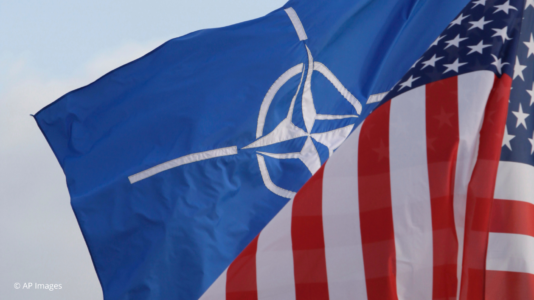
This article argues that the transfer of selected NATO operational commands from the United States to European allies should not be read as a sign of American retrenchment or of a post-hegemonic transition, but rather as a functional reorganisation within a persistently asymmetric alliance structure. By distinguishing between political, operational, and strategic levels of reciprocity, it interprets the reallocation of command responsibilities as an adaptation of U.S. hegemony to changing systemic priorities, rather than a substantive redistribution of strategic control.
[DISPLAY_ULTIMATE_SOCIAL_ICONS]
The author argues that the economic fallout is being driven by a deliberate shift away from Western financial systems, noting that Iran’s Shetab network was integrated with Russia’s Mir card system, making Visa, Mastercard irrelevant. [DISPLAY_ULTIMATE_SOCIAL_ICONS]
The author argues that over the past decade, the UAE, especially Dubai and Abu Dhabi, has evolved into more than an oil-backed monarchy. It has positioned itself as a global logistics crossroads, financial hub, technology centre, and crucially, a low-tax, high-security destination for global capital. [DISPLAY_ULTIMATE_SOCIAL_ICONS]
The recent dismantling of Maoist memorials by the Central Reserve Police Force (CRPF), in coordination with state police units, marks more than a tactical action - it represents a strategic inflection point in India’s long campaign against Left-Wing Extremism. [DISPLAY_ULTIMATE_SOCIAL_ICONS]
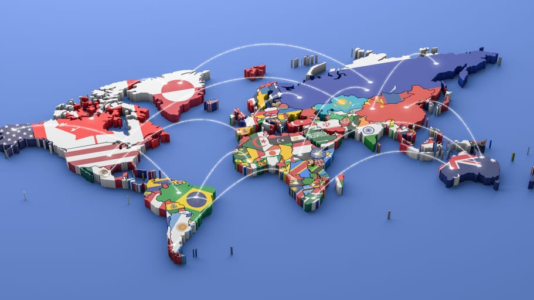
The author argues that western multilateralism is an order led by the United States and the West, based on alliance systems and characterised by value exclusivity. [DISPLAY_ULTIMATE_SOCIAL_ICONS]
The author argues that western multilateralism is an order led by the United States and the West, based on alliance systems and characterised by value exclusivity. [DISPLAY_ULTIMATE_SOCIAL_ICONS]
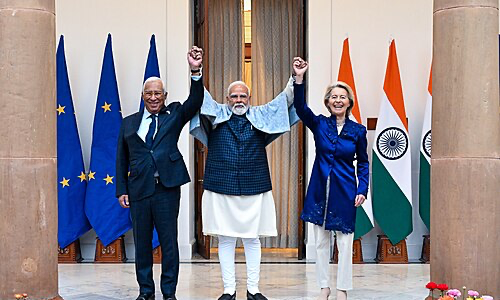
India–EU relations today embody multipolarity as a pattern of behaviour, defined by selective coordination and strategic autonomy rather than formal alignment. [DISPLAY_ULTIMATE_SOCIAL_ICONS]
The author argues that the United States’ shift toward selective, crisis-driven engagement has not created a security vacuum in West Asia but an enduring condition of strategic ambiguity. [DISPLAY_ULTIMATE_SOCIAL_ICONS]
The author argues that the patronage extended to the Rohingya during the PDP-BJP coalition period exposed contradictions between professed secularism and ground-level political practices. [DISPLAY_ULTIMATE_SOCIAL_ICONS]
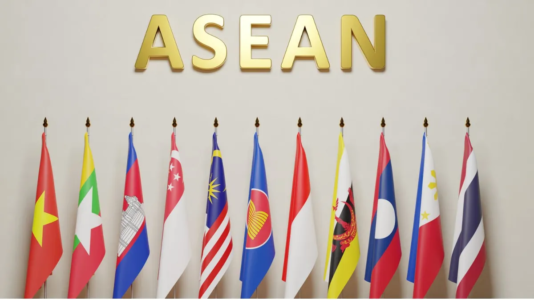
The India–ASEAN partnership exemplifies a multi-sectoral and multipolar engagement model, positioning India as both a strategic balancer and a normative bridge in the Indo-Pacific. [DISPLAY_ULTIMATE_SOCIAL_ICONS]