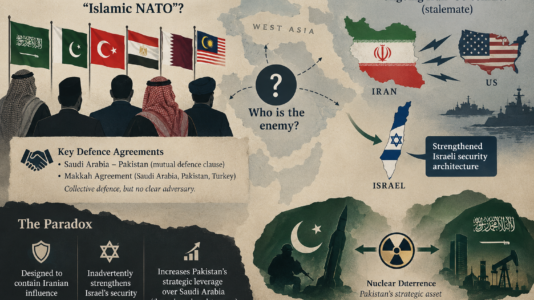
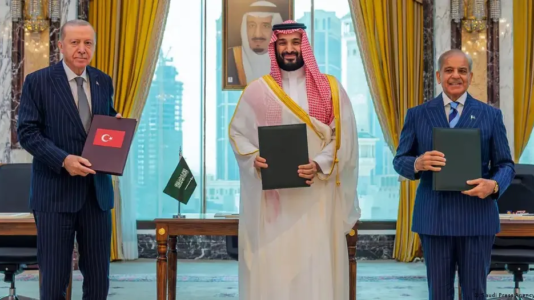
The author argues that the emerging Sunni-led collective security arrangements in West Asia remain strategically ambiguous due to the absence of a clearly defined common adversary, while potentially reshaping regional power dynamics by strengthening Israel’s security position and increasing Pakistan’s strategic leverage over Saudi Arabia through nuclear deterrence. [DISPLAY_ULTIMATE_SOCIAL_ICONS]
The author argues that China-inspired grey-zone tactics, characterised by denial, delay, and disorientation, are reshaping maritime security and strategic competition, requiring India to strengthen its preparedness against coercive actions below the threshold of conventional conflict. [DISPLAY_ULTIMATE_SOCIAL_ICONS]
The author argues that India must safeguard its strategic autonomy and national interests amid stalled trade negotiations with the United States, refusing to accept unilateral tariff demands or conditions that compromise its energy security and ties with Russia, while diversifying trade partnerships and strengthening domestic capabilities. [DISPLAY_ULTIMATE_SOCIAL_ICONS]
The onslaught was defined by sheer brutality: close-range executions, deliberate desecration, and the indiscriminate slaughter of families in their own homes. [DISPLAY_ULTIMATE_SOCIAL_ICONS]
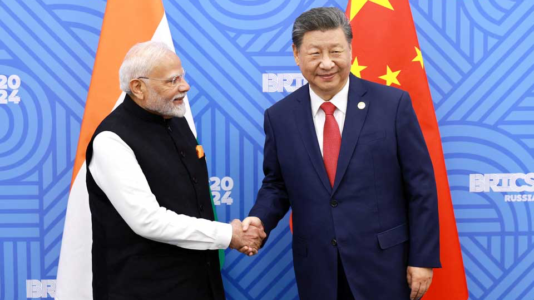
From the October 2024 Modi-Xi meeting in Kazan and the subsequent border understanding, to their meeting at the recent SCO summit in Tashkent and the interactions between National Security Adviser Ajit Doval and Chinese Foreign Minister Wang Yi, India-China ties have been moving through a gradual process of recalibration. [DISPLAY_ULTIMATE_SOCIAL_ICONS]
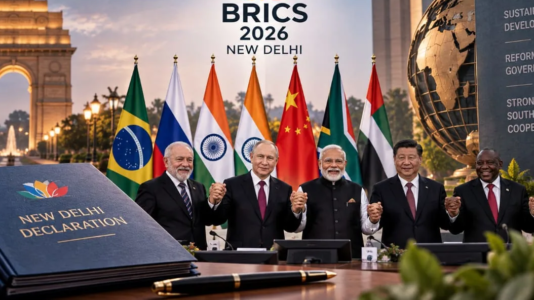
India's emphasis on reforming global institutions reflects an effort to translate its growing economic and political weight into greater representation in global decision-making. [DISPLAY_ULTIMATE_SOCIAL_ICONS]
The author argues that Ansar Allah’s strategic advances in the Bab el-Mandeb Strait and key infrastructure strikes have exposed the military and operational limitations of the Mecca Joint Defence Agreement, leaving Saudi Arabia exposed as key allies and the United States decline direct combat intervention. [DISPLAY_ULTIMATE_SOCIAL_ICONS]
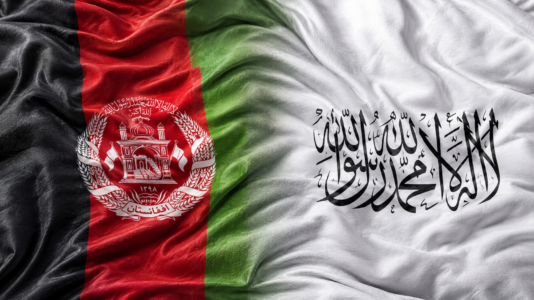
After two decades on the ground, one lesson stands out: India's relationship with Afghanistan transcends regimes, factions and geopolitics. It rests on the resilience of the Afghan people and an extraordinary historical, cultural and civilisational affinity.
[DISPLAY_ULTIMATE_SOCIAL_ICONS]
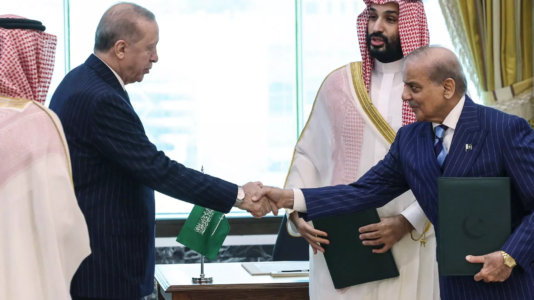
The author argues that while the newly formed Makkah Joint Defence Agreement between major Muslim nations aims to address shifting West Asian security dynamics and project regional power, its internal rivalries, broad external targets—including Israel, India, and Russia—and questionable operational feasibility will ultimately drive impacted non-member states like India to recalibrate their own strategic partnerships and diplomatic alliances. [DISPLAY_ULTIMATE_SOCIAL_ICONS]
The author argues that security is not just about military defense, but is the baseline requirement for economic progress. Stable societies attract foreign investment and safe maritime trade routes directly sustain economic growth. Thus, defense cooperation is a tool to unlock economic development. [DISPLAY_ULTIMATE_SOCIAL_ICONS]